
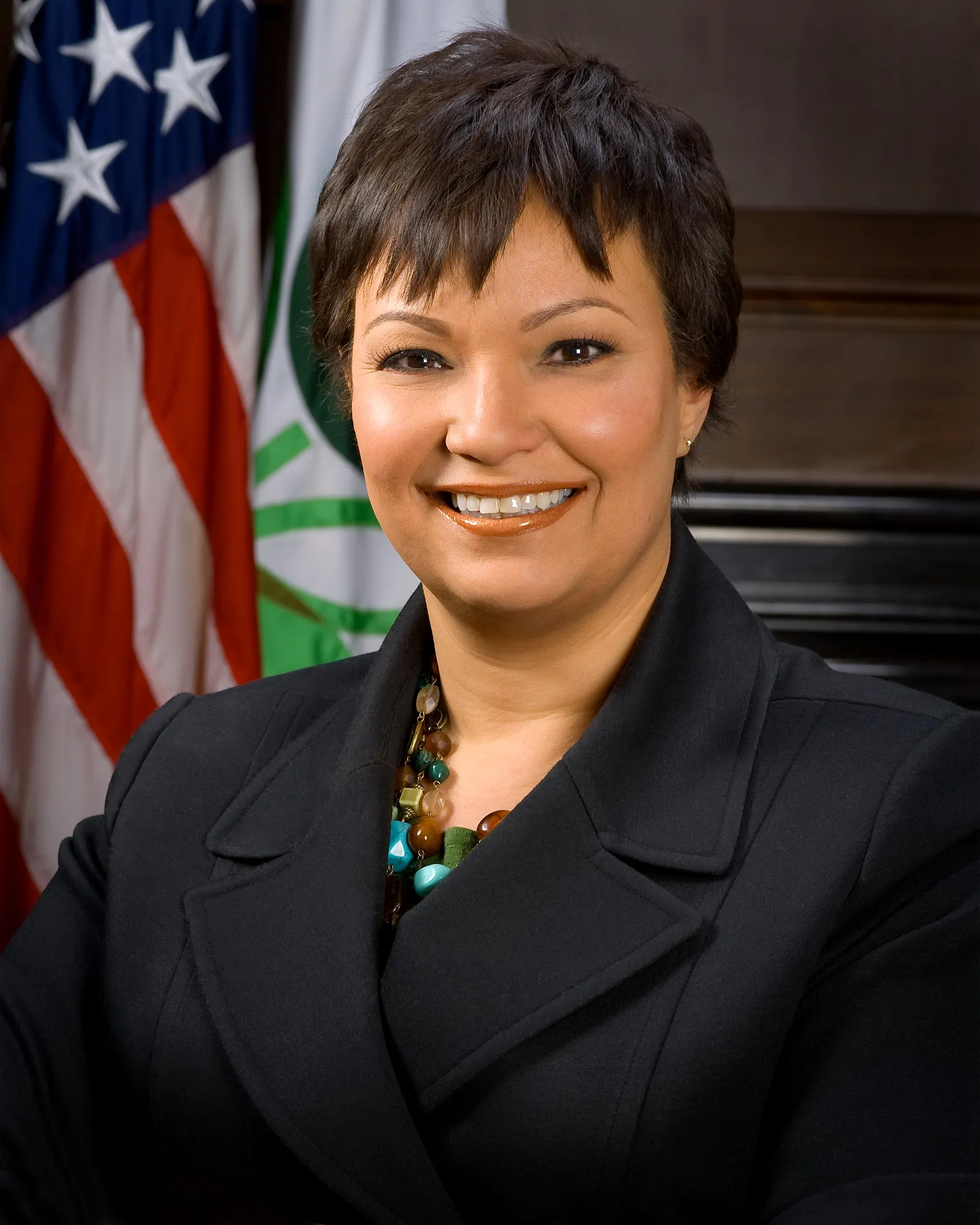
Lisa P. Jackson Ran the EPA. Then She Ran Apple's Climate Strategy.
From Pontchartrain Park to a chemical engineering degree to the Cabinet to Cupertino — the record behind one of the country's most consequential careers.
Photo by Eric Vance, EPA photographer, Public domain, via Wikimedia CommonsLisa P. Jackson ran the largest environmental regulator in the world for four years, then spent 13 more building sustainability and policy strategy inside one of the most valuable companies on the planet. Before any of that, she was a girl in New Orleans's Pontchartrain Park, watching the polluted canals that cut through her neighborhood and deciding, eventually, that an engineer was the person best positioned to do something about it. She is the first African American to serve as Administrator of the U.S. Environmental Protection Agency, and was described in coverage of her 2026 Apple retirement as one of the most visible Black women in Silicon Valley — a run built on a chemical engineering degree, a lot of fieldwork, and an unwillingness to treat pollution as somebody else's problem.
From Pontchartrain Park to Princeton
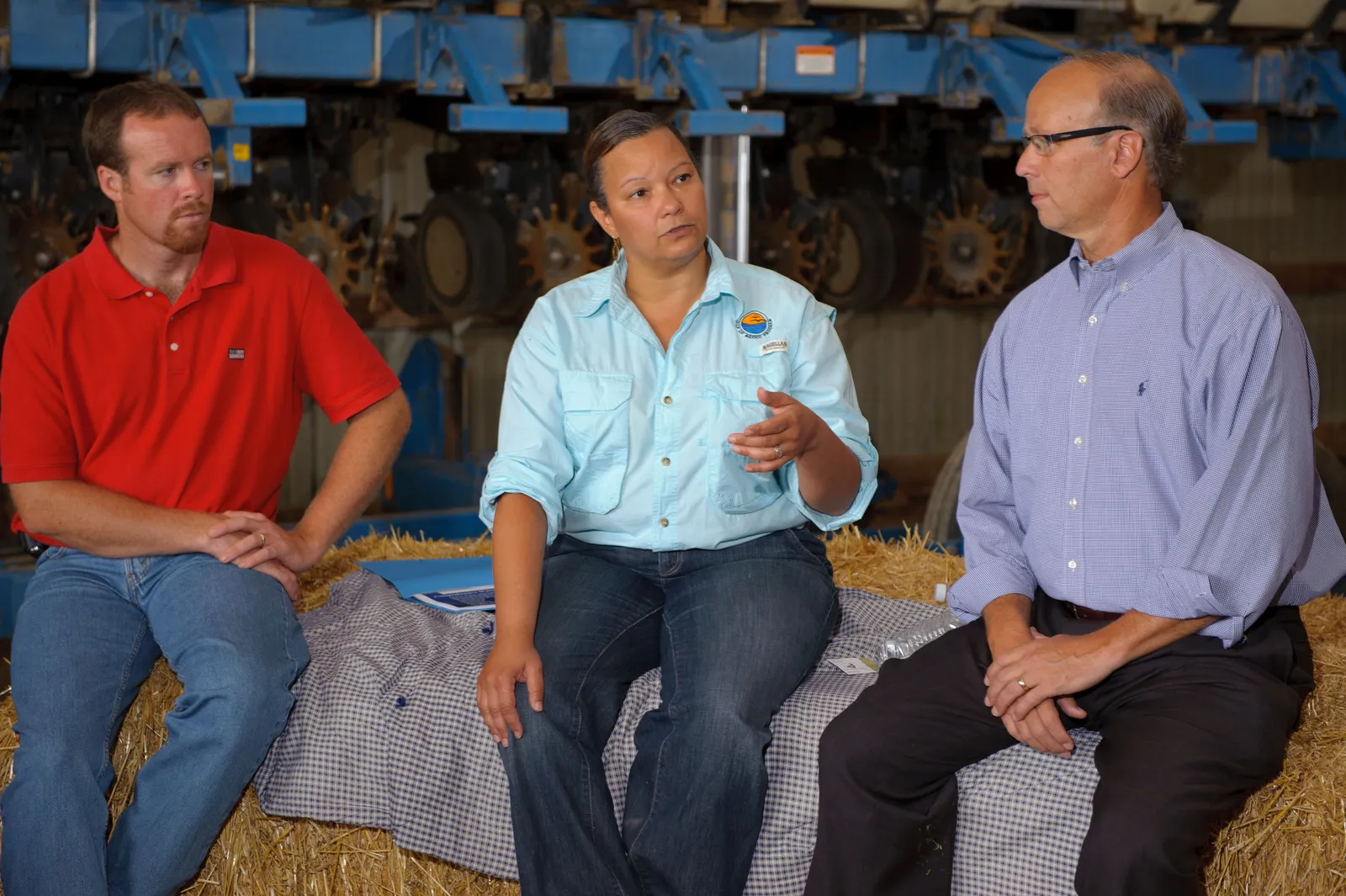
Jackson was born in Philadelphia in 1962 and adopted at two weeks old by Benjamin and Marie Perez, who raised her in Pontchartrain Park, in the Gentilly area of New Orleans — a neighborhood widely but imprecisely described in her own biography as the Ninth Ward. She graduated valedictorian of her class at St. Mary's Dominican High School, then took a full scholarship from Shell Oil to Tulane University, where she graduated summa cum laude in 1983 with a degree in chemical engineering. She earned a master's degree in chemical engineering from Princeton University in 1986, joined the EPA's Washington, D.C. headquarters as a staff engineer in 1987, and spent 16 years working through the agency before New Jersey Governor Jon Corzine appointed her Commissioner of the state's Department of Environmental Protection in 2006. She briefly served as his chief of staff before President-elect Barack Obama chose her to run the EPA.
“My dream as a child and throughout school was to become a doctor because I had always wanted to help people when they got sick. But I came to realize that by protecting our environment I was approaching the same problem from a different angle — by making sure people didn't get sick in the first place.”
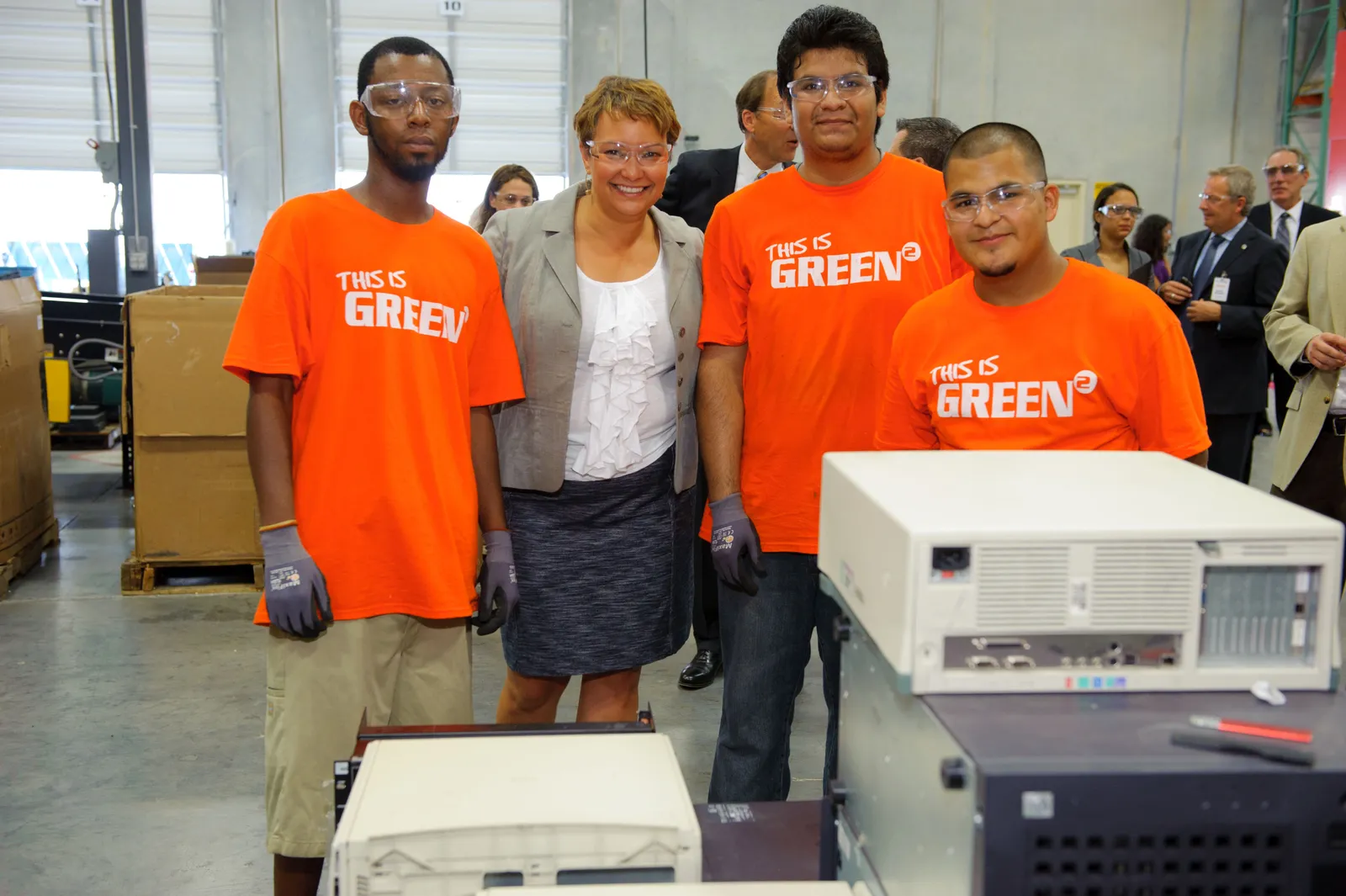
Confirmed by the Senate on January 23, 2009, Jackson became the first African American to serve as EPA Administrator, overseeing an agency of more than 17,000 employees and a budget that opened at roughly $10.5 billion in her first full fiscal year before falling to about $8.3 billion by the time she left in 2013, as Congress cut the agency's funding. In December 2009, she issued the endangerment finding on greenhouse gases, a step the U.S. Supreme Court's ruling in Massachusetts v. EPA had all but required — opening the door to regulating carbon dioxide under the Clean Air Act. Over her four years running the agency, the EPA also set new clean air standards for large industrial facilities, negotiated a clean-cars fuel efficiency program with the Department of Transportation and the auto industry, and made environmental justice a stated priority: an explicit push to direct EPA's attention toward poor and minority communities that had carried a disproportionate share of the country's pollution for decades.
That last priority was not abstract for her. Jackson grew up on the Gulf Coast, and when the Deepwater Horizon rig exploded in the Gulf of Mexico in April 2010, she was the administrator the White House sent to lead the EPA's response — described in coverage at the time as "a native of the Gulf region." She made at least five trips to the Gulf Coast that year, at one point briefing a bipartisan congressional delegation in Grand Isle, Louisiana, on the air, water, sediment and dispersant monitoring her agency was running along a coastline she had grown up near.
From Washington to Cupertino
Jackson joined Apple in 2013 as its vice president of Environment, Policy and Social Initiatives, reporting to CEO Tim Cook, and stayed 13 years. She built out Apple's climate strategy, its $100 million Racial Equity and Justice Initiative, and its government affairs operation. In December 2025, Apple announced she would retire in late January 2026, closing that chapter for good; the company chose not to name a direct successor, splitting her responsibilities instead. Cook's own accounting of what she left behind: "She has been instrumental in helping us reduce our global greenhouse emissions by more than 60 percent compared to 2015 levels." It is a tidy way to measure a career that started with a girl in Pontchartrain Park deciding pollution was an engineering problem, and ended with her having spent four decades treating it like one.
Related Stories
 Photo courtesy of Yvonne
Before Forty, Yvonne Wanted Her Health in Order — Confidence Came With It
She changed her relationship with food, started therapy, and found a confidence she calls 'through the roof.'
 Photo by Maël Balland on Pexels
Room on the Trail: How the Outdoors Finally Made Space for Every Body
From plus-size hiking packs to tour operators built around comfort, the outdoor world is finally sizing up. Here's the proof, from the trail to the dive boat.
 Photo by Sora Shimazaki on Pexels
No Salary, No Shame: How Katie Sturino Built Megababe Into a Body-Care Empire
In 2017, she built an anti-chafing stick with her sister and best friend in a garage. Megababe now sits on Target and Walmart shelves — founder still unpaid.