
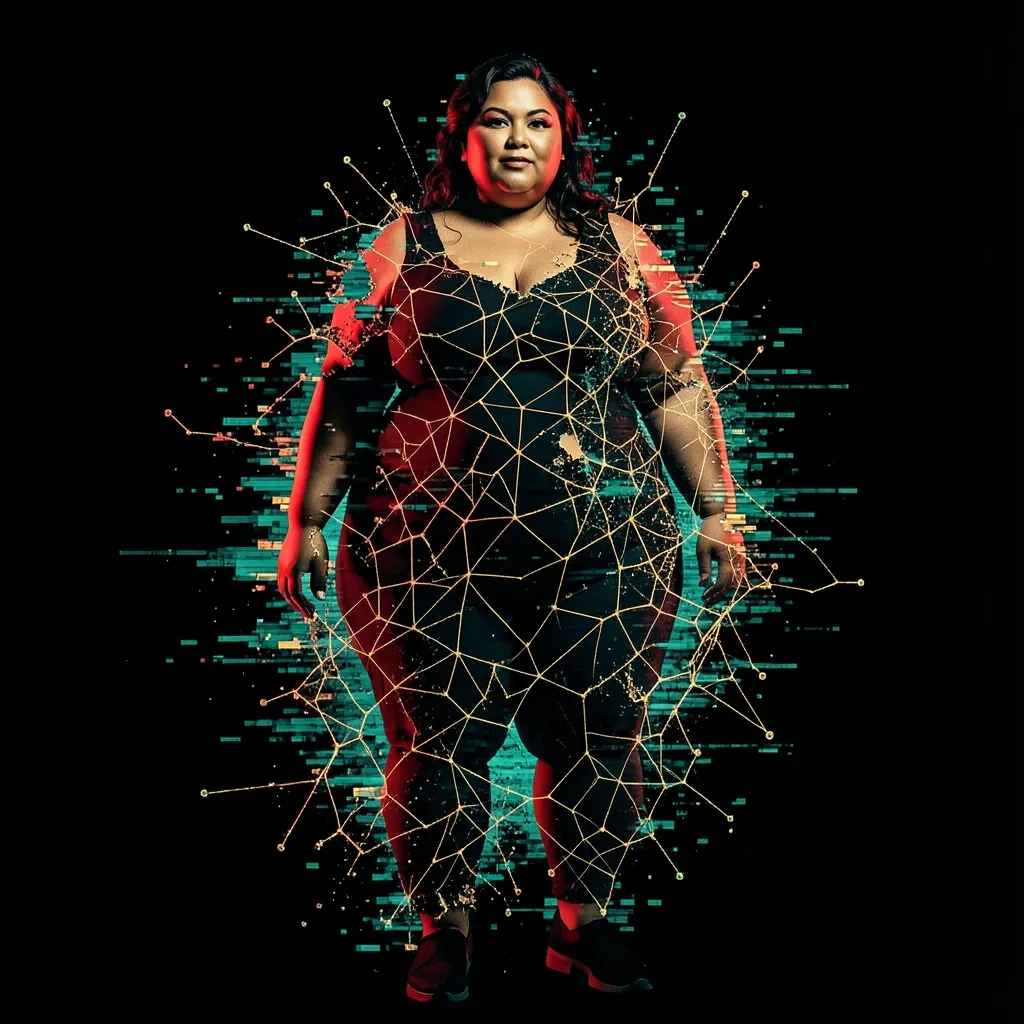
AI Image Generators Almost Never Draw "Good" People as Fat, Study Finds
A peer-reviewed study of 4,000 DALL-E 3 images found positive words like "virtuous" rarely drew fat figures, while negative ones like "greedy" often did.
Ask OpenAI's DALL-E 3 to draw a virtuous person, a competent person, or a clean person, and it will almost always draw a thin one. Ask it to draw someone sinful, inept, or disgusting, and a fat body is far more likely to show up on screen — even though none of those words describe body size at all. That is the finding of a peer-reviewed study out of Fordham University and the University of California, Davis, presented at the 2025 Annual Conference of the North American Chapter of the Association for Computational Linguistics (NAACL) in Albuquerque, New Mexico, this spring.
How the study worked

The researchers — Jane Warren, Gary M. Weiss, Fernando Martinez, Annika Guo, and Yijun Zhao — built 20 pairs of prompts with opposite moral connotations but nothing to do with weight: sinful and virtuous, inept and competent, disgusting and clean, bad and good, among others. They generated 100 DALL-E 3 images per prompt, 4,000 images total, then manually labeled each one for the body size of the person it depicted. The paper, "Decoding Fatphobia: Examining Anti-Fat and Pro-Thin Bias in AI-Generated Images," appears in the Findings of NAACL 2025.
What the images showed

The pattern held across the prompt pairs: negative-connotation words unrelated to size — greedy, immoral, inept — disproportionately generated images of fat people, while positive-connotation words like virtuous and competent overwhelmingly generated thin ones. The researchers describe this as the model effectively erasing fatness from anything coded as morally good. The study builds on earlier work by two of its five researchers, Gary M. Weiss and Yijun Zhao, who used a similar DALL-E 3 prompt-pair method to test for race and gender bias in a separate paper presented at COMPSAC 2025. The authors of the fatphobia study say theirs is the first to apply that approach to body weight specifically.
According to Fordham University's own research news coverage of the project, Warren said she wanted the work to open up a new way of studying bias in AI systems, and that she hopes it makes users approach these tools with more caution about the biases built into them.

Related Stories
 Photo by cottonbro studio on Pexels
Dating Apps' New AI Photo Rules: What Tinder, Bumble and Hinge Actually Require
Tinder's face-matching check is now mandatory in eight markets. Bumble and Hinge have their own rules — and none of the three mention body size.
 Photo by cottonbro studio on Pexels
Meta's Own Research Found the Algorithm Feeds Struggling Teens More Body Content. What Happens to Plus-Size Content on the Same Platforms?
An internal Meta study reviewed by Reuters puts a number on it: three times the disordered-eating content for teens already feeling bad about their bodies.
 Photo by kaboompics.com on Pexels
Meta's $17.1 Billion Settlement Bans Filters and Like Counts. The Algorithm We Reported On Gets an Opt-Out, Not a Fix.
The settlement bans cosmetic filters and restricts like counts for teens. It doesn't require Meta to change what its algorithm recommends by default.