
College Football's 'Heaviest Lineman' Weighs 90 Pounds Less Than the Internet Says
Alcorn State's own roster has sophomore guard Kriston Edwards at 345 pounds — 90 pounds less than the number that's been repeated as fact since June.
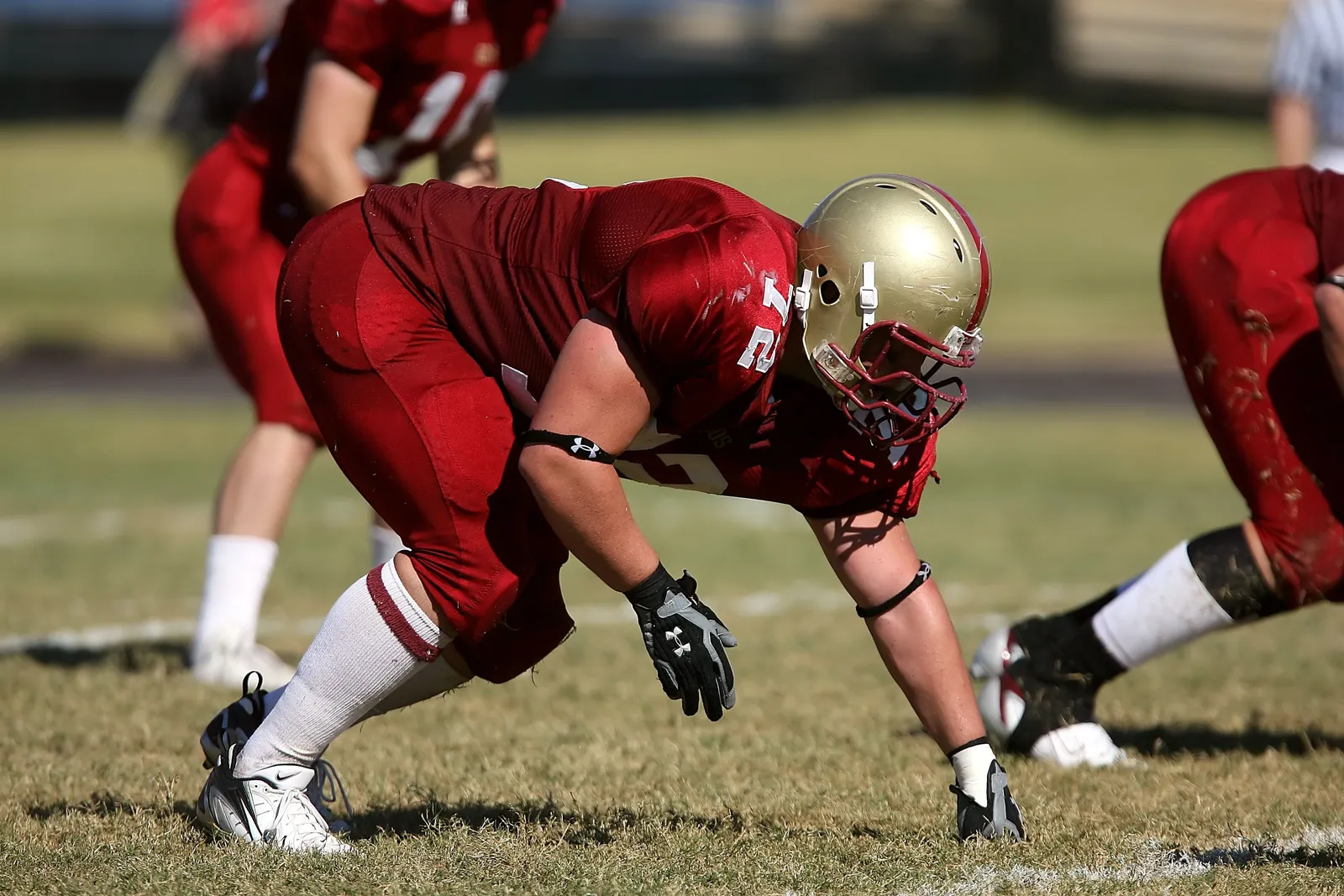
Photo by Pixabay on PexelsFour hundred thirty-five pounds, at six feet even, would make Kriston Edwards not just the biggest offensive lineman in college football — it would put him in range of the heaviest player ever to suit up in the sport at any level. That was the number attached to his name on nearly every "biggest lineman in college football" search result this summer, sourced to a June 30 piece on the recruiting site Crescent City Sports, which called 2026 a landmark year: "Never before have we had four players listed at 400 pounds or more." Edwards, an Alcorn State sophomore guard, was one of the four. His own school says he isn't close.
The piece named more than a dozen other linemen at 330 pounds or heavier, from Grambling to USC, and singled out four for clearing 400 for what it said was the first time in the sport's history: Edwards; Syracuse's Byron Washington, listed at 6-7, 400 pounds; Delaware State's Jaheem Reddick, 6-5, 400; and North Carolina's DuJuan Davis, 6-5, 400. Four real 400-pound linemen in one season would be a genuine record — the position has been getting bigger for decades, but this would be new ground. So we called on the one source that outranks a recruiting blog: each program's own current athletics roster.
The Roster Doesn't Agree
We got a clean read on three of the four. Alcorn State's own roster lists Edwards — number 66, a sophomore from Jackson, Mississippi, out of Lanier High School — at 6-0, 345 pounds, not 435. Swap the first two digits of the number that's been circulating all summer and you land exactly on the figure his own school has him at. Syracuse's roster lists Washington at 385, not 400 — Sports Illustrated's own Syracuse offensive-line preview backs that up, describing him as a "6-foot-7, 385-pound lineman." A smaller gap than Edwards, but a real one. Delaware State's roster, on the other hand, backs up Crescent City Sports exactly: Reddick at 6-5, 400 pounds on the nose. Two of the three came in heavier than the school's own number; one matched it precisely. (We couldn't get a clean read on the fourth — North Carolina's own site carries more than one Davis, and we're not guessing which number belongs to which player.)
The Good-Weight Problem
This is the flip side of a bias this beat writes about constantly: football is the one arena in American sports where a big body gets treated as a credential before anyone questions it. Offensive line is the one room where the number on the scale is the qualification, not a caveat — the Arizona Cardinals' own starting offensive line went from a 261-pound average in 1980 to 314 pounds by 2017, according to a Cronkite News review of pro-football-reference.com's roster data, and today's league-wide average sits around 315 pounds, per Fox Sports' own tally of every team's starting offensive line. But "good weight" cuts both ways. A skill player's 40 time gets re-clocked and argued over because the number changes what he's worth on Sundays. A lineman's weight gets treated like folklore instead of a stat, because a fat body already reads as a better story the bigger it gets, and nobody thinks a fat athlete's number is worth a phone call to confirm. That's how 345 real pounds — already an enormous and genuinely newsworthy body for a six-foot man playing Division I football — became 435 invented ones, and spent two and a half months traveling through search results, aggregator posts, and AI summaries without a single correction.
Edwards is a real sophomore on a team that actually played last weekend. Alcorn State fell to 1-1 with a 49-3 loss to Southern Miss on Saturday, September 5 — a game in which the Braves managed just 104 rushing yards and 223 total yards against 543 for the Golden Eagles, and lost time of possession, 31:21 to 28:39. Nobody needed to invent 90 pounds to make his real size a story, and the tape from that Saturday doesn't care what a June blog post said he weighed. It only cares what he did with the 345 pounds that are actually his.
College football is going to keep getting bigger at the one position where bigger is the entire point, and that's worth covering accurately every time — not just the first time somebody rounds a number up for a better headline. Three hundred forty-five real pounds is always going to be a better story than ninety fake ones.
Related Stories
 Photo by Gregorio Dorta Martin on Pexels
USA Triathlon's Clydesdale and Athena Racers Get Their Own Start Wave
At August's Milwaukee nationals, triathletes in the 220-plus and 165-plus-pound divisions left the line as their own start wave.
 Photo by Julia Larson on Pexels
Built from the Ground Up: The Gyms and Gear Actually Designed for Bigger Bodies
A Portland gym rates its equipment to 500 pounds. An activewear brand fit-tests every piece through size 42. Real design, not a resized afterthought.
 Photo by Lucas Borges on Pexels
Every Clydesdale and Athena Title: The Milwaukee Nationals Results
Phillip Young won Clydesdale overall in all three Milwaukee races, August 7–9. The divisions' separate start wave ran in two of the three — and wasn't a first.