
BYU-Arizona: The Spread Hit -7.5, Then Gave Ground. The Total Fell Three Points.
BYU's number backed off its own season-high even as the money kept piling on the Cougars. The total moved further, and wind is only part of why.
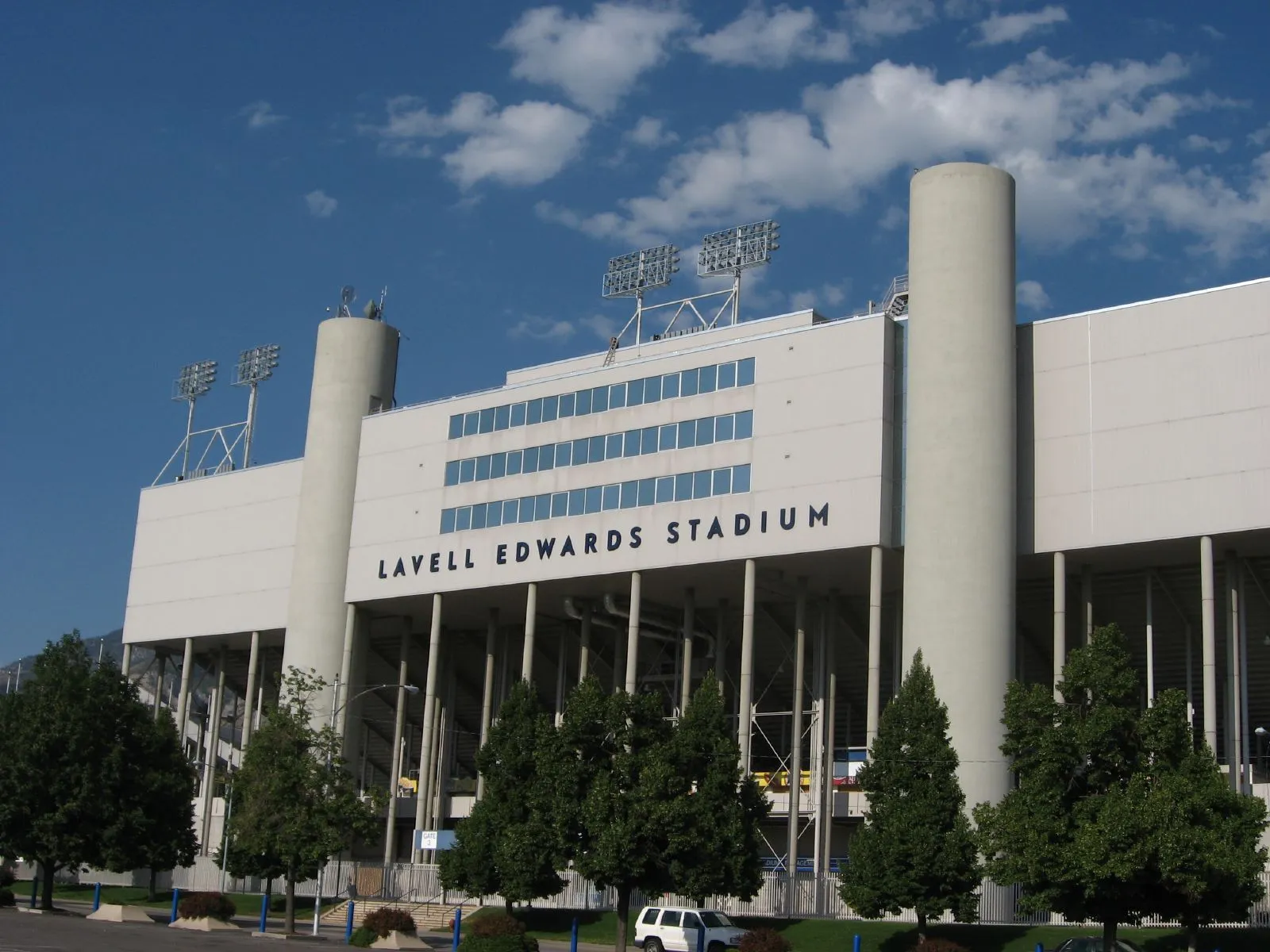
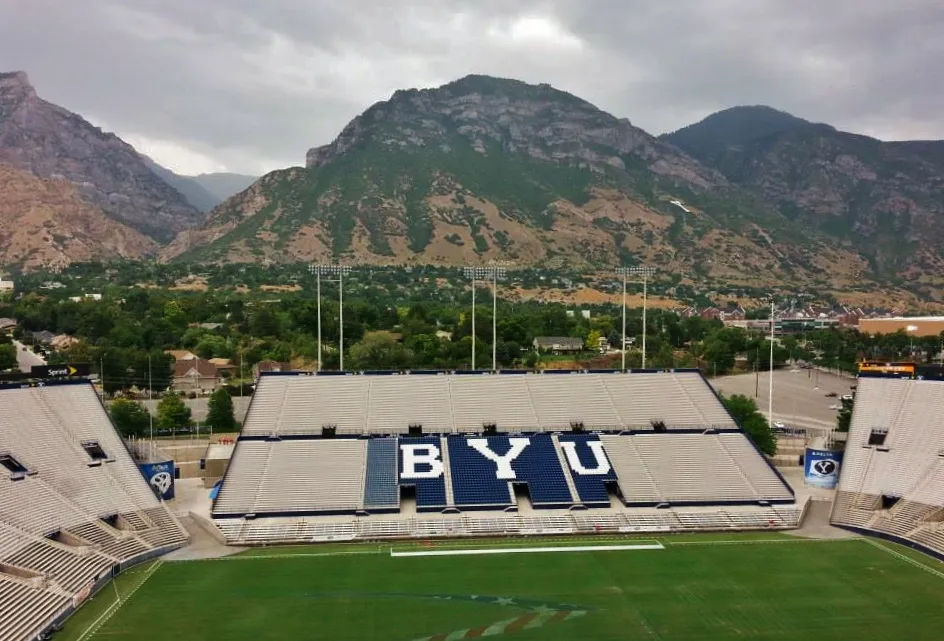
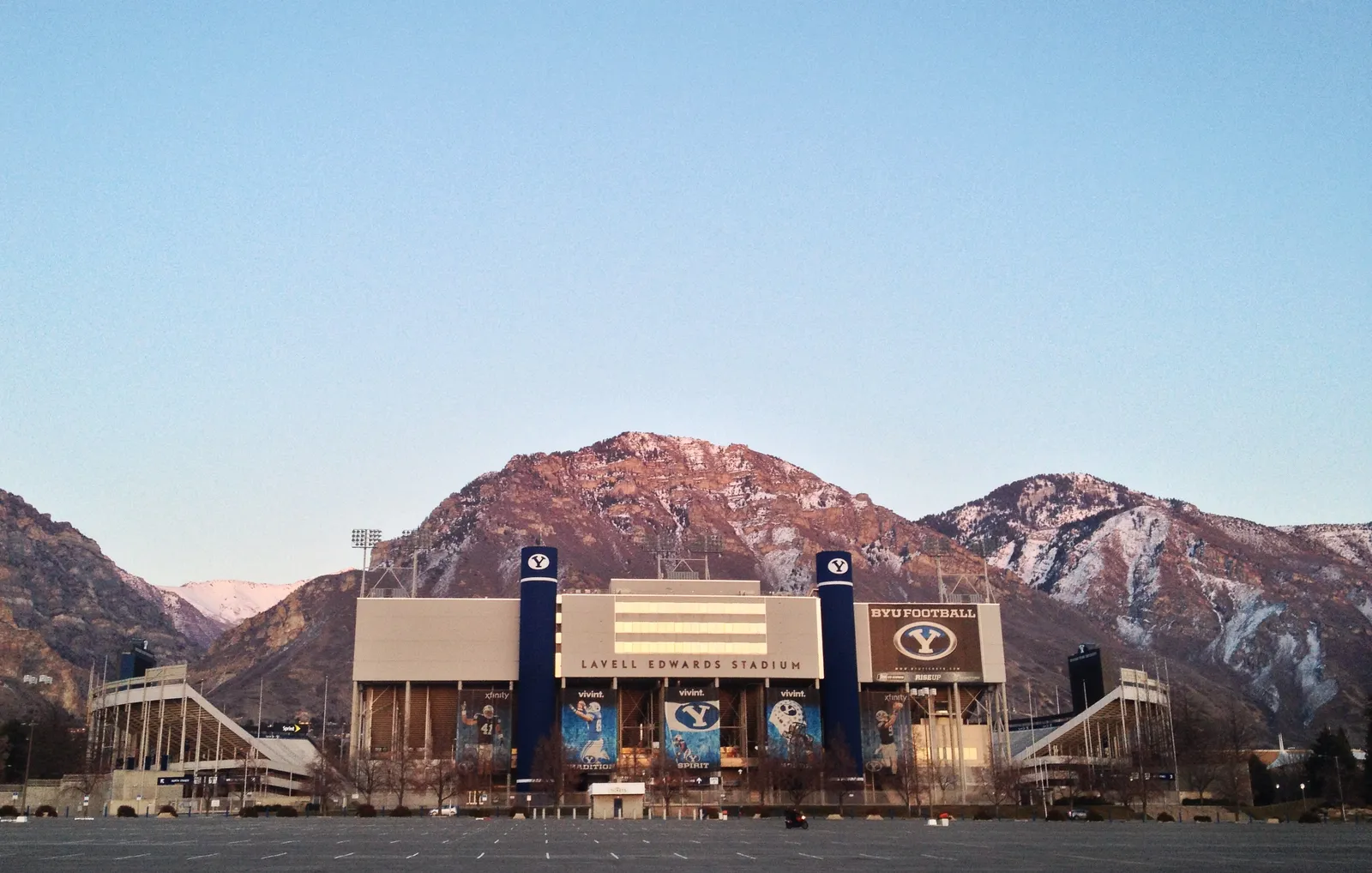
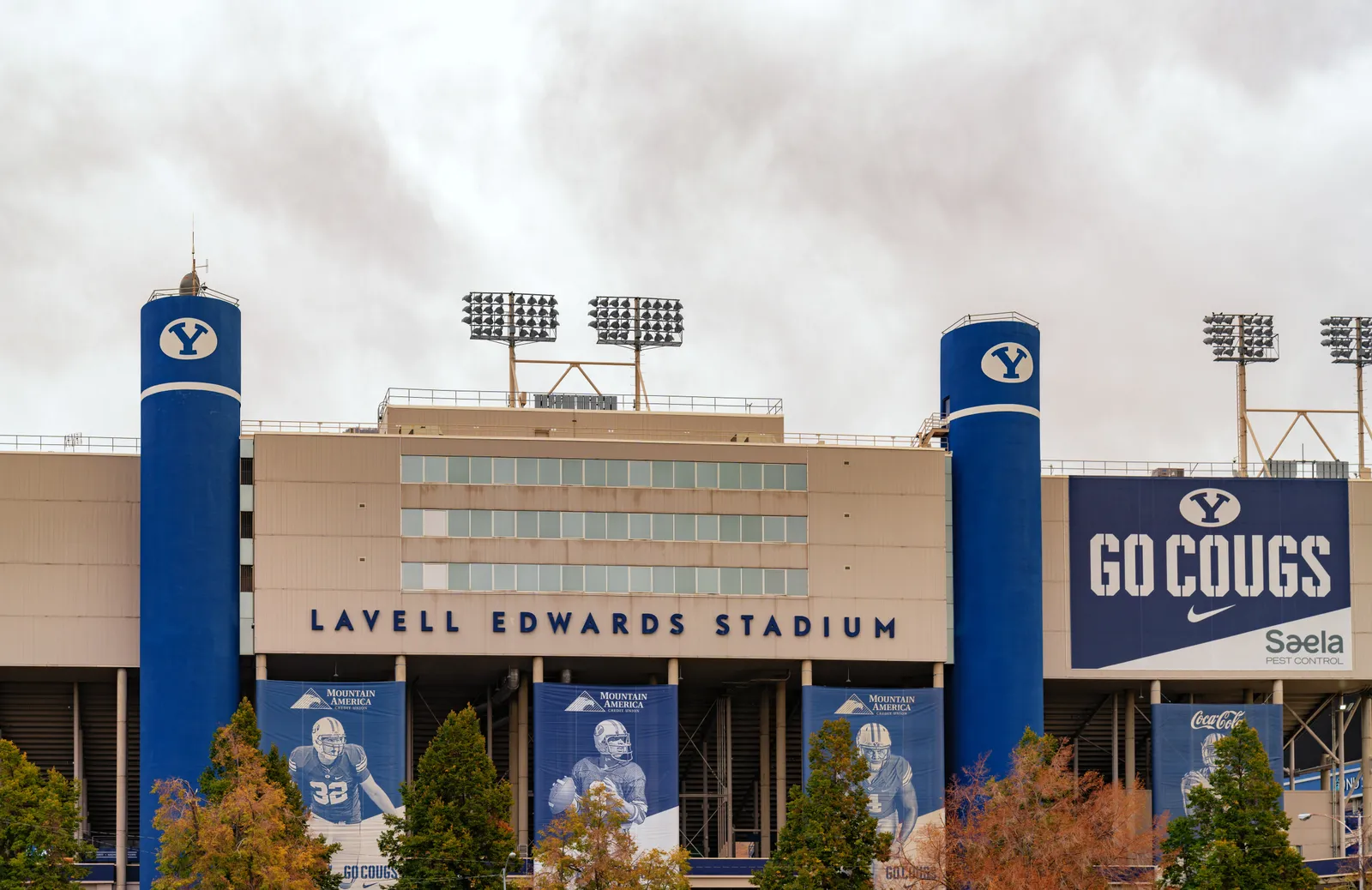
Photo by Ken Lund, CC BY-SA 2.0, via Wikimedia CommonsNo. 15 BYU hosts Arizona at LaVell Edwards Stadium in Provo, Utah, at 2:30 p.m. CT (1:30 p.m. MT) Saturday, September 12, on Fox. The line on this game moved away from BYU, then partway back — even as the bets kept arriving on the Cougars. VegasInsider's own line-history tracker shows BYU opening as a 6.5-point favorite, moving to -7 by the night of September 3, and widening to a season-high BYU -7.5 by 6:47 p.m. on September 6. By early Saturday afternoon, the same consensus tracker had eased back to BYU -7 (-110) — though FanDuel's own posted odds page, dated September 9, still shows BYU -7.5 (-110) and a -310 moneyline, a reminder that not every book had caught up to the pullback by the time this published. The total moved further: VegasInsider has it opening at 51.5, falling to 49.5 on the afternoon of September 8, then to 48.5 minutes later, where it has largely stayed — the same 48.5 FanDuel's own board shows independently.
The Money Is Lopsided. The Number Isn't Following It.
VegasInsider's own betting-splits module has BYU drawing 69 percent of spread bets to Arizona's 31, and a lopsided 98 percent of moneyline handle to Arizona's 2. Ordinarily, when the bulk of tickets and cash lands on one side, a book prices that side up, not down, to protect its own liability if the favorite wins big. That's what happened between September 3 and September 6, when BYU's number climbed from -6.5 to its -7.5 peak. What's happened since runs the other way: the number gave back half a point toward Arizona while BYU's money kept arriving. That reversal lines up with when BYU's own injuries got confirmed. Deseret News' official availability report on September 9 listed safety Raider Damuni out, after a left-leg injury in the September 5 opener against Utah Tech; the same day, Deseret News reported that backup running back Sione Moa had undergone surgery for a torn MCL and PCL from that same game. BYU defensive coordinator Kelly Poppinga told reporters the team is targeting mid-October for Damuni's return — a window that would put him back in time for BYU's Oct. 17 game against Notre Dame, though Poppinga did not name that game specifically — while Sports Illustrated's reporting on Moa's injury notes that a combined tear of that kind typically takes months to heal, with no return timeline set as of publication. A line moving against the side taking the money, in the same week that side's own injuries get confirmed, is the market pricing new information over ticket volume.
“They're a tough team, and we're excited about the matchup. We have to be at our best to beat them.”
The Total Fell Three Points — Wind and a Thinner Backfield, Not the Ticket Count
The total's move is the bigger one, and it runs the same direction against the tickets: VegasInsider's split shows 57 percent of bets on the over, yet the total fell a full three points, from 51.5 to 48.5, the same week. Two factors that would suppress scoring don't need the crowd's agreement first. The first is BYU's backfield: with Moa out for an extended stretch and running back Jovesa Damuni also listed out — per Deseret News' September 9 report, which also lists cornerbacks Jonathan Kabeya and Kevin Doe, offensive lineman Brigham Alexander, and tight end Jacob Nye as out — BYU is thinner in exactly the short-yardage, clock-control snaps most likely to hold a total down. The second is weather: KSL's Provo forecast — most recently issued Saturday, September 12, at 12:42 a.m. MDT, rechecked against the version issued the night before with the same numbers — calls for southwest winds of 10 to 20 mph Saturday afternoon with highs near 90 — not a storm, but enough sustained wind to make an outdoor passing game less efficient, one of the standard total-suppressing conditions a book watches for. Neither needs public buy-in; the book can reprice around them regardless of which way the tickets stack, and did.
None of that is matched on Arizona's side — this week's coverage, from Deseret News to Arizona's own beat writers, hasn't surfaced an injury of similar weight for the Wildcats. What Arizona brings instead is a narrative: BYU has won five straight in this series, quarterback Noah Fifita is personally 0-2 against the Cougars, and Arizona's staff has treated Saturday as a target since January 2026, per Deseret News' Saturday, September 12 preview. That kind of streak is exactly what pulls public money toward a favorite by habit — consistent with BYU's 69-31 spread split and its near-unanimous moneyline handle. Sitake's own on-record comment, from that same preview, was notably flat by comparison. Every number here is a snapshot as of Saturday, ahead of the 2:30 p.m. CT kickoff; this is a market still moving, not one that has closed.
Related Stories
 Photo by SounderBruce, CC BY-SA 4.0, via Wikimedia Commons
Seattle Opened Week 1 as a 4-Point Favorite Over New England. The Market Has Them at 3.5.
Seattle's Week 1 line drifted from -4 toward -3.5 over the summer — a move about roster uncertainty on both sides, not a forecast on the champion.
 Photo by ajay_suresh, CC BY 4.0, via Openverse
Ohio State-Texas: The Spread Never Left -1.5. The Total Climbed Two Points.
Bad injury news hit both teams Friday. The spread barely moved. The total did — and that's where the sharp money went.
 Photo by Cbaile19, CC0, via Wikimedia Commons
The Falcons-Steelers Line Moved From -3 to -5.5/-6 After Tagovailoa Was Ruled Out
Pittsburgh opened -3 over Atlanta. By Friday night it was -5.5 to -6, once Tagovailoa's injury became an official "out" and Cooper Rush got the Week 1 start.