

Weight Watchers Erased $1.15 Billion in Debt in 49 Days. Was It Really All Ozempic?
WW International wiped out $1.15 billion in debt in a 49-day bankruptcy last year and blamed GLP-1 drugs. Its own revenue had been falling since 2012.
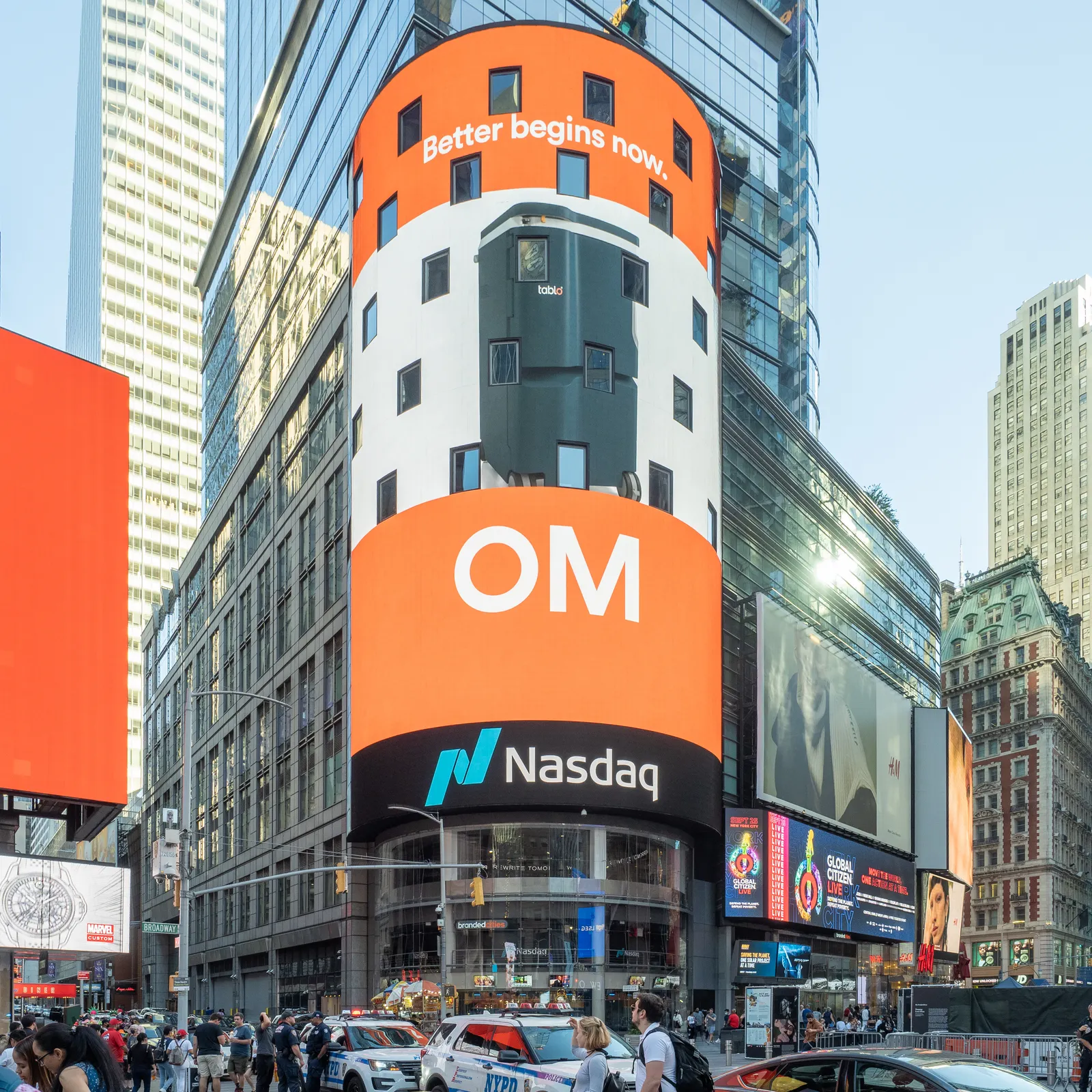
Photo by Chris Pruitt, CC BY-SA 3.0, via Wikimedia CommonsWW International, Inc. — the company that spent six decades as Weight Watchers — filed for Chapter 11 bankruptcy protection on May 6, 2025, in the U.S. Bankruptcy Court for the District of Delaware. It was a prepackaged filing: holders of more than 70 percent of its secured debt had already signed a restructuring agreement before the petition went in. The court confirmed the plan 42 days later, on June 17, 2025 — the milestone the case's own restructuring agreement had set as a deadline — and the company emerged a week after that, on June 24, 2025, 49 days after the petition was filed. The plan eliminated approximately $1.15 billion of debt — more than 70 percent of what the company owed — swapping most of it for equity and leaving roughly $465 million in new senior secured debt due 2030, which the company says cuts its annual interest expense by about $50 million.

WW International's old common stock was delisted from Nasdaq on the exchange's own notice and spent several weeks trading over the counter under the ticker WGHTQ before being cancelled outright in the reorganization. Under the confirmed plan, the company's former lenders and noteholders received 91 percent of the reorganized company's equity; its old shareholders split the remaining 9 percent. WW International returned to trading on Nasdaq under its original ticker, WW, in early July 2025, days after the reorganization closed. In this case, going private lasted only as long as the restructuring itself, not the years it can for other companies.
The company's own account of why this happened is consistent, and it is quotable. CEO Tara Comonte said the restructuring would let WeightWatchers "accelerate innovation, reinvest in our members, and lead with authority in a rapidly evolving weight management landscape" — company language for a business it says was overtaken by GLP-1 drugs, Ozempic and Wegovy chief among them, sold as a prescription alternative to what used to be a subscription. WeightWatchers had already tried to get ahead of that shift: it announced the acquisition of Sequence, a telehealth service that prescribes GLP-1 drugs, in March 2023 and completed the deal that April, paying a net $106 million (a $132 million transaction, offset by cash already on the target's books); it later rebranded the business WeightWatchers Clinic. Buying a seat inside the GLP-1 supply chain did not prevent the bankruptcy that followed two years later.
The filings tell an older story

WW International's own pre-bankruptcy securities filings, though, describe a company that was already in serious trouble a decade before Ozempic existed as a weight-loss drug. Revenue peaked at $1.83 billion in 2012. By 2015 — the year the company brought on Oprah Winfrey as an investor and advisor to try to reverse course — it had lost roughly 700,000 members in a single year, first-quarter revenue was down 21.3 percent year over year, and the stock, down 76 percent for the year by that August, bottomed out at around $3.67 a share that summer, according to contemporaneous market reporting. None of that had anything to do with GLP-1s: semaglutide, the drug behind Ozempic, would not be approved by the FDA for weight loss under the brand name Wegovy until June 2021, and it did not reach meaningful consumer scale until 2022 and 2023.
The company partly recovered under CEO Mindy Grossman, rebranding to WW in 2018 and rebuilding to a record 4.2 million subscribers by the end of 2019, with revenue back up to $1.413 billion. But the decline resumed almost immediately, years before GLP-1 drugs were a factor at any scale: revenue fell to $1.378 billion in 2020, then $1.187 billion in 2021 — a 16 percent drop from 2019, by the company's own annual reports, in a year when Wegovy had only just reached pharmacies. The slide continued through the years GLP-1s did become a mainstream weight-loss option — $1.040 billion in 2022, $890 million in 2023, $786 million in 2024 — but the trend line was already pointed the same direction before the drugs were a market factor at all. Nothing in WW International's own public filings or earnings calls, reviewed for this piece, assigns a specific share of the decline to GLP-1 competition as distinct from the subscriber losses already under way.
What Weight Watchers is now
WeightWatchers today is smaller and organized around a different business. Clinical subscription revenue — from WeightWatchers Clinic, which prescribes GLP-1 drugs through a partnership with Novo Nordisk's NovoCare pharmacy network — grew 57 percent year over year in the fourth quarter of 2024 on the company's own figures (full-year 2024 clinical revenue, at $78.0 million, was up from $30.5 million in 2023), and clinical revenue is projected to make up 25 to 30 percent of 2026 revenue, up from 16 percent in 2025. The legacy points-and-meetings business kept shrinking regardless: behavioral subscribers were down 25 percent year over year in the first quarter of 2026, and total company revenue was still down about 10 percent. A woman who spent years and real money on the meetings-and-points program, and a woman using a GLP-1 prescription instead, are both still part of WeightWatchers' customer base. The company has simply stopped betting its future on the first one.
Related Stories
 Photo by Sasha P on Pexels
Torrid's Store Count Has Dropped From 632 to 463 in a Year
The largest plus-size specialty retailer closed more than a quarter of its stores since mid-2025, and its own filings show sales kept declining.
 Photo by Mathias Reding on Pexels
Target's Plus-Size Selection Fell 37 Percent in a Year, as Old Navy's Slid Too
Extended sizes fell 37 percent at Target and 12 percent at Old Navy over the past year, as GLP-1 drug use climbed toward 10 million Americans in 2025.
 Photo by RDNE Stock project on Pexels
Retail's GLP-1 Forecast Assumes the Weight Stays Off. The Evidence Still Doesn't Agree.
The $5 billion forecast on falling plus-size demand came from a software vendor. The trial evidence and the real-world evidence answer different questions.