
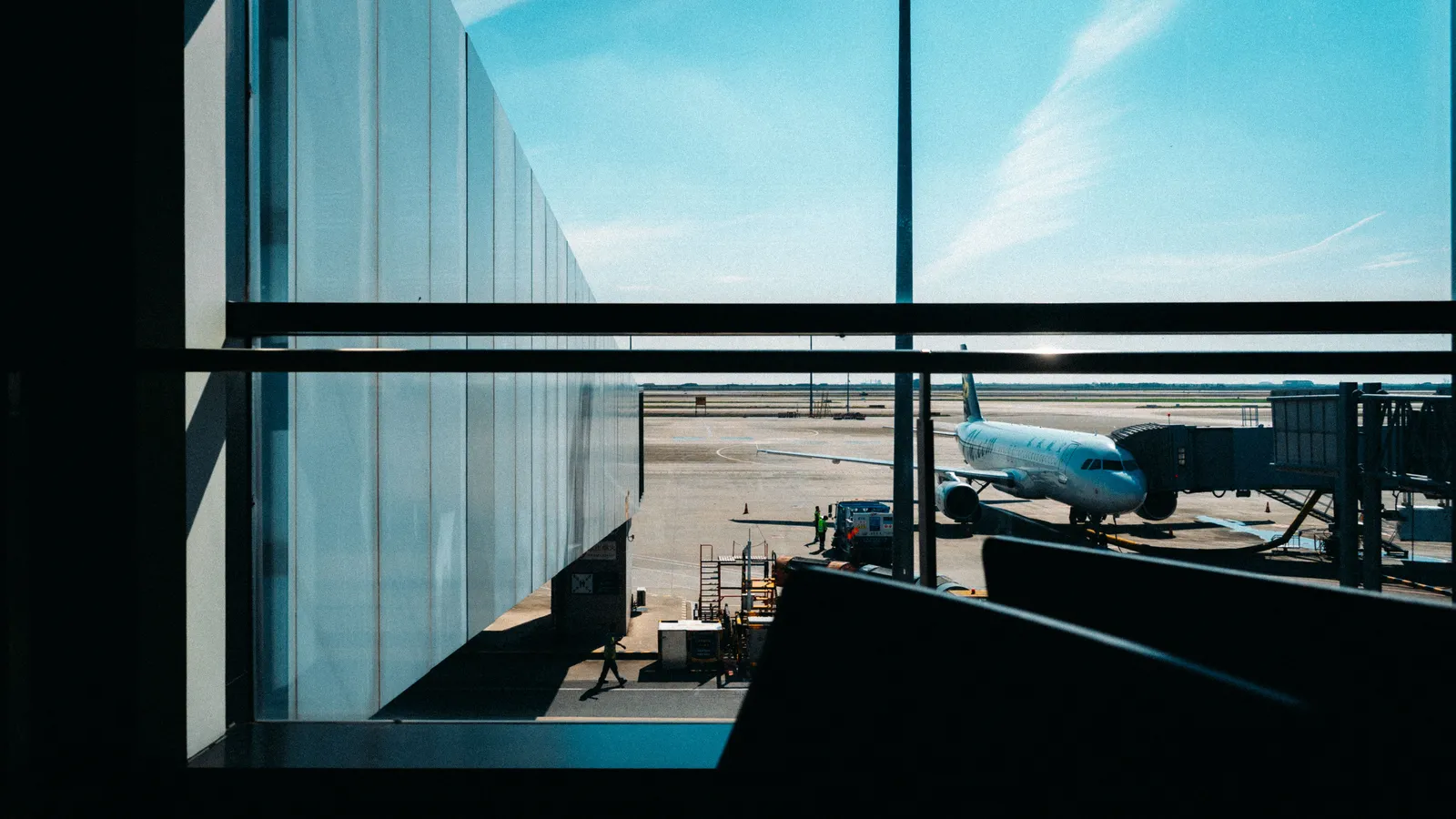
Southwest Recommends Buying the Second Seat. It Doesn't Require It — and We Said Otherwise.
Our August 17 explainer said Southwest required buying a second seat in advance; its Customer of Size page recommends it. What we got wrong, and how we know.
Photo by Blackcurrant Great on PexelsOn August 17, 2026, this magazine published "Southwest's Customer of Size Policy, Explained: What Changed Twice in Four Months." Its closing section ended: "The advance-purchase requirement, and its narrow refund window, remain in place for anyone who books ahead of time." Southwest's own policy page does not impose an advance-purchase requirement, and did not impose one on the day that sentence was published. The airline strongly recommends buying the second seat in advance. It does not require it. A reader who took our sentence at its word may have bought a seat she was free not to buy, on the authority of a piece written to tell her what the policy required — and our own reporting describes a passenger's account of being told at the gate that a second seat would cost roughly $450.
What the Policy Page Says, Read August 24, 2026
Southwest's Customer of Size page at support.southwest.com states: "If you need to occupy more than one seat, we strongly recommend that you purchase the seat prior to travel to ensure that adjacent seats are available." For a passenger who arrives without one, the page says, "You'll be accommodated with a complimentary extra seat, but only if adjacent seats are available, which may result in a change of seat type, including a lower category of seat." Where that condition fails, the page is direct about the consequence: "If the flight is full or if adjacent seats aren't available, you'll be rebooked on another flight with available seating." The refund terms our published piece described are unchanged, re-read against the same page on the same date: the request must be made within 90 days of travel, the flight must have departed with at least one open seat, and both seats must be purchased in the same fare class. The armrest remains, in the airline's words, "the definitive boundary between seats."
Measuring the Error
Most of what we published holds. The armrest definition, the same-fare-class rule, the 90-day refund window and its conditions, the January 27, 2026 date for the original change, and the late-May date for the reversal were accurate then and remain accurate now. The error is confined to one clause. "The advance-purchase requirement" that our sentence said "remain[s] in place" describes an obligation the policy page does not contain. The other half of the same sentence — the narrow refund window — is correct, which is part of how the error survived a reading: the sentence is half true. It is also incoherent on its own terms. A requirement binding only "anyone who books ahead of time" is not a requirement; it is a description of what happens to people who choose to pre-purchase. There is a second problem in the same piece, structural rather than factual. The article runs its sections in this order: "The January Change," then "What Southwest's Policy Says Today," then "The May Reversal." The middle section, the one labeled as current, describes the January mechanics, and the reversal arrives after it. No sentence in that section is false. A reader going through the piece in order is nonetheless told that the January rules are the ones in force.
When It Became Wrong, and Whether It Has Changed Again
Two possibilities had to be separated: that the sentence was wrong on the day we published it, or that Southwest changed the page afterward. The dated record settles it. ABC News reported on May 28, 2026 that plus-size passengers were "no longer required to purchase an extra seat in advance," and that the change had taken effect the previous week. Gate Access, carried by Yahoo on May 31, 2026, already described the airline as recommending rather than requiring pre-purchase. Fox 17 reported the same conditional policy on August 4, 2026, 13 days before we published. And the edition of Southwest's Contract of Carriage in force on August 17 was the 56th revision, effective July 16, 2026, which imposes no advance-purchase obligation. The sentence was wrong when published, not overtaken by a later change. One limit on that finding is worth stating plainly: it could not be confirmed from the policy page itself. The Internet Archive holds no capture of that page between May 31 and August 24, 2026, and the captures it does hold are the help center's JavaScript shell, containing no policy text at all. The conclusion rests on dated documents on either side of August 17, not on a snapshot of the page. The same search answered a second question — whether the policy changed a third time in early August, as a glance at the coverage can suggest. It did not. The Fox 17 item of August 4 clarifies the May revision rather than reporting a new one, and the other August-dated pieces reviewed here, in Newsweek and the Gate Access newsletter, are from August 2025 and describe the January 2026 tightening, which Southwest announced that year and made effective January 27, 2026. The claim in our headline — "What Changed Twice in Four Months" — and our late-May date both stand.
What the Contract Obligates, and What Nobody Has Measured
Southwest's Contract of Carriage, the document that binds the airline rather than describing its intentions, is more specific than the help center page and is quoted in none of the coverage reviewed here. Section 4.a.(4) states that "an adjacent seat is required for Passengers who, at the Carrier's discretion, cannot be safely accommodated in a single seat, whether because of a disability or because the Passenger would encroach upon the neighboring seat," then routes the mechanics elsewhere: "Southwest's policies for Customers of size and Customers with disabilities who require more than one seat, including how to obtain an adjacent seat, can be found in our Help Center." The word "required" appears there, but it governs the seat rather than the timing of its purchase — whether a passenger must occupy two seats, not when she must buy the second. The obligation that applies when the adjacent seat is not available sits in the next subsection: "If Southwest, in its sole discretion, determines that a Passenger cannot be safely accommodated in a single seat, and an additional adjacent seat is not available, Southwest will rebook the Customer on an alternate flight with available adjacent seats." The same subsection adds that Southwest "may refuse to transport individuals who are unable or unwilling to comply with Southwest's seating requirements." What none of this establishes is how often the condition fails. Neither Southwest nor the U.S. Department of Transportation publishes figures on how frequently adjacent seats are open on a departing flight, and the DOT's disability-complaint reporting does not break out Customer of Size complaints as a category. Whether "recommended" is a genuine choice or a requirement in everything but name is a question these documents do not answer.
Related Stories
 Photo by Ken Lund from Reno, Nevada, USA, CC BY-SA 2.0, via Wikimedia Commons
Two Bills, Not One: What's Actually Pending in the New Jersey Assembly on Weight Discrimination
A companion bill this newsroom never reported has sat five months, and the sponsoring caucus's own vote count doesn't match the chamber's record.

AI Image Generators Almost Never Draw "Good" People as Fat, Study Finds
A peer-reviewed study of 4,000 DALL-E 3 images found positive words like "virtuous" rarely drew fat figures, while negative ones like "greedy" often did.
 Photo by Sasha P on Pexels
Torrid's Store Count Has Dropped From 632 to 463 in a Year
The largest plus-size specialty retailer closed more than a quarter of its stores since mid-2025, and its own filings show sales kept declining.