
Oklahoma Closed -5.5 Over Michigan. The Home Underdog Won Outright, 17-10.
Oklahoma closed -5.5, a swing off Michigan's messy Week 1 win. Michigan won outright, 17-10, on a fourth-quarter interception that set up the winning score.
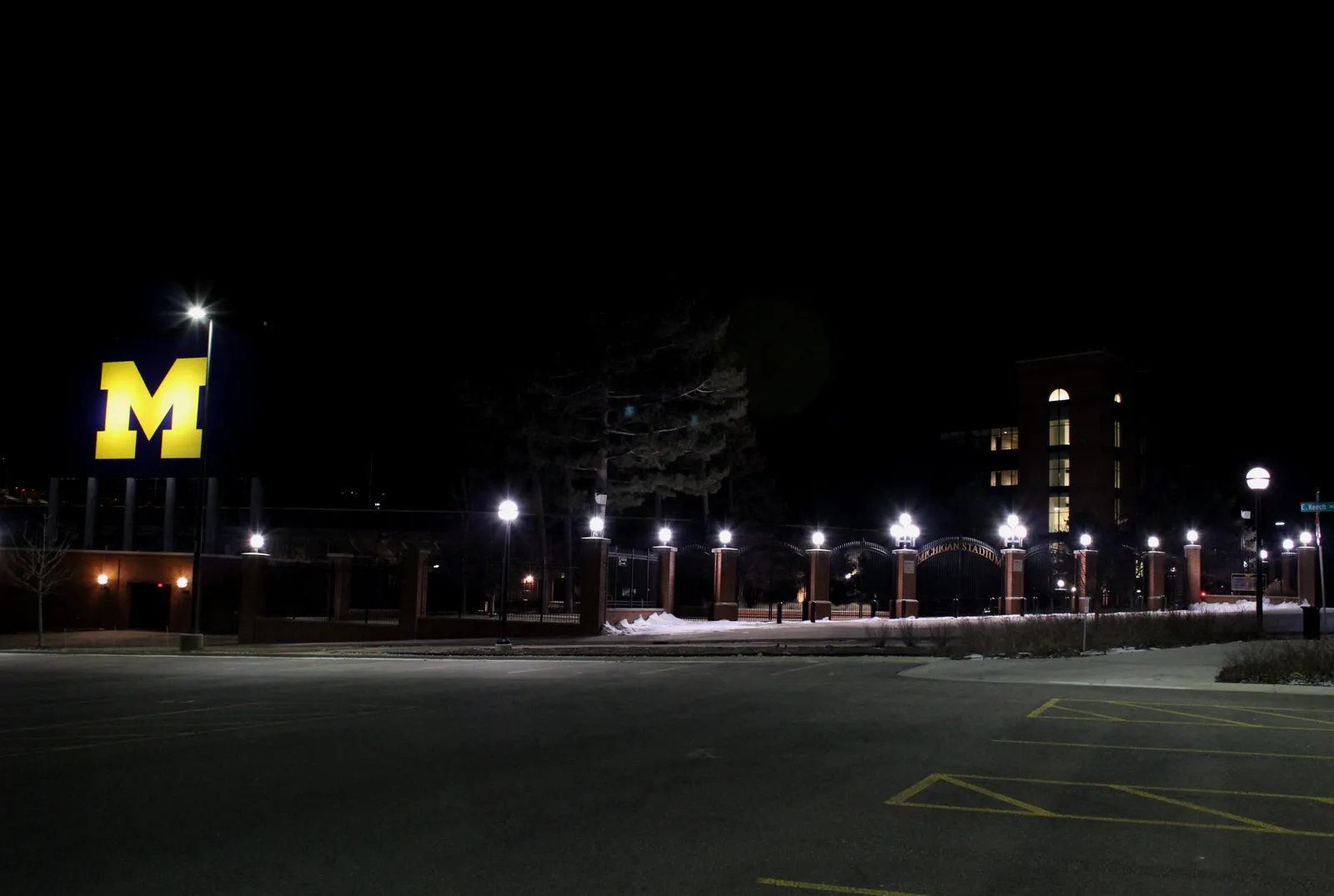
Photo by Dwight Burdette, CC BY 3.0, via Wikimedia CommonsUpdated September 12, 2026: Michigan beat Oklahoma 17-10 at Michigan Stadium, forcing two turnovers including a fourth-quarter interception that set up the winning touchdown. The line this story tracked closed at Oklahoma -5.5, total 43.5 — the road favorite lost outright. Final score and closing-line sourcing are now at the top of this piece.
Michigan beat Oklahoma 17-10 at Michigan Stadium in Ann Arbor on Saturday, September 12, a game that spent its final quarter deciding itself on defense rather than offense. Oklahoma tied it at 10 on a Tate Sandell field goal with 11:49 left, then got the ball back with a real chance to take the lead — until Michigan cornerback Jyaire Hill intercepted John Mateer at Oklahoma's own 30-yard line. Two plays later, Jordan Marshall scored on a 1-yard run with 7:53 to go, and that held up as the final margin. Oklahoma finished with two turnovers to Michigan's zero, per ESPN's and CBS Sports' game pages, both showing the contest as Final — the same kind of ledger, reversed, that had gotten Michigan bet against in the first place.
The number this story tracked closed almost exactly where it had been sitting for three days: Oklahoma -5.5, total 43.5. That figure is drawn from ESPN's own odds page for this game (sourcing DraftKings, gameId 401856679), re-checked after the final whistle, and from VegasInsider's own Michigan-Oklahoma line-movement history, which logged the spread settling at Oklahoma -5.5 on Friday evening, September 11, at 5:19 p.m. ET and holding there through kickoff. A 5.5-point road favorite losing outright wasn't what the market's own math made likely — the same closing moneyline (Oklahoma -230, Michigan +190) implied Oklahoma had roughly a two-in-three chance to win outright — but it wasn't the least likely outcome that number priced, either; by that same moneyline, a favorite that wins yet falls short of covering a 5.5-point spread happens less often than a favorite losing outright. That's a report of the closing number against the final score, not a verdict on the reasoning the market used to get there — nothing about Michigan's three-turnover escape of Western Michigan or Oklahoma's own 51-0 opener determined how either team would actually play under Saturday's lights, and no source cited in this piece claims otherwise.

In the days before kickoff, Oklahoma had been sitting as a 5.5-point favorite at Michigan Stadium — a full flip from where this game opened. ESPN's own betting page (sourcing DraftKings) — checked September 10, and cross-checked against its own September 9 betting-desk article — had Oklahoma -5.5, total 43.5, with the moneyline drifting slightly between checks (Oklahoma -205 to -230, Michigan +170 to +190). Sportsbettingdime.com, in a market rundown published Tuesday, September 8, independently listed the same numbers: Oklahoma a 5.5-point road favorite, total down to 43.5. A Yahoo Sports report syndicated from Detroit Sports Nation, published Monday, September 7, put the consensus line as high as Oklahoma -6.5 at some books, with the total having fallen from 45.5 to 43.5 industry-wide. Kickoff was noon ET Saturday, September 12, on FOX, at Michigan Stadium in Ann Arbor.

That's a swing of at least seven points, and exactly how big a swing depends on which opening number you use — the sources don't agree, and it's worth saying so rather than picking whichever is more dramatic. ESPN's own betting desk, in an article dated September 8, listed the week's lookahead line as "Opened Michigan -2.5, O/U 45.5," a figure the Yahoo Sports/Detroit Sports Nation piece independently matched, putting the same opening lookahead at Michigan -2.5. Sportsbettingdime traces the number back further, noting that "when the lines first opened in the spring, Michigan actually surfaced as a slight 1.5-point home favorite" — a different, much earlier reference point for what counts as the open. Both can be accurate at once: a spring number and a post-Week-1 lookahead number are two different postings, made at two different times, and neither outlet's figure is being treated here as the wrong one.
Why a game Michigan won moved the line against it
The trigger is Week 1, not anything new this week. Michigan needed a 47-yard, no-time-remaining touchdown pass from Bryce Underwood to J.J. Buchanan to beat Western Michigan, a Mid-American Conference opponent, 13-12, on September 5 — a finish Yahoo Sports and the Detroit News both described as controversial, after officials reset the game clock to one second before the winning snap. Michigan's own box score, via ESPN, shows why the market didn't price that as an ordinary escape: Michigan turned the ball over three times to Western Michigan's zero, and held the ball for 19:52 against Western Michigan's 40:08 — Michigan possessed the ball for barely a third of a game it won. Oklahoma, by contrast, shut out UTEP 51-0 in its own opener the day before, with quarterback John Mateer throwing three touchdown passes. The AP's own Top 25 poll read the two openers the same direction as the betting market, though not identically: Michigan, ranked entering the season, fell out of the poll entirely after Week 1, while Oklahoma — also ranked entering the season, at No. 10 — stayed in the Top 25 but slipped one spot to No. 11, a move multiple outlets attributed to LSU's own big Week 1 win pushing ahead of it in the voting rather than to any doubt about Oklahoma's performance.
The mechanism worth naming: a sportsbook's line isn't a forecast of which team is better — it's a running estimate built from everything a book can observe, including what a close, ugly win reveals about a team that the final score alone doesn't show. Michigan's 13-12 scoreline said "win." The turnover count and the time-of-possession split said something closer to a team that got outplayed and needed one throw to escape it. Oklahoma's dominant 51-0 opener against a considerably weaker UTEP team pulled the number the other way at the same time. No source in this reporting isolates which single factor — the turnovers, the time-of-possession deficit, or Michigan's offensive line specifically — is doing the most work in the re-price, and this piece isn't manufacturing that precision where the sourcing doesn't support it. The honest read is that all three moved in the same direction at once, and the market moved with them.
The total told a related but separate story. It opened at 45.5 and had come down to 43.5 by kickoff, across every book checked here — a two-point drop that reflected an updated view of combined scoring, not of who wins by how much. That was consistent with the same overall read: an offense that had struggled to sustain drives against a MAC defense, priced against a defense that had just held an FBS opponent scoreless. The final score, Michigan 17, Oklahoma 10, added up to 27 total points — well under even the reduced 43.5 number. That's a fact about where the total landed, not a verdict on the number itself: a total prices an average across many possible versions of a game, not a forecast of the specific one that gets played, and nothing here treats one final score as proof the market read the total right or wrong.
Related Stories
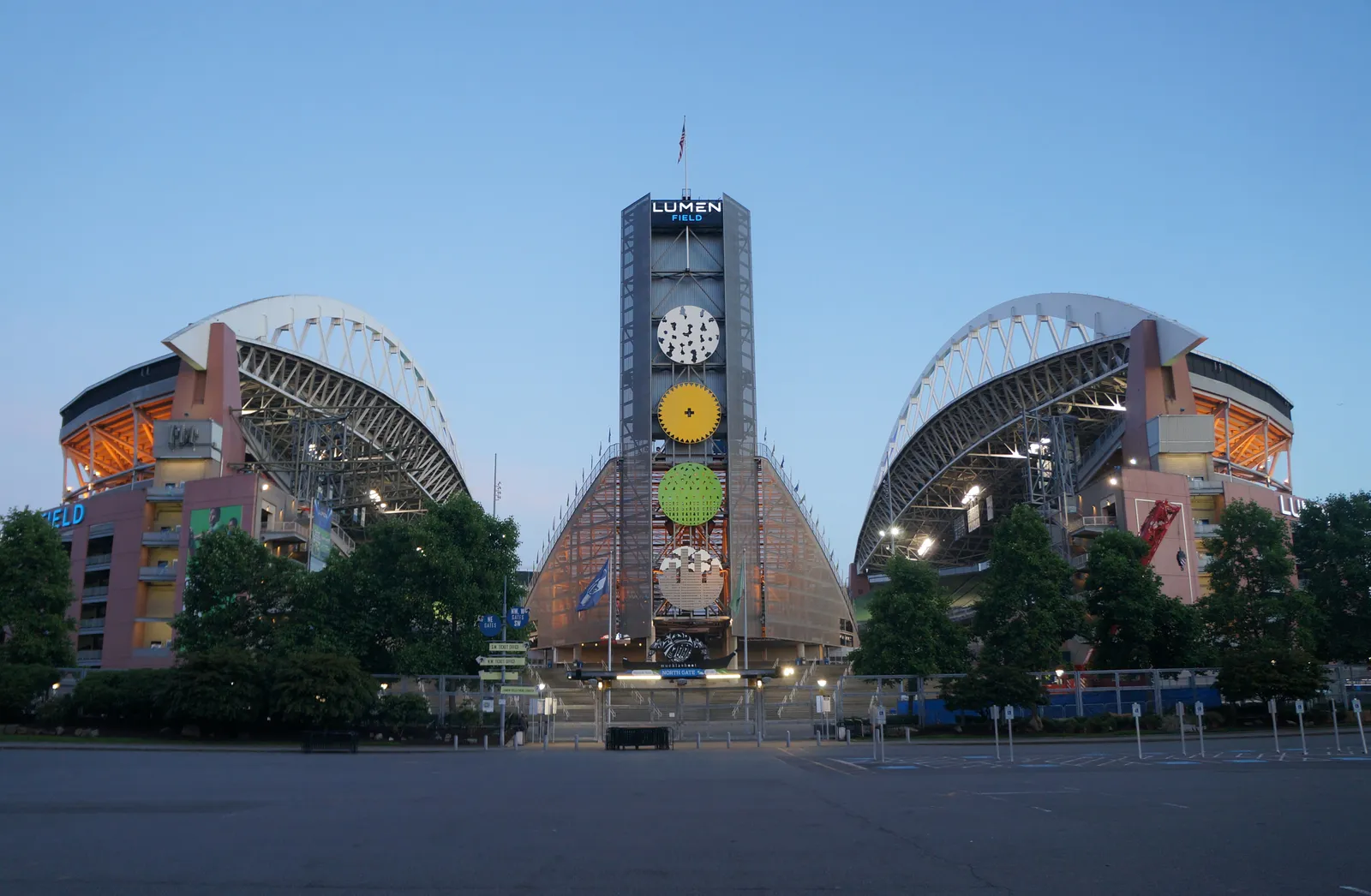 Photo by SounderBruce, CC BY-SA 4.0, via Wikimedia Commons
Seattle Opened Week 1 as a 4-Point Favorite Over New England. The Market Has Them at 3.5.
Seattle's Week 1 line drifted from -4 toward -3.5 over the summer — a move about roster uncertainty on both sides, not a forecast on the champion.
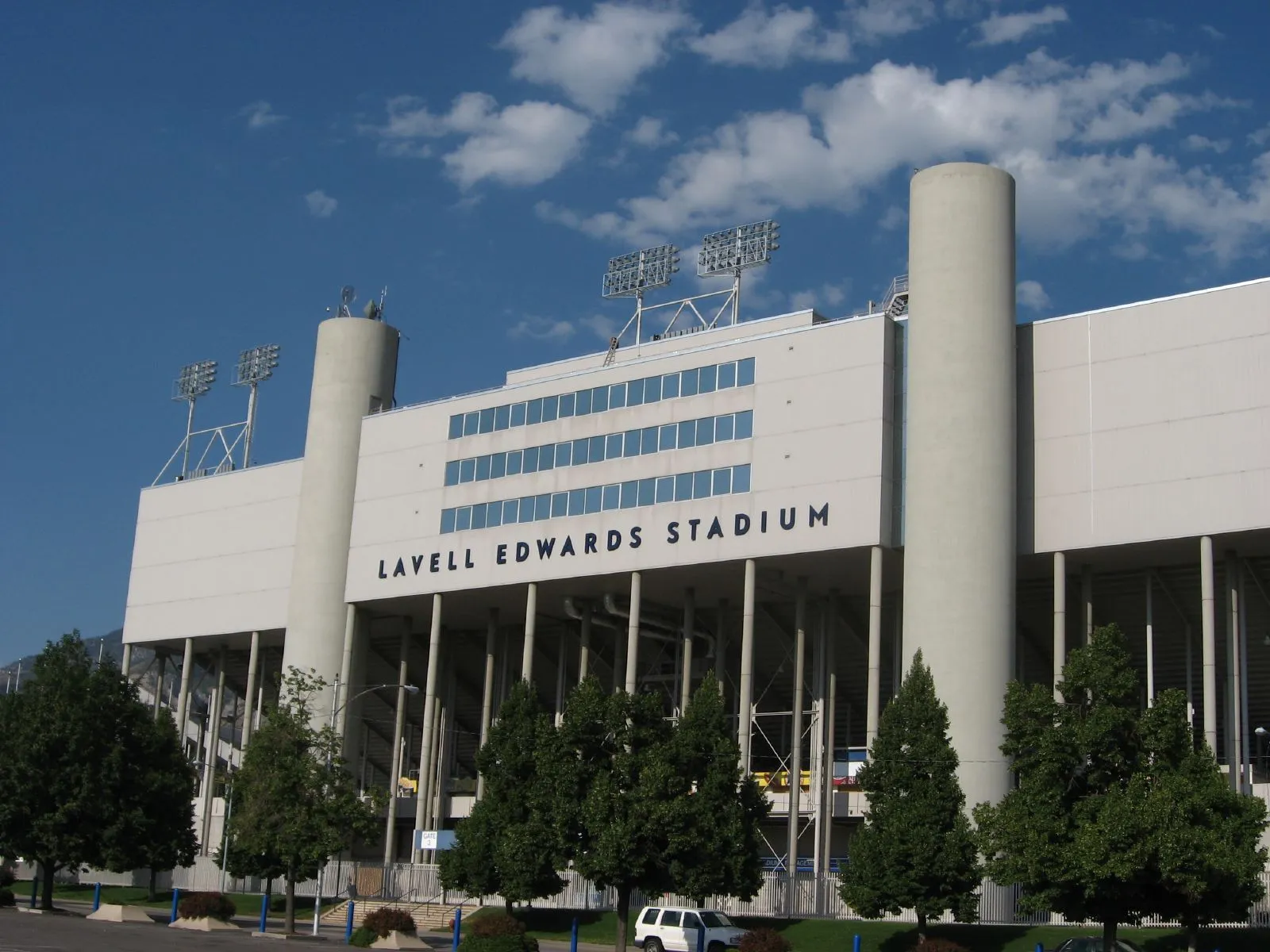 Photo by Ken Lund, CC BY-SA 2.0, via Wikimedia Commons
BYU-Arizona: The Spread Hit -7.5, Then Gave Ground. The Total Fell Three Points.
BYU's number backed off its own season-high even as the money kept piling on the Cougars. The total moved further, and wind is only part of why.
 Photo by ajay_suresh, CC BY 4.0, via Openverse
Ohio State-Texas: The Spread Never Left -1.5. The Total Climbed Two Points.
Bad injury news hit both teams Friday. The spread barely moved. The total did — and that's where the sharp money went.