
How Plus-Size Denim Finally Got the Fit Right
No built-in waist gap by default. Four denim makers spent a decade rebuilding the pattern block around real hips — and real gaps remain.
Photo by Darina Belonogova on Pexels
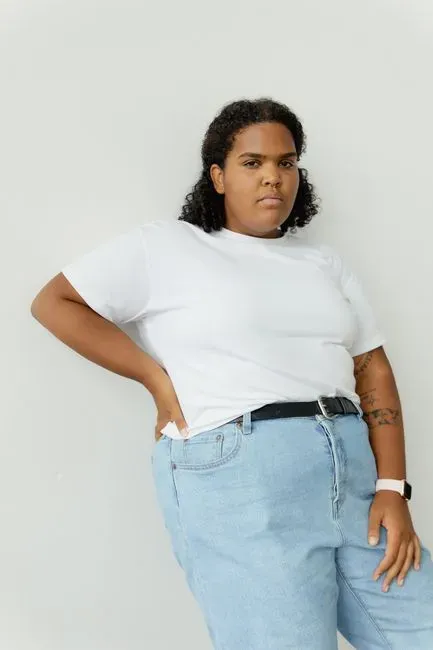
For decades, a pair of jeans in a larger size was often just a straight-size pattern scaled up — wider through the waist and hip in the same fixed proportion, with none of the extra shaping a fuller hip-to-waist ratio actually needs. The result was the waist gap: a jean that fit the hip and pulled away at the small of the back, long blamed on the body wearing it rather than the pattern block that never accounted for it. Over the past decade, four of the denim market's most visible players — Universal Standard, Old Navy, Good American, and Levi's — have each, on their own timeline, rebuilt that pattern block from the body up instead of the straight-size sample down.
Universal Standard Started With the Pattern, Not a Campaign
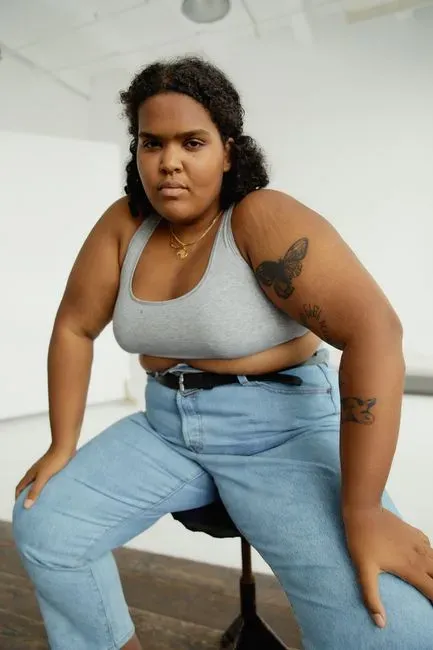
Universal Standard launched in 2015, founded by Alexandra Waldman and Polina Veksler, and now produces apparel across a 00-to-40 range. When the label launched its own denim line, called Denim by US at the time (the collection is now folded into the brand's main denim assortment without that separate name), in 2019, it arrived to a waitlist of 1,700 customers who signed up before a single pair shipped, priced from $90 and cut across the full size range from day one rather than added later as an afterthought. Waldman, interviewed by Forbes around the launch, was blunt about why a plus-size pattern can't just be a scaled-up straight-size one: "People always think fashion is fashion, that you can compare straight-size fashion to plus-size fashion," she said. "But you cannot. It's like comparing oranges and giraffes." Waldman died of cancer in September 2023, at 57; Veksler continues to run the company as chief executive.
Old Navy Tied Fit to the Price Tag, Then Hit a Wall
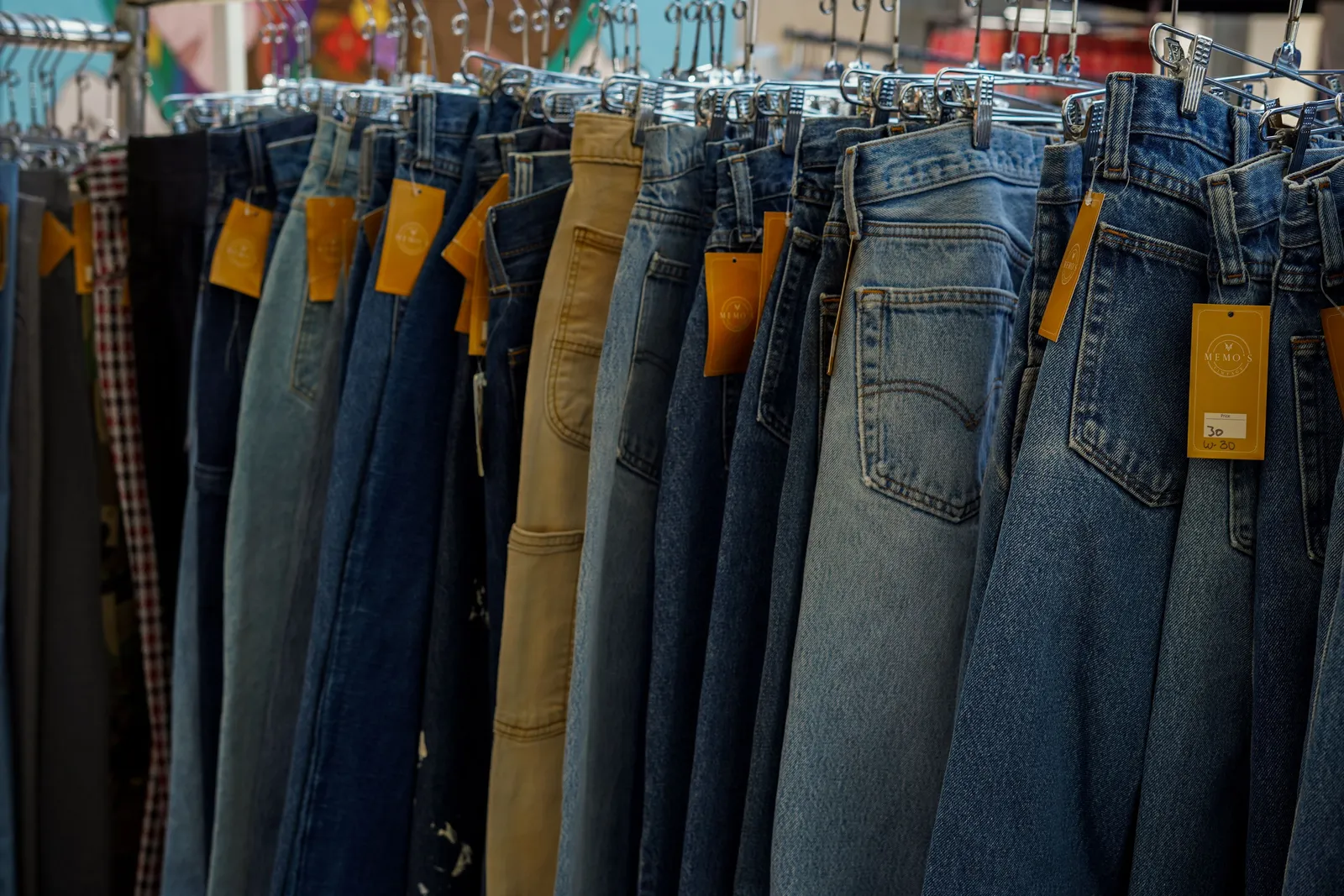
Old Navy took a different route in 2021 with Bodequality, folding its separate plus line into the main collection at the same price across sizes XS to 4X — ending the practice of charging more for a larger size. The rollout didn't hold everywhere: in May 2022, parent company Gap Inc. pulled Bodequality's expanded sizing from 75 U.S. stores and 15 Canadian stores, with then-CEO Sonia Syngal saying the initiative had been "launched too broadly and too quickly" for the demand it actually saw, leaving the company with excess inventory in sizes that weren't moving. Bodequality has continued online and in most stores since — a July 2026 company reference still describes sizes 00 to 30 as integrated across store floors rather than segregated into a separate plus section — though Old Navy hasn't published an updated store-by-store figure since the 2022 pullback. The brand also runs a "Choose Your Model" tool online that shows the same jean on bodies across a range of sizes before checkout.
Good American and Levi's Went Straight to the Data
Good American, founded by Emma Grede and Khloé Kardashian, builds its denim range — sizes 00 to 32 — around fit rather than one core silhouette stretched wide. In September 2018, the brand rolled out an entirely new size, 15, after its own measurements showed a bigger jump in body proportions between sizes 14 and 16 than between any other two sizes in its range — a gap the company said was producing 50 percent more returns on those two sizes than on any other. Levi's took a more data-driven route to a similar problem with Curve ID, a fit system built from a study of more than 60,000 women's body scans and organized around the measured difference between hip and seat rather than a single size-up, size-down scale; the brand added its two largest Curve ID sizes, 36 and 38, in fall 2011, and the current 501 Curve style still adds room through the seat and thigh with a tailored hip-to-waist ratio aimed at closing the same waistband gap Waldman described. None of the four is finished — plus-size denim still tops out well short of the fashion industry's broader range, and every one of these fixes arrived after customers absorbed years of bad fit first. But the direction across all four is the same one this outlet traced in outdoor gear in "Room on the Trail": a pattern block built for the hip that's actually there, not stretched from one that wasn't.
“As a brand who believes that women are not defined by size, we made room for size 15 to solve for an issue that shouldn't even have been there in the first place.”
Shop the Mana Collection
Fat Girl Fan Club Tee
Lifetime member. The fan club for the ones who already knew — a cream-and-gold ticket-stub of a shirt on a garment-dyed black or navy body.…
Curves Are The Culture Tee
The line, said flat: curves are the culture — not a trend that needs your permission, not a moment somebody's brand discovered last spring.…
BBW Graffiti Splash graphic T-Shirt
Graffiti is what it looks like when somebody decides they will be seen without asking permission — same energy here. Heavyweight 6.1 oz rin…
Related Stories
 Photo by Mariia Stepanova on Pexels
Why a Size 22 Cut From a Size 8 Pattern Never Quite Fits
The shoulder is too wide, the armhole gapes, the bust pulls. That isn't the factory or the fabric. It's a decision made at the pattern stage.
 Photo by Michael Burrows on Pexels
Vogue Business Put New York Fashion Week's Plus-Size Number at 0.9 Percent. The Named Exceptions Stop at an 18, a 12, or a Custom Order.
Vogue Business counted 0.9 percent plus-size runway looks this season. Refinery29 named ten designers doing better — their own size charts tell a fuller story.
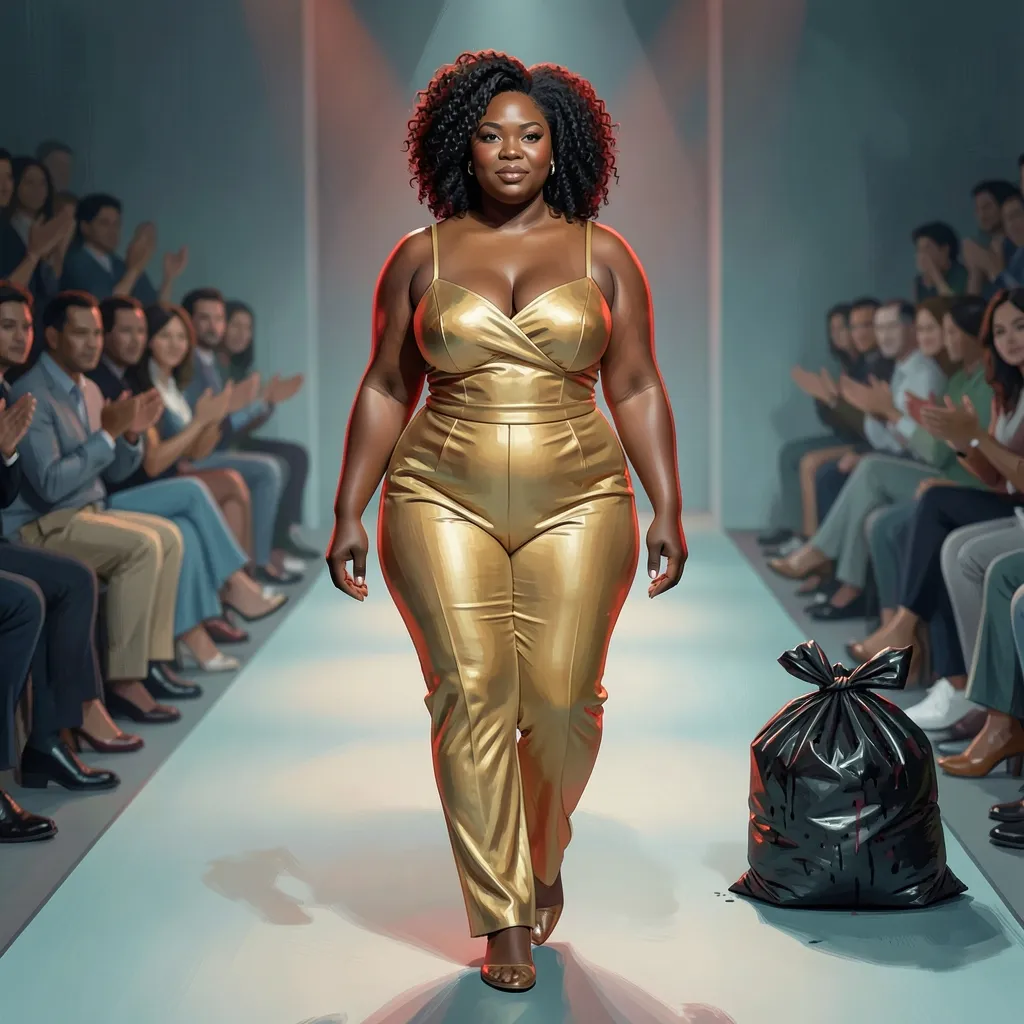
Liris Crosse Was Taped Into a Garbage Bag on Project Runway. She Just Walked for Christian Siriano at NYFW.
Liris Crosse says a designer draped her in a paint-stained trash bag rather than dress her. Christian Siriano said yes — and this week, she walked his runway.