
Vogue Business Put New York Fashion Week's Plus-Size Number at 0.9 Percent. The Named Exceptions Stop at an 18, a 12, or a Custom Order.
Vogue Business counted 0.9 percent plus-size runway looks this season. Refinery29 named ten designers doing better — their own size charts tell a fuller story.
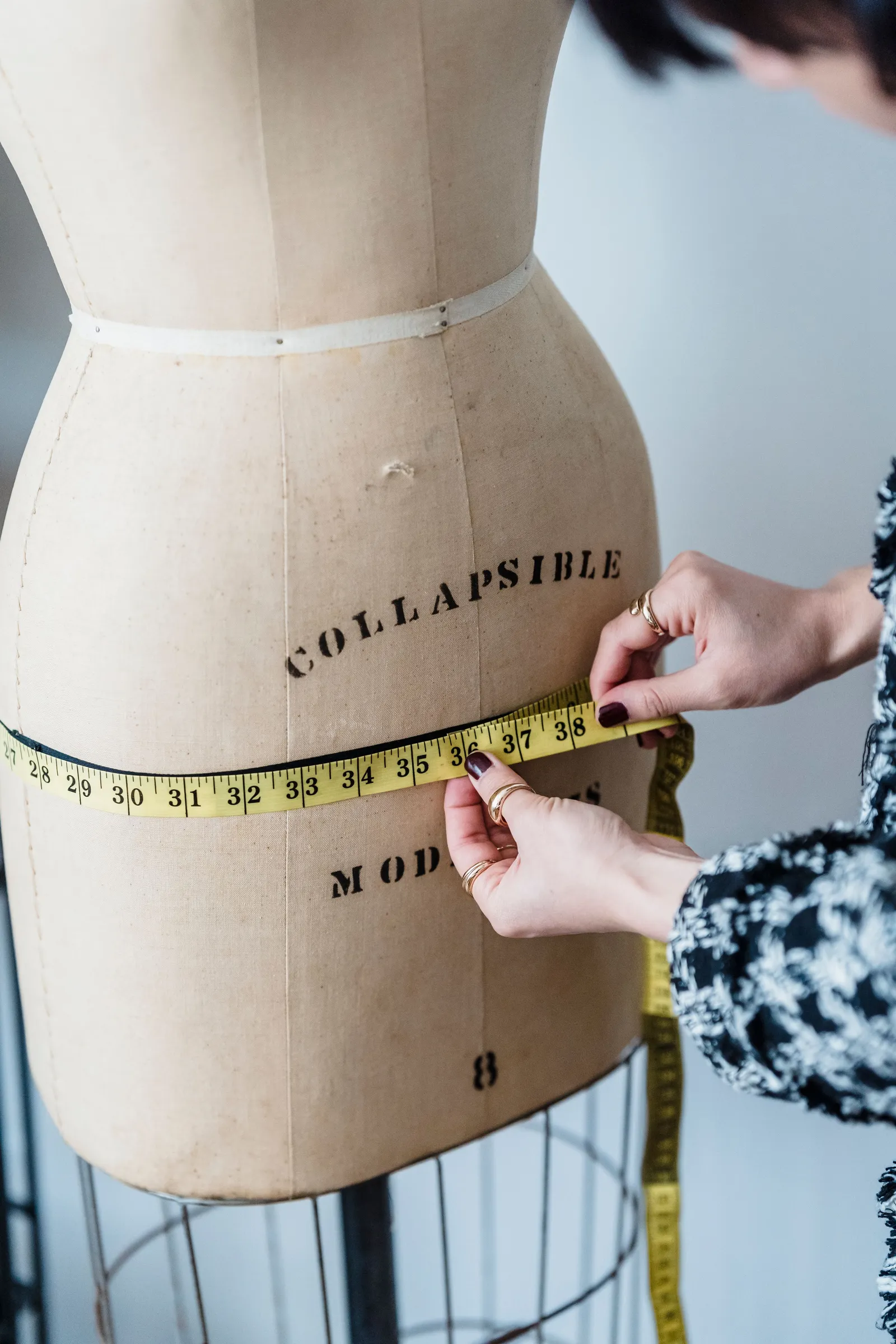
Photo by Michael Burrows on PexelsNew York Fashion Week's next season opens in early-to-mid September, roughly two weeks from now, and the number the industry will be measured against was set last spring. Vogue Business — which runs its own seasonally recurring Size Inclusivity Report, a count this magazine did not perform itself — found that of 9,038 runway looks shown across New York, London, Milan, and Paris for spring/summer 2026, 97.1 percent were on models sized US 0 to 4, 2.0 percent were mid-size (US 6 to 12), and 0.9 percent were plus-size (US 14 and up). The national average dress size is 16/18. That 0.9 percent is a four-city aggregate — nothing found in reporting this piece isolates New York's own looks from the total, and that gap is worth stating plainly rather than implying a precision the number doesn't have.
It is not a floor, either. Vogue Business's tracking — which assesses the shows and presentations posted to Vogue Runway and gives each brand 48 hours to confirm its own numbers before publishing — turned to menswear for the fall/winter 2026 season shown in Milan and Paris and found plus-size representation at 0.2 percent of 2,523 looks, down from 0.3 percent the season before; mid-size fell from 1.2 percent to 0.8 percent, while straight sizes rose to 99 percent. Milan's shows that season had no plus-size or mid-size models at all, across the 55 shows and presentations analyzed in the two cities together. Menswear and womenswear are different garment categories, tracked separately and shown months apart, so those two figures aren't one continuous line — but they move the same direction, and this magazine reported the same pattern in its own coverage, published this August, of women's autumn/winter 2025 shows, when the same tracking put plus-size representation at 0.3 percent of 8,703 looks, down from 0.8 percent the season before that.
Refinery29 Named Ten Designers Who Did Something Different
Refinery29's Sarah Chiwaya covered the most recent women's New York Fashion Week — fall/winter 2026, shown in February — in a piece published February 20, 2026, and did what an aggregate percentage can't: she named names. Against what she described as most of the NYFW calendar showing predominantly straight-size models, she credited ten designers with including plus-size models that season: Christian Siriano, Chuks Collins, Andrew Curwen, Kim Shui, Collina Strada, Jane Wade, A.Potts, Menyelek Rose, RENÉE NYC, and Veejay Floresca. This magazine did not run its own count of that week's shows — the list is Refinery29's reporting, credited here rather than repeated as an original finding.
“Adding plus sizes to my line tripled my business. Why wouldn't you do that?!”
A Cast Look and a Size Run Are Different Claims
Casting a plus-size model answers what walked. It doesn't answer what a customer her size can buy afterward, and the houses on Refinery29's list answer that second question in different ways. Christian Siriano's own FAQ states plainly that "most production runs of the Christian Siriano Collection" are ordered "up to size 18, as that is what our retailers order" — sizes beyond that exist only as a custom order made for one client at a time, through the brand's contact form. Kim Shui's own site advertises a made-to-order range of XXS to 4X for its runway corsetry and sculpted dresses — not a stocked size run, but a promise that any size gets cut once someone orders it. Veejay Floresca, a Project Runway winner whose site's own navigation reads Made to Order, Bridal, and Custom, doesn't sell ready sizes in the first place — every piece, in every size, is built for the one client who commissioned it. Collina Strada's own size chart, current as of this reporting, runs XS to XXL — a 24- to 25-inch waist up to 34 to 36 inches — with no plus range listed anywhere on the brand's direct site.
Chuks Collins, also credited by Refinery29, told the outlet that "about 40 to 50 percent of my clients are plus size people" — but his house runs on the same couture, made-to-order model as Kim Shui and Veejay Floresca, so a larger body on his runway isn't evidence of a rack anywhere either. "This designer includes plus-size models" and "this designer sells plus-size clothing" are two separate claims, and nothing in the industry's own reporting on the first answers the second. There's no institutional floor forcing anyone's hand, either: the Council of Fashion Designers of America's own published diversity guidance, dated to 2016, states that "diversity doesn't just pertain to ethnicity, but also to gender and body type" — but every actionable request in that same guidance (asking model agencies to include and send "models of color," every season, without exception) is aimed specifically at racial diversity in casting. Nothing in the CFDA's own published materials directs a comparable, specific ask for plus-size casting, and none of it sets a minimum percentage or size-representation requirement of any kind. New York Fashion Week's next season, spring/summer 2027, opens in early-to-mid September — worth watching, when it does, whether the same names show up again, and whether any of their own size charts have moved.
Related Stories
 Photo by Darina Belonogova on Pexels
How Plus-Size Denim Finally Got the Fit Right
No built-in waist gap by default. Four denim makers spent a decade rebuilding the pattern block around real hips — and real gaps remain.
 Photo by Mariia Stepanova on Pexels
Why a Size 22 Cut From a Size 8 Pattern Never Quite Fits
The shoulder is too wide, the armhole gapes, the bust pulls. That isn't the factory or the fabric. It's a decision made at the pattern stage.
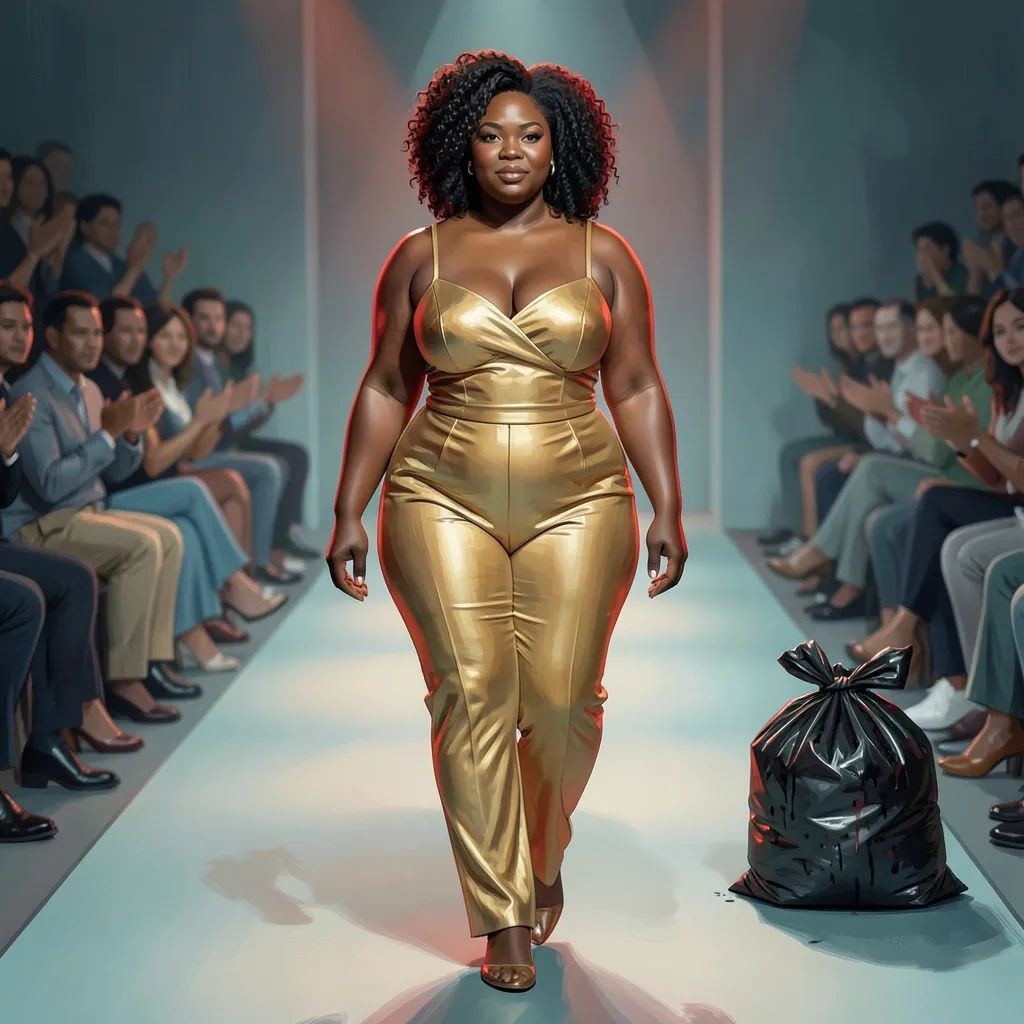
Liris Crosse Was Taped Into a Garbage Bag on Project Runway. She Just Walked for Christian Siriano at NYFW.
Liris Crosse says a designer draped her in a paint-stained trash bag rather than dress her. Christian Siriano said yes — and this week, she walked his runway.