
Cigna Stopped Covering Its Own Employees' Weight-Loss Drugs in July. Starbucks Follows in October.
PepsiCo has made the same cut. The employer survey behind the trend traces to one source, and its own numbers don't quite match what's being repeated.
Photo by Mikhail Nilov on Pexels
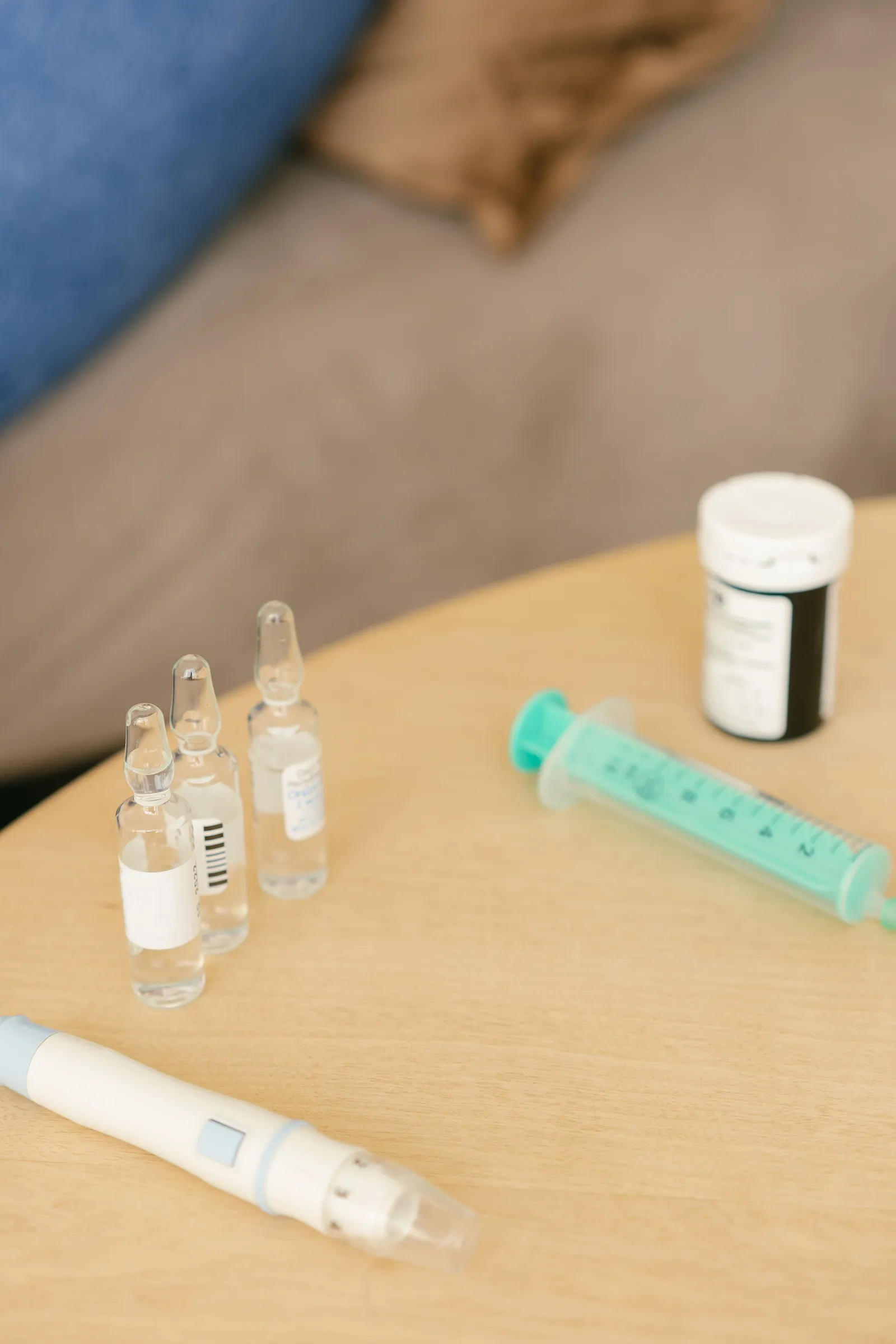
Cigna stopped covering GLP-1 weight-loss drugs for its own employees on July 1, 2026 — not for the health plans it administers for clients, not for GLP-1s prescribed for type 2 diabetes, just weight-loss coverage under its own Group Medical Plan, cut by an internal email sent to staff a month earlier. Starbucks follows in October, for any benefits-eligible worker logging 20 hours a week or more. PepsiCo already has, telling employees in a letter that "prescription weight loss medications have become one of the fastest-growing costs in the PepsiCo Plans." None of these decisions was made by a doctor, a lab result, or the person taking the drug. Each was made by an employer, on a timeline nobody on semaglutide or tirzepatide chose for herself.


Cigna confirmed the cut to ABC News in a story that ran August 29, 2026: coverage for weight-loss GLP-1s under its own employee plan ended July 1, though staff already filling a prescription had until June 30 to get one last refill under the old benefit, and anything paid out of pocket after that doesn't count toward a deductible. Diabetes coverage was untouched. Starbucks' cut keeps the same shape — GLP-1s stay covered for diabetes and other approved conditions, and disappear only for weight loss, only in October, only for its own workforce. PepsiCo's letter to employees, shared with ABC News, framed the decision the way most of these employers have: as sustainability. "This change enables us to maintain a healthcare program that is sustainable and affordable for all PepsiCo employees," it read. Asked about the pushback from its own staff, Cigna gave a nearly identical answer: "As an employer, we regularly make updates to our health coverage to maintain a plan that meets the needs of our unique employee base, while also managing affordability for all those who rely on it." It isn't the company's only fight over weight-loss drug coverage this year: this outlet reported September 1, 2026 that a federal appeals court upheld a separate Cigna health plan's exclusion of weight-loss drugs entirely, ruling that obesity alone doesn't establish a disability under the ADA's insurance rules.
The 72-to-60 Number, Traced

A figure now circulating everywhere in this story holds that employer coverage of GLP-1s for weight loss fell from 72 percent in 2025 to 60 percent in 2026, with roughly 14 percent of employers having already dropped the benefit or planning to by 2027. It appears, worded almost identically, across an HR trade outlet, an investing-news aggregator, and several wire-style rewrites — all crediting Business Group on Health, a nonprofit coalition of large employers that runs an annual GLP-1 survey. That is one source, not several independent confirmations, no matter how many outlets repeat it. It is also not quite what the most direct account of that survey says. SHRM's own reporting on Business Group on Health's spring 2026 survey — 105 employer members, published May 25, 2026 — gives different numbers: 67 percent of surveyed employers currently cover GLP-1s for weight management; of those, 72 percent said they were likely to continue that coverage into 2027, and 10 percent said they likely would not. A separate breakdown circulating alongside these figures — 60 percent of employers covering GLP-1s for diabetes only, 36 percent covering both diabetes and weight loss — is sometimes folded into the same 72-to-60 framing, but it does not come from Business Group on Health at all: it traces to a different organization's own poll, the International Foundation of Employee Benefit Plans' 2026 Pulse Survey. Seventy-two, in SHRM's account, is a real Business Group on Health figure — the share of current weight-loss-GLP-1 coverers likely to keep that coverage into 2027. Sixty, in the diabetes-only sense several outlets cite it, belongs to a wholly separate survey by a wholly separate organization, not to Business Group on Health's. In the primary reporting we could verify, no single survey's own numbers line up as a straightforward before-and-after coverage rate for weight-loss GLP-1s. Three named outlets that read the survey — SHRM, Healthcare Dive and MedCity News — report the same figures, and none of them reports a 72-to-60 year-over-year decline; the outlets repeating that figure cite no Business Group on Health document that does, and the coalition's own release could not be read directly. Nor does the 10 percent that SHRM reports as likely to drop coverage in 2027 match the 14 percent cited elsewhere for the same claim.
What Happens When It Stops, and Who Is Pushing Back
This outlet's own reporting on Epic Research's real-world discontinuation data is the closest available answer to what happens next, and it comes with real limits. Epic followed 188,722 patients for up to two years after a calculated stop date and found complete regain — putting back all the weight lost on the drug — at 23 percent for semaglutide patients, 21 percent for tirzepatide, and 27 percent for liraglutide, while a slim majority in each group held their loss or improved on it. But Epic's "stop date" is arithmetic run on a pharmacy refill record, not something any patient reported, and the study does not know why anyone stopped — a supervised taper, a side effect, a personal choice, or, as would be the case for someone caught in one of these employer cuts, a benefits decision with no clinician involved at all. Nothing in the real-world data distinguishes a managed stop from an abrupt one, so nobody can say with any confidence whether losing coverage overnight behaves differently in a body than the gradual, often partial tapering the refill-based studies actually captured. A separate line of evidence — a peer-reviewed meta-regression of six randomized trials covering 3,236 participants, published in eClinicalMedicine in March 2026 — found that roughly 60 percent of the weight lost on a GLP-1 returns within a year of stopping under trial conditions, leveling off at an estimated 75.3 percent. That is the strongest evidence available on regain after stopping, and it says nothing about insurance or how a stop happens — only that stopping, by whatever means, tends to bring weight back.

Bank of America is the clearest counter-example on record. Its chairman and chief executive, Brian Moynihan, told CNBC in August 2026 that the bank spends roughly $250 million a year on GLP-1 drugs for employees, part of a total wellness budget of about $2 billion, and pairs the benefit with health coaching that tracks employees' progress. Cigna and Starbucks are citing that same rising cost as the reason to cut; Bank of America is citing it as a reason to keep paying. Neither decision rests on new clinical evidence about what the drugs do — both are bets about their price. The pushback against these cuts is coming from more than one direction. The Obesity Action Coalition, a patient-advocacy nonprofit, publicly called on Starbucks to reverse its decision in a statement issued August 21, 2026. "An employee should not lose access to a treatment simply because the diagnosis is obesity," its president and chief executive, Joe Nadglowski, said in the release, which notes that Starbucks plans would keep covering the same drugs when prescribed for other conditions. On the Cigna side, a Connecticut television station, WFSB, reported on September 2, 2026 that more than 450 Cigna employees had signed a petition asking the company to restore the benefit — a real, named-outlet-confirmed number, not only the single aggregator report that had circulated it earlier in the summer. Cigna's response to WFSB echoed the same language it gave everywhere else in this story: a plan has to stay sustainable and affordable for everyone who relies on it, not a claim about whether the drug worked for the employees now asking for it back.
“What we see is a great impact on the employees. We've always been about mental wellness, physical wellness.”
Related Stories
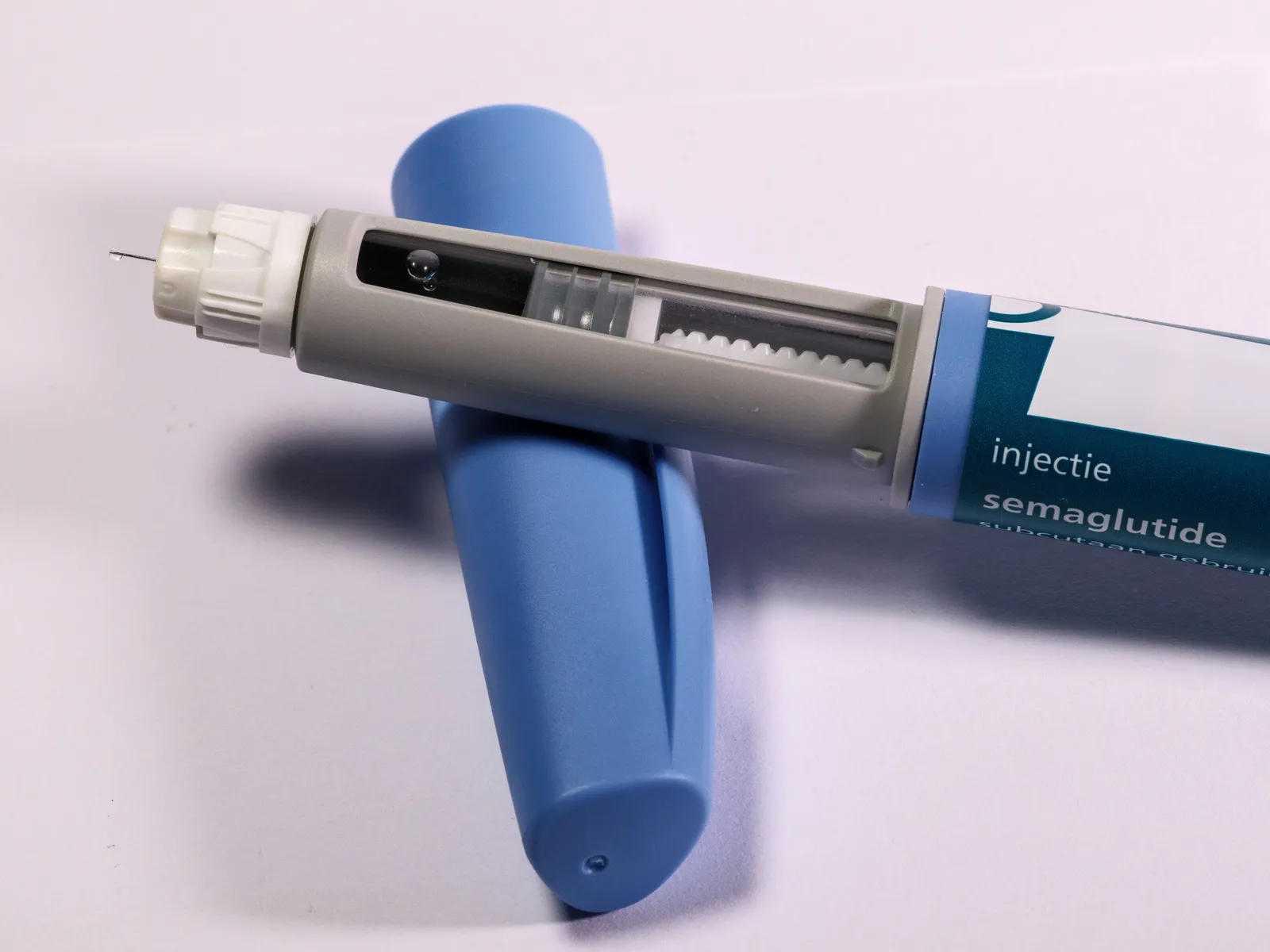 Photo by Haberdoedas Photography on Pexels
The Muscle Warning About GLP-1s Leaves Out What the Placebo Group Did
In SURMOUNT-1's body-composition substudy, about a quarter of the weight lost was lean mass — in the tirzepatide group and the placebo group alike.
 Photo by Artem Podrez on Pexels
Two Years After Stopping GLP-1s, Epic Says Most Patients Held. It Calculated "Stopping" From Refills.
Epic Research counted 188,722 patients as having stopped a GLP-1. Its two-year tirzepatide figure rests on 145 of them.
 Photo by Pavel Danilyuk on Pexels
GLP-1 Use Hits 11 Percent of U.S. Adults, Gallup Finds. Cost Drove Most of the Switch to Compounded Versions.
Gallup's new poll puts current GLP-1 use at 11 percent of U.S. adults, up from 3 percent in 2024, and finds cost drove most switches to compounded versions.