

New Jersey Senate Passes Bill to Ban Height and Weight Discrimination
S1631 would add height and weight to the state's Law Against Discrimination, making New Jersey the second state to bar the practice outright.
Photo by Famartin, CC BY-SA 4.0, via Wikimedia CommonsOn February 24, 2026, the New Jersey Senate passed S1631 by a vote of 24 to 14, with two senators not voting. The bill, sponsored by Senator Andrew Zwicker and Senator Angela V. McKnight, would add height and weight to the list of protected characteristics under the state's Law Against Discrimination. It is now pending before the Assembly Judiciary Committee. If it becomes law, New Jersey would be the second state, after Michigan, to bar height and weight discrimination on a statewide basis.
What the Bill Actually Changes

S1631 amends several sections of the LAD (P.L.1945, c.169) by inserting "or height or weight" into the statute's existing list of protected classes, which already covers race, creed, color, national origin, ancestry, age, sex, and other categories. The effect, plainly stated: once enacted, an employer could not refuse to hire, fire, or set different terms of employment because of an applicant's or employee's height or weight; a landlord could not refuse to rent on the same basis; and a business open to the public could not refuse service on the same basis. The bill states it would take effect immediately upon passage.
“practices of discrimination against any of its inhabitants, because of race, creed, color, national origin, ancestry, age, sex, gender identity or expression...or height or weight”
The Carve-Outs

The bill is not an absolute bar. In employment, it permits differential treatment based on height or weight "in any circumstance in which the height or weight of an individual is a bona fide occupational qualification" (Section 11.a). In public accommodations, an owner or proprietor may deny service on the basis of height or weight "for bona fide safety reasons" (Section 11.f). Neither phrase has been tested in a New Jersey court yet, because the bill is not law — these are the exceptions as written, not as any judge has interpreted them.
Michigan Got There First, in 1977
Michigan has barred height and weight discrimination since the Elliott-Larsen Civil Rights Act took effect on March 31, 1977. The statute's employment section, now codified at MCL 37.2202(1)(a), still reads, in relevant part, that an employer may not discriminate against an individual with respect to employment "because of religion, race, color, national origin, age, sex, sexual orientation, gender identity or expression, height, weight, or marital status" — height and weight have been on that list since the law's original enactment; sexual orientation and gender identity or expression were added later, by a 2023 amendment. New Jersey's bill would put a second state's employment, housing, and public accommodations law on the same footing.
Related Stories
 Photo by Thomas on Pexels
Southwest's Customer of Size Policy, Explained: What Changed Twice in Four Months
Southwest tightened its extra-seat rule in January, then partly reversed it in May after backlash. Here is what the airline's own policy says today.
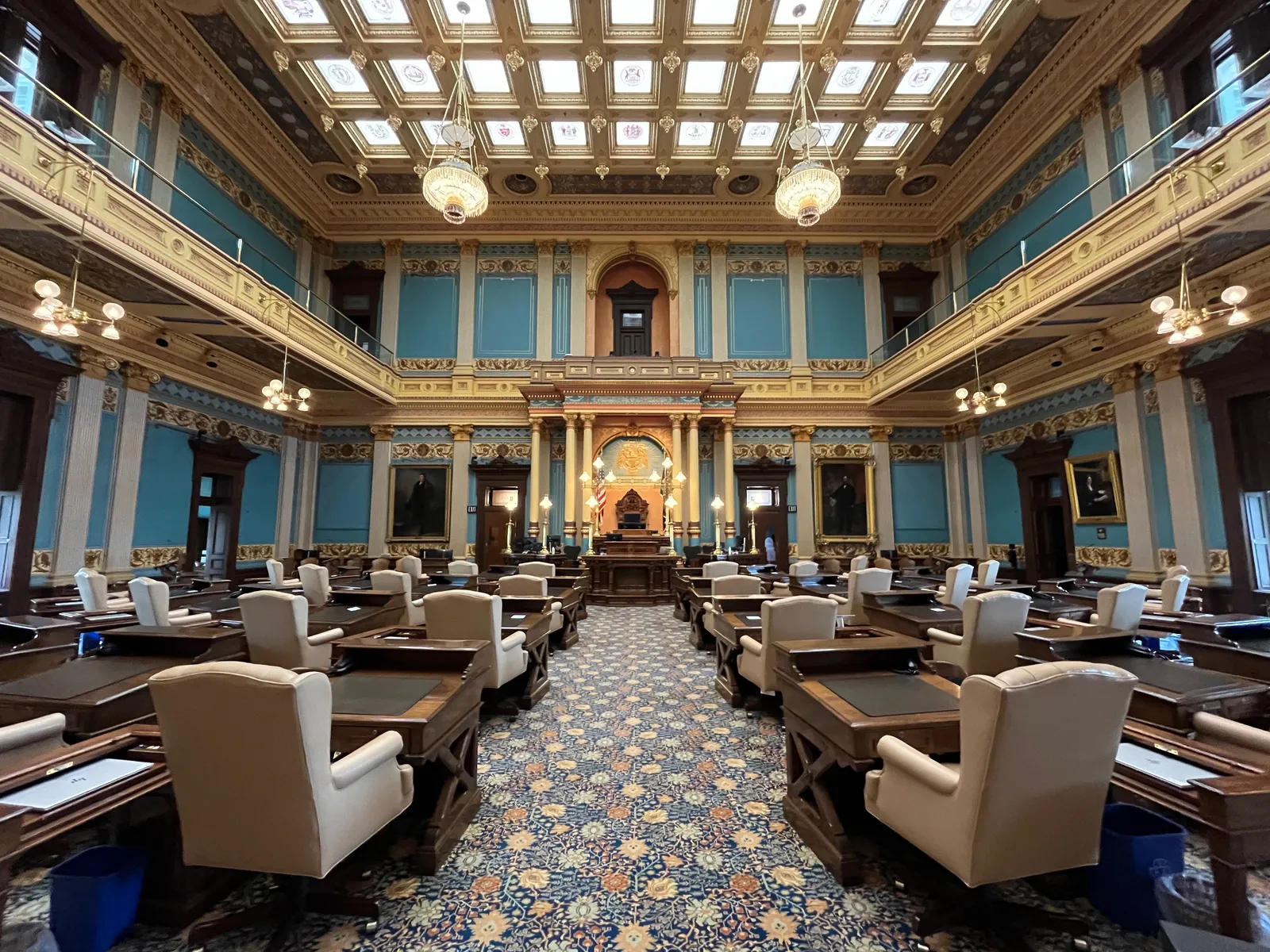 Photo by Antony-22, CC BY-SA 4.0, via Wikimedia Commons
Weight Discrimination Bills Keep Passing One Chamber and Dying in the Other
Michigan enacted the only state ban in 1976. New Jersey's Senate has passed its own twice, and the Assembly has not voted on it either time.
 Photo by 4300streetcar, CC BY 4.0, via Wikimedia Commons
First Circuit: Obesity Alone Isn't a Disability Under the ADA's Insurance Rules
The appeals court upheld a health plan's exclusion of weight-loss drugs, ruling the plaintiff hadn't shown obesity limited a major life activity.