
Weight Discrimination Bills Keep Passing One Chamber and Dying in the Other
Michigan enacted the only state ban in 1976. New Jersey's Senate has passed its own twice, and the Assembly has not voted on it either time.
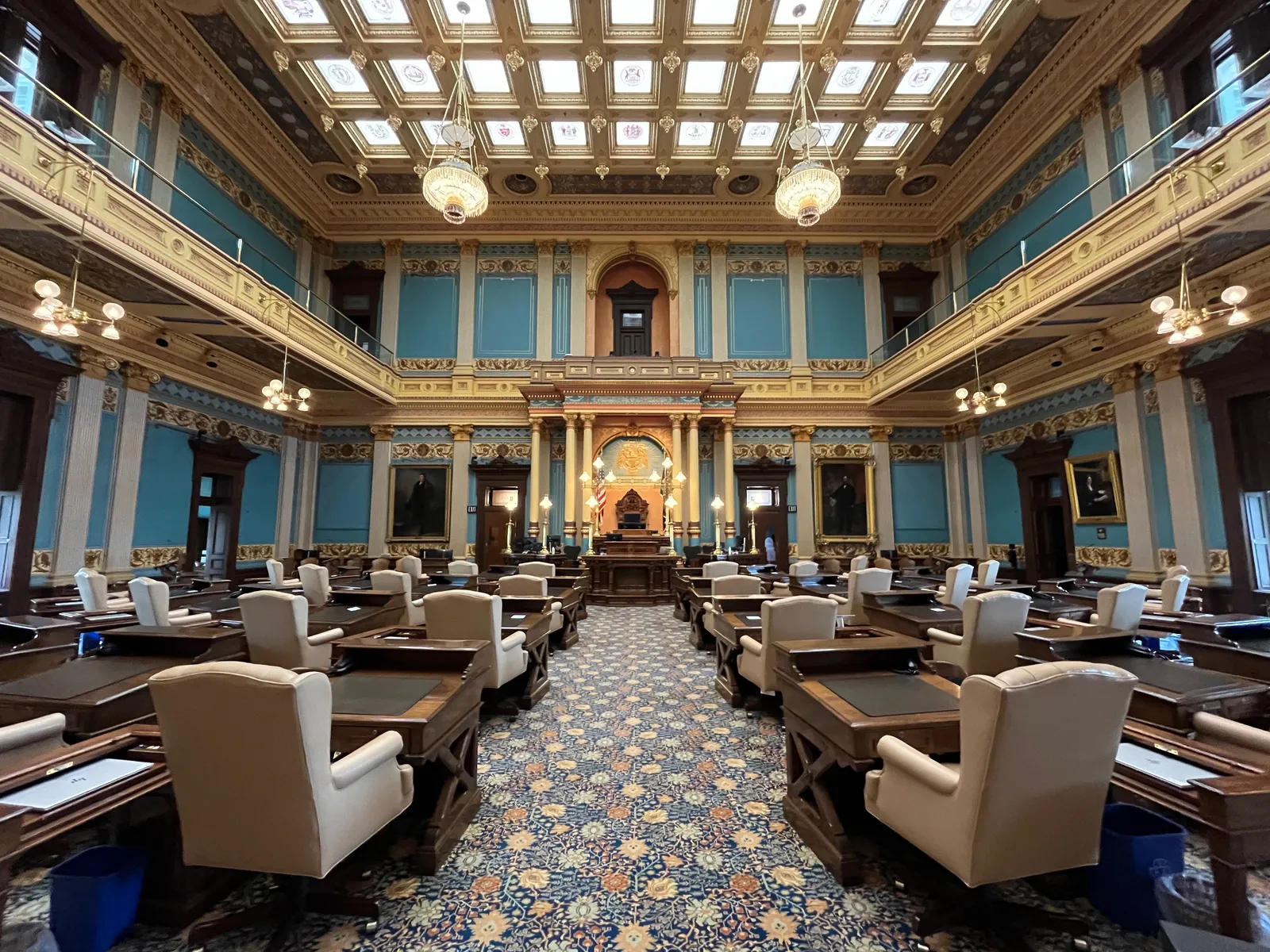
Photo by Antony-22, CC BY-SA 4.0, via Wikimedia CommonsMichigan is still the only state that bars discrimination on the basis of weight. Its statute, the Elliott-Larsen Civil Rights Act, was enacted as Public Act 453 of 1976 and took effect on March 31, 1977. In the half-century since, five other states — New York, New Jersey, Massachusetts, Vermont, and Delaware — have introduced bills to do the same thing, several of them repeatedly, and none has enacted one. What the legislative record shows is not that these bills lose votes. In the two states where they have gone furthest, they passed one chamber and the other chamber never voted.
Passed by One Chamber, Buried by the Other

New York's Senate has passed a height-and-weight discrimination ban twice. It passed S2440 on June 6, 2023, by 54-8; the Senate's own action record for that bill reads "died in assembly" on January 3, 2024. The Senate passed an amended version 49-8 on May 30, 2024, and that one ended the session sitting in the Assembly Committee on Governmental Operations without a vote. A separate, weight-only bill has been introduced in the Assembly in five consecutive two-year sessions since 2017 — A8689, A735, A1851, A801, and now A3193 — and has never left that same committee. Senate companions to both bills, S9783 and S9803, were introduced on April 6, 2026, and referred to the Committee on Investigations and Government Operations the same day. Neither has recorded an action since.
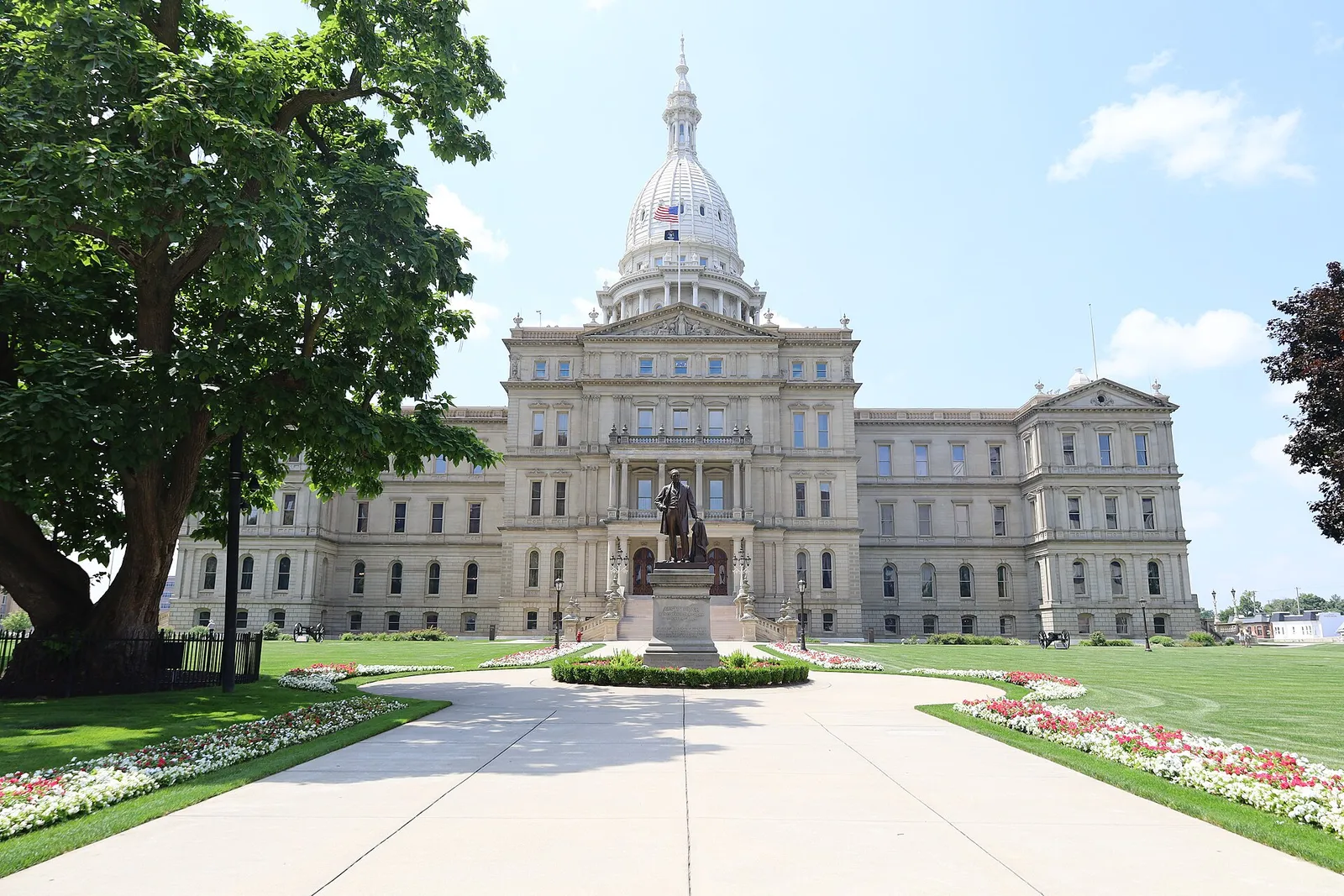
New Jersey's Senate has also passed the bill twice. S1602 passed 22-14 on February 12, 2024, and went to the Assembly Judiciary Committee, which did not act on it before the session ended. The reintroduced version, S1631, was reported out of the Senate Labor Committee on February 5, 2026, passed the Senate on February 24, 2026, and was referred to the Assembly Judiciary Committee the same day. That committee has recorded no action on it since. New Jersey would be the second state to bar the practice. The Senate's vote is not the step that decides whether it gets there.

Massachusetts has a specific procedural route for ending them. A body size discrimination bill, S.1108, was sent to a study order on July 1, 2024 — the mechanism the Legislature uses to close out a bill without voting it down. In the current session the House version, H.1919, met the same end on March 26, 2026, while the Senate version, S.1249, was reported favorably by the Judiciary Committee on February 5, 2026, and sent on to Senate Ways and Means. Vermont's route was different again. A 2023 bill, S.23, would have added both weight and race-associated hair texture to the state's anti-discrimination laws. The hair provisions became law as Act 92, effective July 1, 2024. The weight provision did not. Delaware took the simplest route of all. Its House Administration Committee heard about 90 minutes of testimony on HB115 on May 14, 2025, and then, as NAAFA executive director Tigress Osborn wrote afterward, "opted to take no action on the bill." The General Assembly's own bill page records no committee vote and no action of any kind since the referral of April 8, 2025.
“This is a bridge too far that will create havoc in terms of labor law.”
The Test That Has Been Running Since 1977
Bramnick, who told the chamber the state already had "some very significant rules" against discrimination, was making the standard objection to these bills: that a new protected class destabilizes labor law and invites claims. It is also the kind of objection a long enough record can answer. Michigan's employment provision, MCL 37.2202(1)(a), bars an employer from discriminating "because of religion, race, color, national origin, age, sex, sexual orientation, gender identity or expression, height, weight, or marital status." Height and weight have been in that statute since 1976; sexual orientation and gender identity or expression were added by a later amendment. Whether nearly 50 years of it produced a wave of litigation is a question the Michigan Department of Civil Rights' complaint records could settle, and they are not published in a form that settles it. The department's site did not return its complaint statistics to repeated automated retrieval, and the one Michigan figure in general circulation covers a single year and exists in two incompatible versions: a Harvard T.H. Chan School of Public Health fact sheet reports 24 weight discrimination complaints out of 1,627 total in fiscal 2018, about 1.5 percent, while several law firm summaries citing the Washington Post report 39 out of roughly 2,100 for the same year. No published series covers the statute's full run, and no public source reports what any of those complaints resulted in. The half-century of enforcement that both sides of this argument invoke has not, as far as the public record goes, been counted.
Related Stories
 Photo by Thomas on Pexels
Southwest's Customer of Size Policy, Explained: What Changed Twice in Four Months
Southwest tightened its extra-seat rule in January, then partly reversed it in May after backlash. Here is what the airline's own policy says today.
 Photo by Famartin, CC BY-SA 4.0, via Wikimedia Commons
New Jersey Senate Passes Bill to Ban Height and Weight Discrimination
S1631 would add height and weight to the state's Law Against Discrimination, making New Jersey the second state to bar the practice outright.
 Photo by 4300streetcar, CC BY 4.0, via Wikimedia Commons
First Circuit: Obesity Alone Isn't a Disability Under the ADA's Insurance Rules
The appeals court upheld a health plan's exclusion of weight-loss drugs, ruling the plaintiff hadn't shown obesity limited a major life activity.