Why I Hate the Body Positivity Community
A manifesto on race, culture, standards, and the strange decision to reinvent something Black women had already built.

Before we start: who's talking
I'm a Black man from Texas. I have a degree from Texas State University, and it's not in history, sociology, or anything that qualifies me to lecture anybody about anything. I have never lived one day as a plus-size Black woman. What I have done is date them, marry one, and spend my life around them — at the table, in the car, on the couch, in the shop — close enough to hear what they say about themselves when nobody with a hashtag is listening.
So understand what this is. This is not testimony. This is a witness statement. When I say "our culture," I mean Black culture, which I'm part of. When I talk about what Black women built, I'm describing something I watched and benefited from, not something I did. I'm going to try to keep that line clean the whole way through, because the entire argument of this piece is about what happens when somebody mistakes their own vantage point for the whole view.
Here's how it started.
The couch
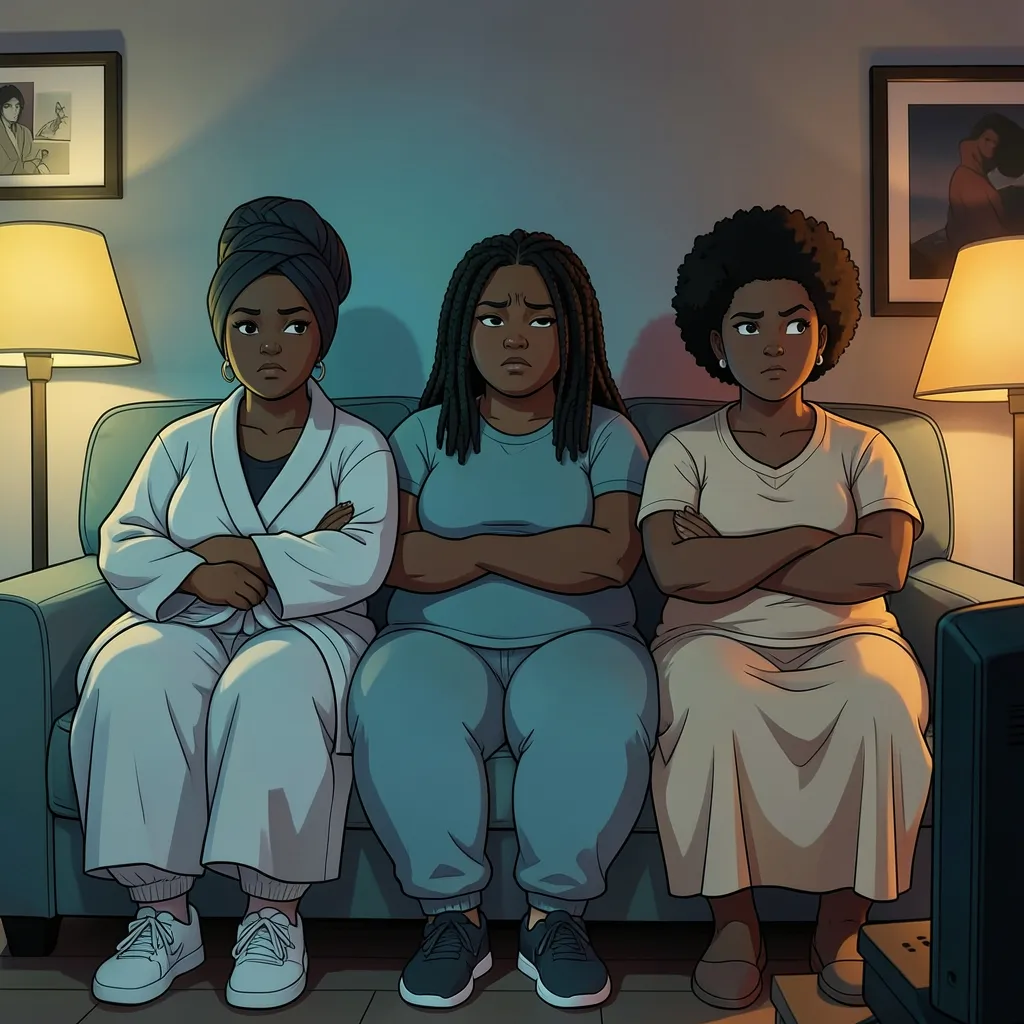
In June, my wife and I sat down with her sister to watch Big Girls Wanted: Escaping Pearadise — the three-part docuseries about the Las Vegas mansion that marketed itself as a body-positive sisterhood for plus-size women, complete with reinforced furniture and a quarter-million TikTok followers, and that the women who left it now describe as something much darker: allegations of coercive control, weight-gain pressure, a founder who they say treated the place like a fetish, and a young woman who didn't make it out alive. The founder denies the allegations. The series lets everybody talk.
My wife is a plus-size Black woman. Her sister used to be. Between the two of them there is not one hour of that documentary's subject matter they haven't lived some version of — the clothes, the doctors, the men, the internet, the "sisterhood."
And they didn't relate to one second of it.
Not the women. Not the founder. Not the influencers, the roommates, the fans, the exes. Nobody on that screen felt like anybody they knew. What they saw, and what I saw sitting between them, was a house full of people who had built an entire world around fatness as an identity — a reason, an excuse, a brand, a cause — and in that whole world could not find one adult willing to say "that was my decision." Everybody was a victim of something. Nobody was accountable for anything. And the language they all used to describe it — safe space, body positivity, community, sisterhood, liberation — was the exact language of the movement.
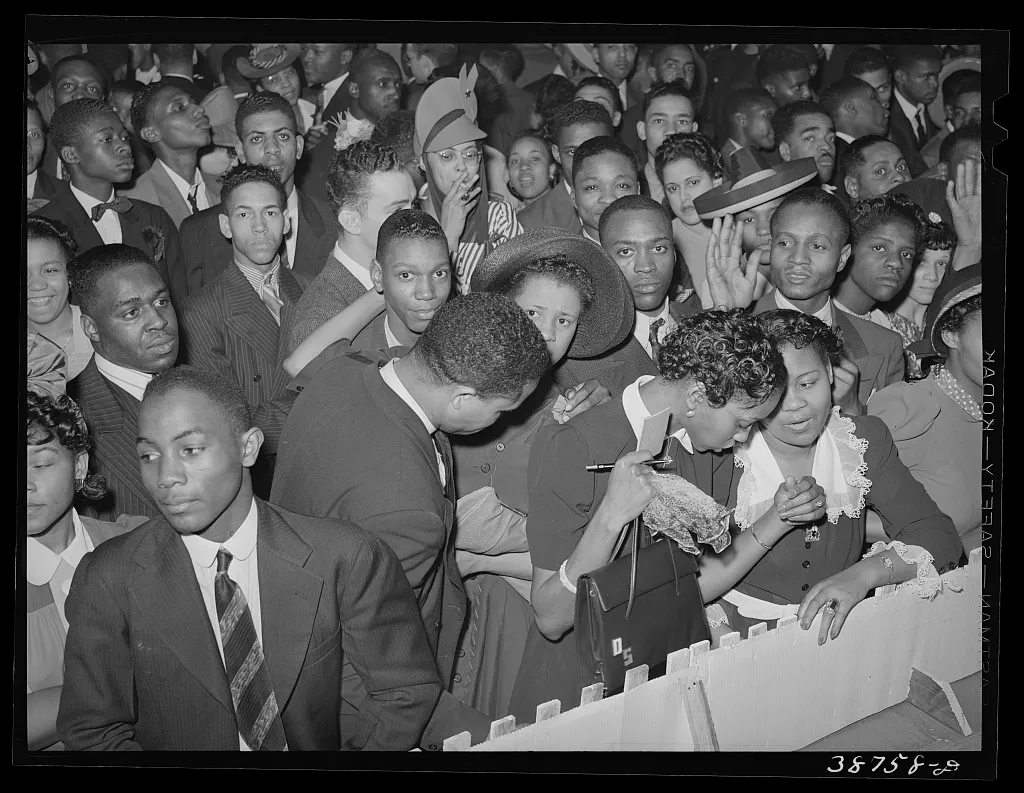
We turned it off and sat there, and the conclusion we reached together was simple and probably going to get me in trouble: whatever that was, it wasn't ours. That was something in White culture. That was not Black plus-size culture, not the one those two women grew up in, not the one that raised the women I've loved. Our culture has its problems — I'm going to spend a lot of this piece on them — but it never needed a mansion in Vegas to tell a big woman she was fine, and it never confused being fine with being unaccountable.
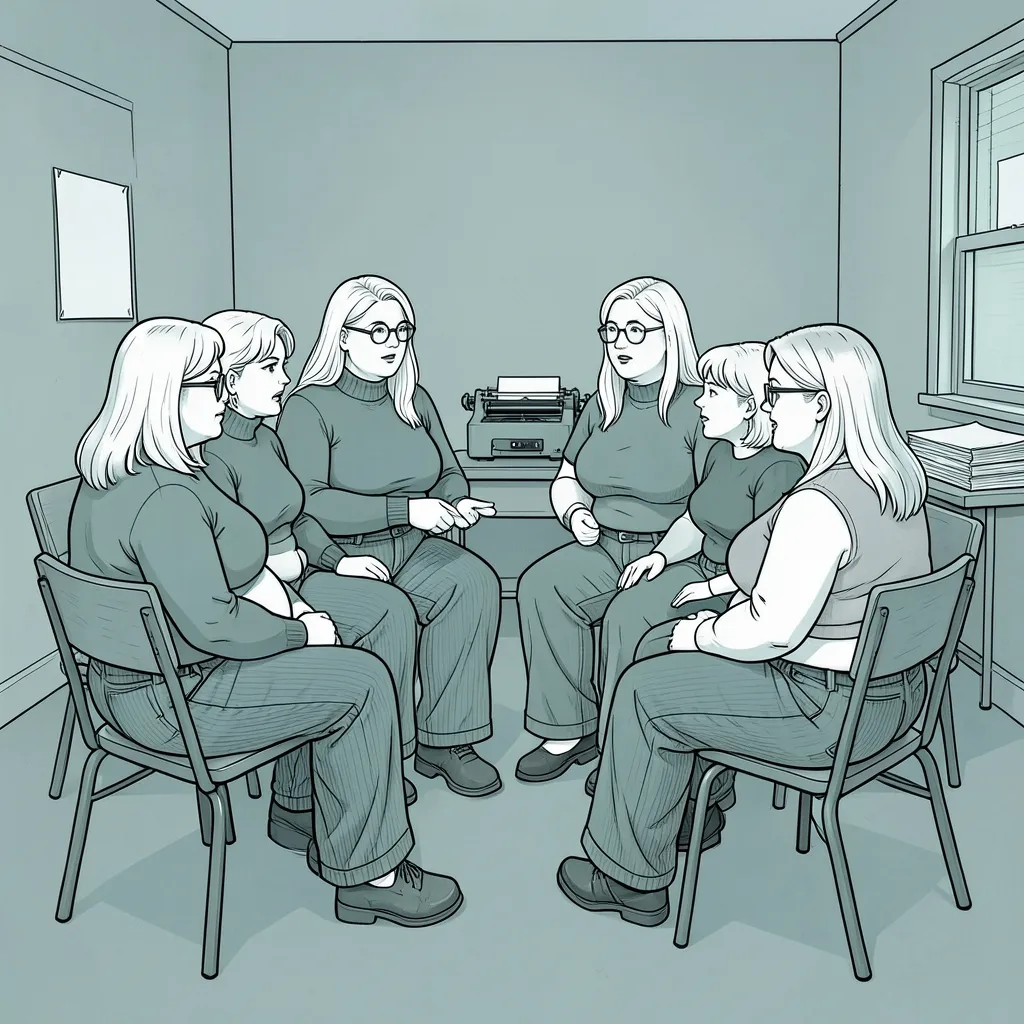
That's where the question came from. Here it is.
The question
“Why did you decide you needed to fix something Black women had already fixed?”
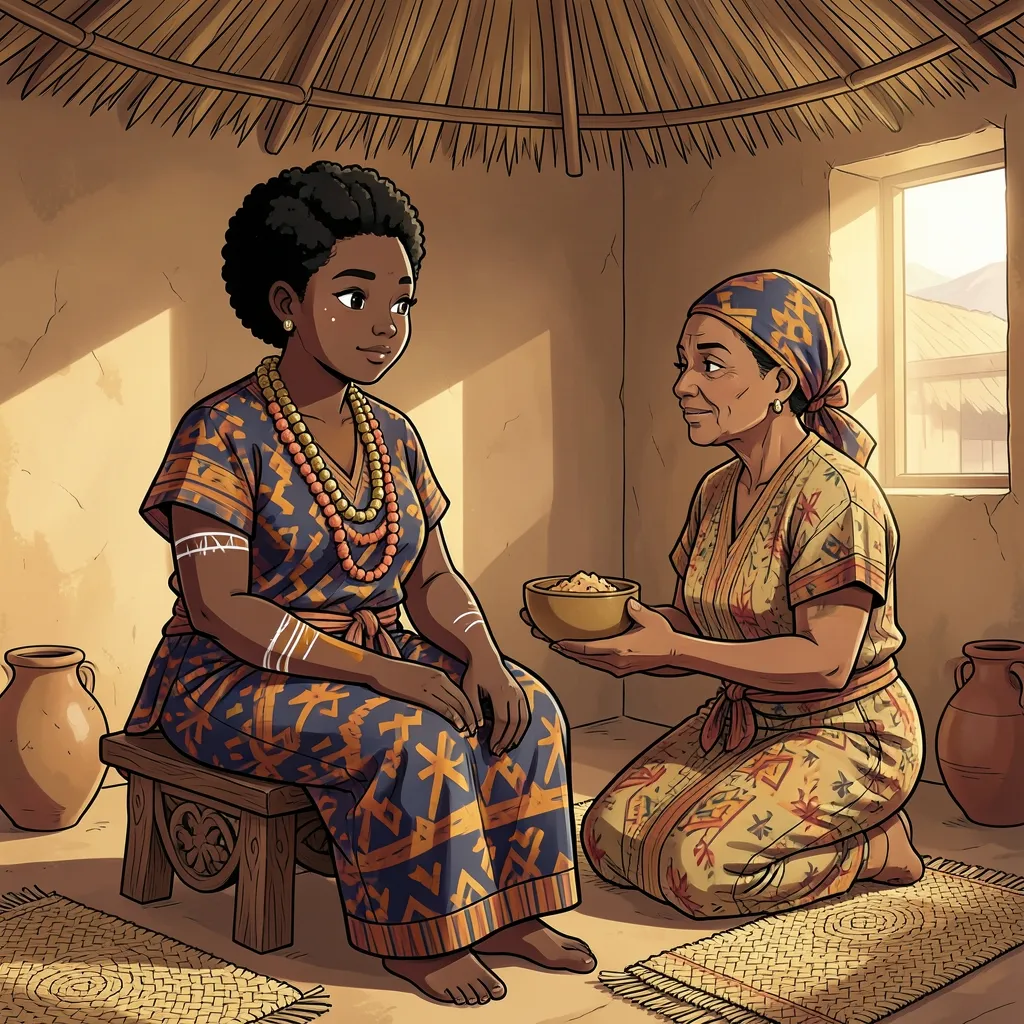
I don't mean that rhetorically. I mean it as a question I'd like answered. Somewhere in the last thirty years, a movement looked at fat women, looked at how the world treats them, and concluded that nobody had ever built a way to live in a big body with your dignity, your style, and your sex appeal intact. That the territory was empty. That it needed a flag, a vocabulary, a rulebook, and a name.

And I keep wanting to ask: did you look around first?
Before anybody starts typing: I'm not saying fat people don't deserve dignity — they do. I'm not saying fat people aren't discriminated against — they are, and I'll get there. I'm not saying Black women invented fat acceptance; they didn't, and that's not the argument. I'm not saying White women's problems weren't real. I'm not saying Black culture was perfect, or that Black women never dieted, never felt shame, never talked about each other's bodies. They did all of that. My wife and her sister do it at the kitchen table. That's part of it.
What I'm saying is narrower, and I think harder to dismiss:
Black women had already built a working cultural answer to most of the problems body positivity says it exists to solve. Not a perfect answer. Not a universal one. A working one. And the modern movement walked into that room, didn't recognize a single thing in it, and started explaining to the people who built it where the furniture should go.
This piece is organized like a case. First the record — what's documented. Then the patterns — what I think the record adds up to. Then the argument, stated as mine. Not every claim in here has a smoking gun. I'm going to show you enough that the question stops sounding crazy. The gavel is mine. The receipts belong to everybody.
And the backbone of the whole thing is one woman, and five sentences she wrote in 1972.
Part one: the record
1. Five sentences
“I'm a woman. I'm a black woman. I'm a poor woman. I'm a fat woman. I'm a middle-aged woman. And I'm on welfare. In this country, if you're any one of those things you count less as a human being. If you're all those things, you don't count at all. Except as a statistic.”
That's Johnnie Tillmon, opening an essay called "Welfare Is a Women's Issue," in the very first issue of Ms. magazine, Spring 1972.
Read the dates. The Fat Underground's Fat Liberation Manifesto — the document every history of fat activism treats as the founding scripture — came out in November 1973. Tillmon beat it by a year and a half. NAAFA existed, barely, three years old. "Body positivity" as an organization wouldn't be founded for another twenty-four years. Instagram was thirty-eight years away.
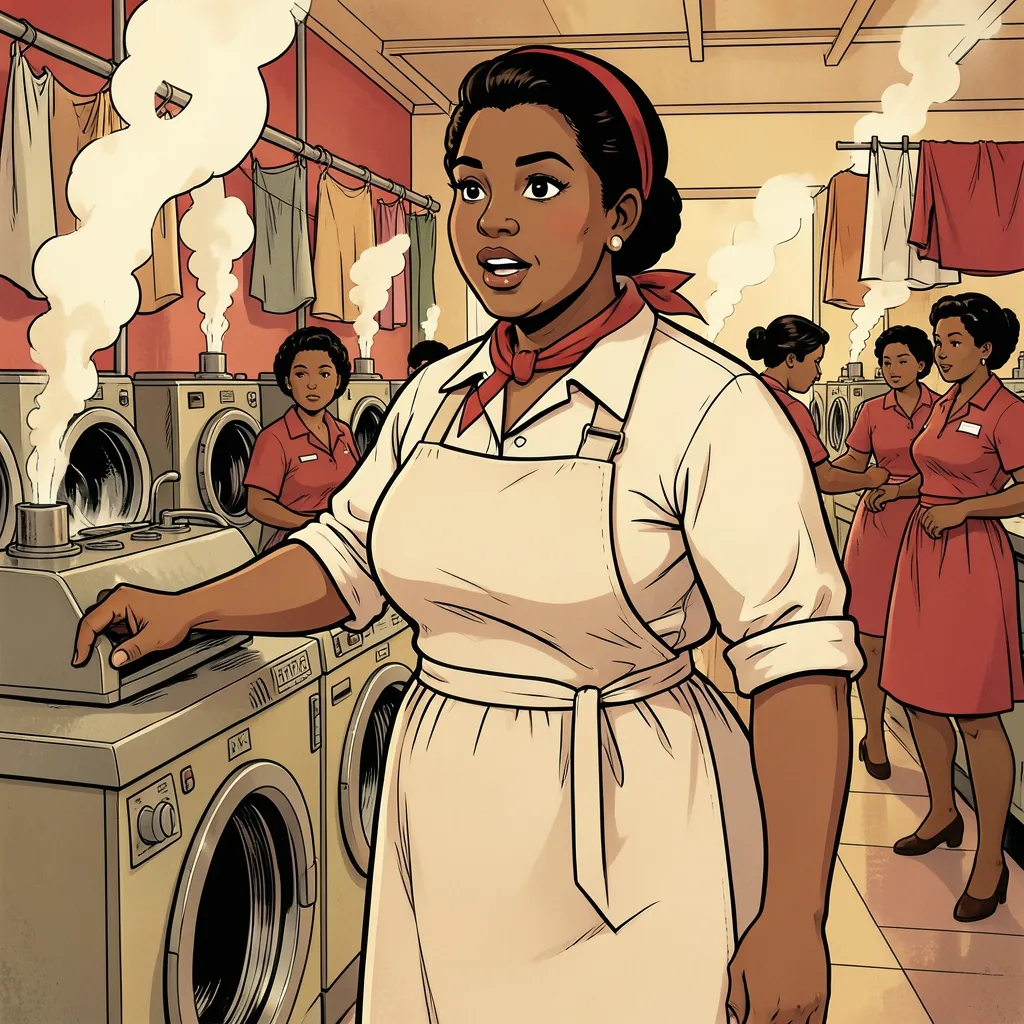
Now read who she was. Born Johnnie Lee Percy in 1926, in Scott, Arkansas, to sharecroppers. Moved to Watts in 1959 with six children. Worked in a laundry, where she was a union shop steward, until she got sick in 1963 and ended up on welfare — and then, instead of disappearing into the statistic, organized the other mothers in her housing project into one of the first welfare-rights groups in the country, ANC Mothers Anonymous. When that fed into the National Welfare Rights Organization in 1967, she became its first chair. By the time Ms. printed her, she was about to become its executive director. She didn't have a hashtag. She had a housing project and a membership list.
Now read what she did with "fat."
She said it once. One sentence. "I'm a fat woman." And then she moved on — because she had a country to argue with about welfare, and fat was one of five things about her that the country used to count her less, and she was not going to stop and build a whole identity around any one of them. She named it, she claimed it, she put it in the list next to Black and poor and middle-aged, and she got to work.
I'm going to come back to those five sentences in every part of this piece, because I think they contain the entire argument. But hold this first: a Black woman on welfare in Watts said "I'm a fat woman" in print, in the first issue of the most famous feminist magazine in America, before the fat liberation movement had written its manifesto — and the history of fat liberation forgot her. Sorensen and Krings, writing in Affilia in 2023, say it flat out: the standard history centers White-dominated organizations while Black activists like Tillmon and Margaret Bass are "nearly invisible." The Fat Liberation Archive lists Tillmon as an "ancestor" now. Better late than never. But you see the shape of the problem already. The history learned to recognize the organization before it recognized the woman.
2. Fat is a descriptor. That's all.
Look at her list again. Woman. Black. Poor. Fat. Middle-aged. Welfare.
Tillmon didn't rank them. She didn't say one was her identity and the rest were details. Every one of them was a descriptor — a true thing about her that the country used against her — and none of them was a culture. Her culture was Black, Arkansan, Southern-turned-Watts, church, work, mothers, organizing. Fat was one fact inside it.
That's the first thing the movement gets wrong, and it gets everything else wrong from there.
Being fat is not a culture. Culture is something people build: history, language, music, food, fashion, institutions, rituals, values, jokes, memory. Two women can share a body and share none of it. A fat Black woman from Houston and a fat White woman from Vermont share weight stigma, the empty rack, the doctor who won't look past the scale. Real things. But what those things mean — whether a big body makes you invisible or makes you the center of the room, whether losing it makes you a success story or a traitor — culture decides that. Not the body.
“Fatness gives you a shared physical experience. It does not give you a shared culture.”
So when a movement says "fat people" as if that names one community with one history and one set of problems, it has already made Tillmon's list into one word and thrown the other four away. It has assumed the room is empty because it only recognizes one kind of furniture.
3. Beauty wasn't waiting for permission.
Tillmon's grandmother's generation is where the historians start.
Black women were locked out of the institutions that defined American beauty — the pageants, the magazines, the department-store counters. What they did about it was not "declare beauty standards oppressive." What they did was build their own apparatus.
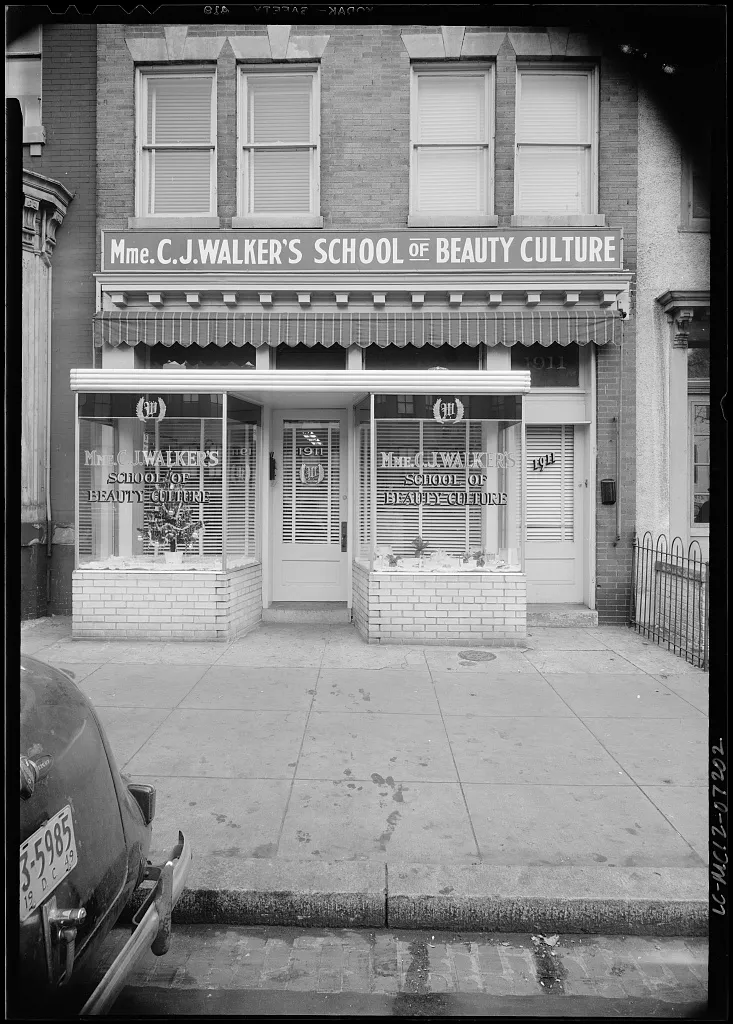
Maxine Leeds Craig lays it out in Ain't I a Beauty Queen? (Oxford, 2002): by the early twentieth century, Black newspapers, magazines, product companies, and social clubs were running their own beauty contests as a direct answer to the degrading images White America made of Black women. Blain Roberts's Pageants, Parlors, and Pretty Women (UNC, 2014) fills in the South. A whole Black beauty industry — hair, cosmetics, salons, schools — grew up around Madam C. J. Walker and the women after her. That's not resistance in the abstract. That's a cultural system, with products, techniques, businesses, and standards.
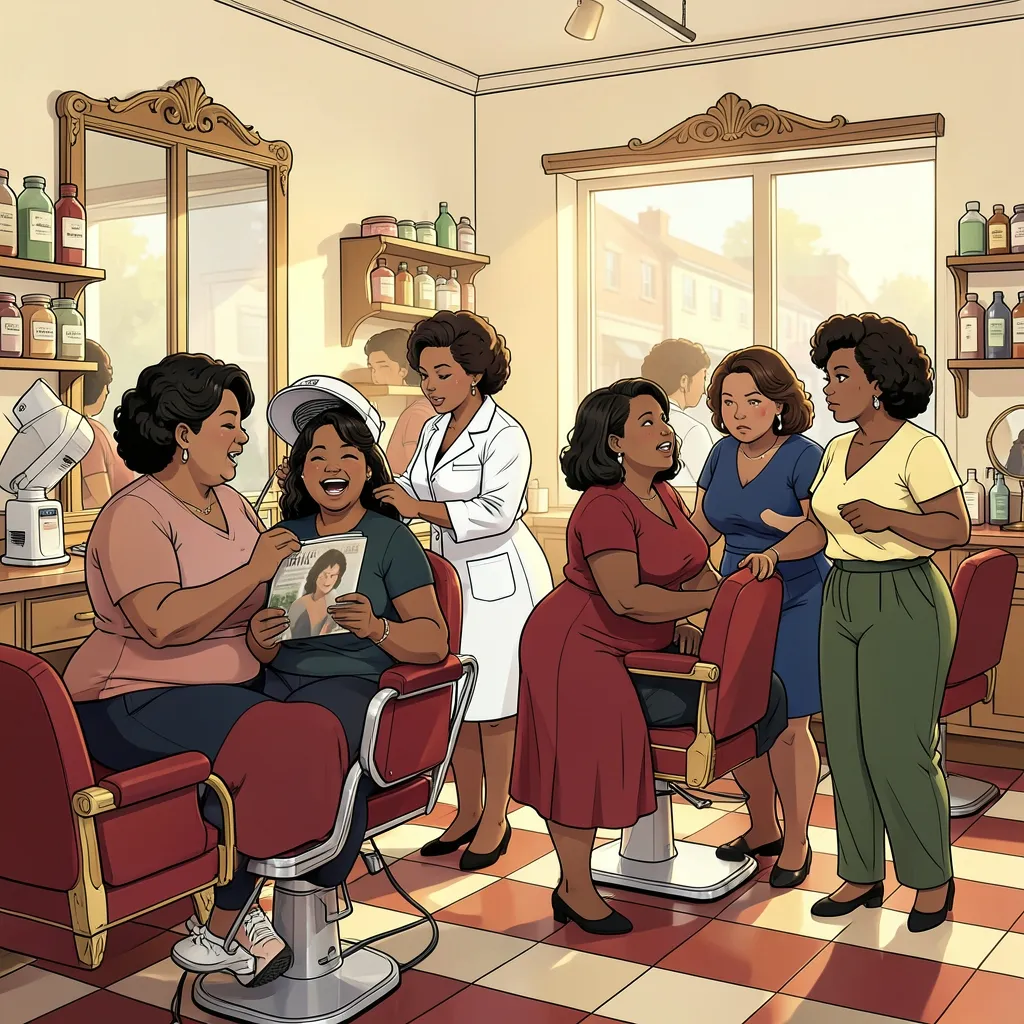
And the standards are the point. Tiffany Gill's Beauty Shop Politics (Illinois, 2010) shows the beauty shop as one of the few economically independent, semi-private spaces Black women controlled — where money moved, news moved, organizing moved, and where women got judged, fixed up, talked about, and sent back out looking right. The shop was infrastructure. It was also a courtroom. Both.
I've sat in the waiting chairs of those shops for hours of my life. I can tell you the verdicts are not gentle.
“Breaking a standard doesn't mean there is no standard.”
Black women broke the White one and, in the same motion, built their own. Argued about them. Enforced them. Changed them. That's what a living culture looks like. It does not look like "everyone is beautiful." It never did.
4. Jet was not a body-positive magazine.
Dawson-Andoh, Gray, Soto and Parker went through fifty-three years of Jet's "Beauty of the Week" — 1953 to 2006 — and measured the women (Body Image, 2011). The women got larger over time, while mainstream media was sprinting the other way. But they also got straighter in silhouette, less curvy, over the same years. Black beauty ideals, the authors say, show "both consistencies with and departures from" the mainstream.
I'm giving you the whole finding because the argument doesn't need me to hide half of it. Jet wasn't running a liberation issue. It was doing something more useful: putting Black women who didn't fit the White ideal in front of a Black audience, every week, as desirable. Not as a political statement. As the beauty of the week.
The Ebony study says the same thing from the other side. Thompson-Brenner and colleagues coded 462 issues from 1969 to 2008 (Body Image, 2011): the majority of figures shown were average-sized, not thin — and the magazine also ran plenty of diet and exercise content, peaking in the early nineties. Both at once. "She's fine." "She could stand to lose a few." Same magazine, same month.
“The woman didn't have to become an activist to become beautiful.”
Tillmon's year — 1972 — sits right in the middle of that Jet data. While she was writing "I'm a fat woman" in Ms., Jet was running a big woman in a swimsuit every week for a Black audience that did not need a manifesto to understand why.
5. And yes, Black women dieted. And yes, Black people were cruel about it.
If you want this to be a fairy tale — Black folks loved fat bodies, White folks hated them, the end — two Black women will ruin it for you, and you should let them.
The first is the historian Ava Purkiss. Fit Citizens (UNC, 2023) and her earlier article "Beauty Secrets: Fight Fat" (Journal of Women's History, 2017) document Black women from the 1900s forward dieting, exercising, reducing, and tying slimness to respectability and racial uplift. Clubwomen preached it. Black papers printed it. Purkiss's sharp point is that this can't be dismissed as Black women "internalizing" White taste — it has to be read through what they were up against: a country that read every Black body as a verdict on the race.
The second is Margaret K. Bass, whose essay "On Being a Fat Black Girl in a Fat-Hating Culture" (in Recovering the Black Female Body, Rutgers, 2001) says that growing up fat in the segregated South, the cruelest thing in her life wasn't Jim Crow — it was the teasing about her weight, and a lot of it came from inside her own family and community. "No one prepared me for living as a fat person." Purkiss puts Bass and Tillmon side by side as proof that fatness was painful for Black women, not automatically a point of pride.
I believe both of them. I've heard the jokes at cookouts. I've watched the aunties do the once-over. Nobody in my family needs a study to know Black people can be brutal about weight.
So hold both: the culture that put big women in Jet is the same culture that told Bass she was too big to love and told the clubwomen to fight fat. Contradiction? Yes. That's what I'm trying to tell you. Culture is allowed to be contradictory. "You need to lose some weight." "Girl, you look good." "I like thick women." "That dress is not it." "She's beautiful." All of those live in the same house and sometimes come out of the same mouth in the same afternoon.
And here is what Tillmon did with all of that: she wrote "I'm a fat woman" and kept going. She didn't need the cruelty to stop before she could claim the word. She didn't need the culture to fix itself before she could organize inside it.
“Black culture didn't need to eliminate judgment in order to create acceptance.”
6. The numbers, with the caveats attached.
The lazy version of this argument is "Black women don't have body issues." False, and Bass just told you so.
What the research says: two meta-analyses in 2006 — Roberts, Cash, Feingold and Johnson in the Journal of Consulting and Clinical Psychology; Grabe and Hyde in Psychological Bulletin — found Black American women, on average, report less body dissatisfaction than White women. A real gap. The weight-specific part has been narrowing since the nineties, which is its own story about what the mainstream eventually does to everybody. But the gap is documented and it points one way.
Cameron, Muldrow and Stefani's interviews with Black women (Qualitative Health Research, 2018) found a near-universal refusal to accept thinness as the only measure of health or beauty — alongside a whole set of other things those same women were negotiating: curves, hair, skin, grooming, fashion, sexiness, respectability. Not "no standards." More standards, held at once.
The supportable claim isn't immunity. It's that the social meaning of a big body has historically been different in Black life than in White life — which is the whole reason a movement built from White experience could look at our answer and not recognize one.
7. Listen to what the culture sings about.
If you want to know what a culture values, don't read its position papers. Listen to its music.
White popular music has songs about big women. "Fat Bottomed Girls." "Whole Lotta Rosie." A country single here and there. Individual songs. What hip-hop and R&B built is different in kind: a recurring vocabulary. Hips. Thighs. Thick. Booty. BBW. Slim-thick. A whole rhyming dictionary for a body, and an audience that needs no footnote.
Sir Mix-a-Lot took it to number one in 1992. Twenty-two years later, on Nicki Minaj's "Only," Drake put five words on a chart-topping album — "I like my girls BBW" — and nobody in the room needed it explained. That's the evidence. The rapper is just the witness. A culture that can say it that plainly, that casually, on the radio, has been saying it for a long time.
The scholars caught up. Hunter and colleagues built a "Curvy Ideal Silhouette Scale" (Sex Roles, 2021) because the thin-ideal instruments couldn't measure what Black women's social worlds were actually endorsing. Elizabeth Hughes's interviews (Journal of Black Studies, 2021) are literally titled "I'm Supposed To Be Thick." And in 2025 Q. McElroy, in the Howard Journal of Communications, named the thing the way the culture already had — "big butt ideology" — a normative beauty construct, with rules, running through Nicki, Cardi, and Megan's feeds.
Read that carefully. A normative beauty construct. With rules. Thick is not a synonym for fat. It has a silhouette, a proportion, a style, a sexual meaning, and a boundary. A culture that builds a category that specific isn't tolerating bigger bodies. It's rating them. It replaced one standard with another. It never said everything is beautiful.
“Black culture didn't abolish beauty standards. It built another one.”
8. The woman who knows she's fat — and doesn't care.
Chris Rock, Bigger & Blacker, the Apollo, 1999. The bit: the big Black woman dressed to the nines on a Friday night, foot spilling out the pump, announcing to the whole club that she is the sexiest thing in it. And meaning it.
People hear that as a fat joke. Listen again. It only works because nobody in it is pretending she isn't fat. She knows. The room knows. Rock knows. Her confidence sits right there next to the judgment. It doesn't need the judgment gone first. It doesn't need the room to agree.
"I'm sexy anyway" is a completely different sentence from "everyone must agree that I'm beautiful." The first one is a woman. The second one is a policy.
And it's the same posture as Tillmon's. "I'm a fat woman" — said flat, no apology, no argument, next in the list, keep moving. The club woman and the welfare organizer are doing the identical thing twenty-seven years apart: naming the fact and refusing to let the fact run the room.
I've been in that club. I married the woman in that dress. I'm telling you Rock didn't make her up.
9. Now let's talk about the movement. Honestly.
Fat activism has a real history and I'm not going to insult it.
NAAFA was founded in 1969 by Bill Fabrey, a man furious at how the world treated his fat wife. (I understand him better than I'd like to.) In 1973, Los Angeles feminists who found NAAFA too tame formed the Fat Underground and wrote the Fat Liberation Manifesto — equal rights for fat people in all areas of life, and the "reducing" industries named as the enemy. That's fifty years ago. The anti-diet argument is not an Instagram invention; it belongs to those women.
And NAAFA wasn't only politics. By its own history, its conventions were "the first places many people encountered the fat fashion shows, fat pool parties, and fat dance parties" that influencers run today. Abigail Saguy's sociology describes it as both an esteem-building community and a place to meet "fat admirers" — and describes the women inside arguing, in the seventies and eighties, about objectification, about a calendar, about men's preferences, about whether being desired was liberation or the opposite.
They were building culture too. Where are our people, where can we dress up, where can we date. And they were fighting about sexuality and standards inside it decades before anybody had a feed. Pearadise wasn't new. Pearadise was that argument with the brakes cut.
The Body Positive — the organization the term comes from — was founded in 1996 by Connie Sobczak and Elizabeth Scott. Fat acceptance, fat liberation, size acceptance, body positivity, social-media body positivity: five different things. The movement flattens them into one origin story, and that story has a color.
10. Who was in the room?
Here is the part the movement's own scholars have started saying out loud, and it's the part that makes Tillmon the backbone of this piece.
Sorensen and Krings, Affilia, 2023: the standard history of fat activism centers White-dominated organizations — NAAFA, the Fat Underground, Health at Every Size — while Black fat activists like Johnnie Tillmon and Margaret Bass are "nearly invisible."
Think about what it takes to make Johnnie Tillmon invisible. She was not a private person. She chaired a national organization. She was published in the first issue of Ms. She said "I'm a fat woman" in print before the manifesto existed. And the history that remembers a 1973 pinup calendar controversy in exhaustive detail did not have a line for her — because she was doing it wrong. She wasn't organizing as a fat woman. She was organizing as a whole woman who happened to be fat, alongside a housing project full of women who happened to be a lot of things, and the story she told about fatness was one sentence long.
The movement's history had a shape it was looking for: an organization about fat, a manifesto about fat, an identity built on fat. Tillmon didn't fit the shape. Neither did the beauty shop, the Jet centerfold, the Friday-night club, or the kitchen table where a woman says "girl, you look good" to somebody who weighs what she weighs. None of that is about fat. It's about a life with fat in it.
“The problem was never that Black women weren't doing the work. The problem is that the history learned to recognize the organization before it recognized the culture.”
Part two: the pattern
Here's what I think the record adds up to. This is interpretation, and I'm labeling it.
Black women built an autonomous beauty culture because they were locked out of the mainstream one. That culture developed its own institutions, media, businesses, and standards — plural. Inside it, bigger bodies carried meanings the mainstream didn't assign them: desirable, glamorous, thick, fine. Not universally. Not without argument, not without cruelty — ask Bass. But recurringly, visibly, and for a long time.
Does something older sit under that? I think the honest answer is probably some of it, and nobody can prove which parts. The argument is not that one West African beauty standard survived slavery intact — that's unprovable and I'm not making it. The argument is that fuller female bodies have carried positive meaning in a number of documented African contexts — Pamela Brink's ethnography of the Annang fattening room in southeastern Nigeria (Medical Anthropology, 1989); Rebecca Popenoe's Feeding Desire (Routledge, 2004) among the Azawagh Arabs of Niger; Cogan and colleagues' finding that Ghanaian students rated larger bodies more favorably than Americans did (Journal of Cross-Cultural Psychology, 1996) — and that a curvaceous ideal keeps surfacing in African American life. Different societies, different logics, same direction. West Africa is hundreds of cultures. I'm showing you three. Draw your own line through them, or don't.
Meanwhile, organized fat activism grew up on a parallel track, mostly White, with real accomplishments and real blind spots. When modern body positivity inherited the track, it inherited the blind spots. It looked for fat acceptance where it knew to look — organizations, manifestos, hashtags — and did not find it in a beauty shop, a Jet page, a Drake verse, or Johnnie Tillmon's fourth sentence, because it wasn't looking for culture. It was looking for itself.
And here's the pattern inside the pattern. Read Tillmon's third paragraph, the one nobody quotes:
“Not all of them are black. Not at all. In fact, the majority — about two-thirds — of all the poor families in the country are white.”
She had just listed six ways she personally got counted less, and the very next thing she did was refuse to make her own experience the universal one. She said: I'm telling you about me, and most of the people in my situation don't look like me. In 1972. On welfare. In Watts.
That's the discipline the movement never learned. It is the entire difference between naming your position and universalizing it.
Part three: the argument
11. The problems were real.
Before anybody accuses me of pretending White fat women weren't suffering: I'm not.
Weight stigma was real. Diet culture was real. The empty rack, the doctor's face, the airplane seat, the humiliation — real. The women in that Vegas house had real problems before anybody sold them a sisterhood. Fat White women deserved better than what they got, and the ones who organized to get it did something brave.
But a real problem does not make your solution universal. And it doesn't mean nobody solved it before you.
“The problems were real. Black women had already been solving them.”
12. Whiteness, as a structure, not a slur.
The sloppy version of this is "White women can't see Black culture," and that's both insulting and wrong.
Peggy McIntosh's 1989 essay on the "invisible knapsack" gave us the language: privilege that works precisely because the people holding it experience it as ordinary. The sociology since — McDermott and Ferguson's 2022 review in the Annual Review of Sociology is a fair summary — describes whiteness as the unmarked default: the position from which your own experience feels like the experience.
So, the sharper version: whiteness didn't make these women unable to see Black culture. It let them experience their own cultural problems as universal problems.
A White woman goes through dieting, weight stigma, sexual rejection, fashion exclusion, shame — and concludes, reasonably from where she stands, this is what it means to be fat. And once your experience feels universal, somebody else's solution doesn't look like a solution. It looks like an unrelated cultural quirk. A Black woman being loud about being fine on a Friday night isn't an answer to her problem; it's just, you know, Black people being Black.
Tillmon did the opposite. She named her position and then, in the same breath, said most people in her position weren't like her. That's what it looks like when somebody knows the difference between my experience and the experience.
“You didn't discover the problem. You discovered your version of the problem.”
13. You don't have to intend to erase history.
Rebel Wilson, October 2018, on Ellen, promoting Isn't It Romantic: the first plus-sized woman ever to star in a romantic comedy.
Within hours the internet did the footnoting. Mo'Nique, Phat Girlz, 2006. Queen Latifah, Just Wright, 2010, and Last Holiday before that. Mo'Nique's response was about as gracious as you could ask: take a moment and know the history. Wilson blocked people, then, on November 5, apologized — "not only wrong but also incredibly hurtful" — and unblocked them.
I don't think Rebel Wilson is a villain. I think she sincerely believed she was breaking a barrier because nobody ever told her the names of the women who broke it. That's the point. That is the whole point, and it's the same thing that happened to Johnnie Tillmon, just with a bigger budget.
“You don't have to intend to erase somebody to benefit from their erasure.”
Appropriation doesn't need a meeting. Nobody has to say "let's take this." It happens through visibility, institutional power, whose books get published, whose organizations get archived, whose vocabulary becomes the vocabulary. A culture develops something organically; another group encounters it later, renames it, institutionalizes it, becomes associated with it. Ask anybody who was around for the last five things that happened to.
14. Here's where I really disagree with you.
Weight loss.
In the culture I grew up in, a woman losing weight did not betray the women who stayed big. She made a choice, people said "look at you," and she stayed in the room. She could be celebrated thick and complimented smaller and neither canceled the other. Purkiss's history says Black women have been doing exactly that — dieting inside a culture that still put big women on the cover — for over a century.
I've watched it in my own house. My wife's sister used to be plus-size and isn't anymore. She didn't leave anything. Nobody held a funeral. She and my wife watched that documentary on the same couch, from different bodies, and reached the same verdict.
In parts of contemporary fat activism — parts; the movement isn't one thing — intentional weight loss gets read as capitulation. As leaving. A celebrity drops fifty pounds and a corner of the internet holds a funeral. I'm stating that as an observation, not a study, because I don't have the study. But I've watched it happen enough times to ask: why does a woman becoming smaller have to mean she has rejected the women who stayed big?
And the follow-up, which is the one that stings: if your acceptance of fat women disappears the moment one of them loses weight — was that acceptance, or allegiance?
15. Your humanity is automatic. Your reputation isn't.
This is the line, and Tillmon drew it first.
Look at what she actually asked for. Not to be found beautiful. Not to be admired. Not for the country to affirm her body. She asked to count as a human being. "If you're any one of those things you count less as a human being. If you're all those things, you don't count at all." That's the demand: the floor. Personhood. The thing that's supposed to be automatic.
She never confused the floor with the ceiling. And the movement did.
Everybody deserves human dignity. Full stop. Nobody has to earn the right to be treated like a person, and anybody who treats a fat woman like less than one is wrong, and I'll say it as loud as the movement does. Tillmon said it louder, and earlier, and with less to lose it with.
But dignity is the only thing on the list that's automatic. Here's the rest of the ledger: Humanity — automatic. Dignity — universal. Freedom — universal, within the law. Beauty — evaluated. Attraction — personal. Admiration — earned. Trust — earned. Status — earned. Reputation — earned. Approval — not owed.
You can wear whatever you want; I can think it looks terrible. You can lose weight; nobody has to call it betrayal. You can stay four hundred pounds; nobody has to call it healthy. You can love your body; nobody has to love your lifestyle. You can be beautiful; nobody is required to be attracted to you.
“Attraction is not a civil right.”
You don't have to find her attractive. You do have to treat her like a human being. Two different sentences. The movement's biggest mistake was welding them together — because once every "no" is oppression, oppression becomes indistinguishable from criticism, and the word stops meaning anything.
So what is fatphobia? Try Tillmon's own frame: counting somebody less as a human being because of their size. The qualified employee passed over for being fat. The stranger mocked on a beach for sitting down. The doctor who won't look past the scale. That's fatphobia. It's real, it's wrong, and it's the thing she was writing about.
"I'm not attracted to fat women" isn't. "That outfit doesn't work" isn't. "You should talk to your doctor about your weight" — context matters, but usually isn't. A world that can't tell those two lists apart isn't more just. It's just louder.
16. I don't want a world without standards.
I want more than one.
"Fat can be beautiful" is not "fat is beautiful." "I love fat women" — and I do — is not "everyone must find fat women attractive." Beauty is multidimensional: a face, a body, hair, style, grooming, carriage, the way she talks. Every culture I've ever heard of rates it. Black culture rated it. Black culture also made room. Those aren't opposites. That's the sophistication the movement threw away.
“You don't have to be beautiful to deserve dignity. But you also don't get to redefine beauty so that everyone is required to find you beautiful.”
And if you want a fat culture — not a fat body, a fat culture — you have to build one. Media. Businesses. Music. Institutions. Jokes. Standards. A Friday night. A membership list. Black women built one. Tillmon built one out of a housing project. Not for you. Not against you. Because they needed it and nobody was going to hand it to them.
The verdict
17. So what did you invent?
Run the list. Go slow.
Visibility for big women? Black media had it. Desirability? Black popular culture built a vocabulary for it. Fashion and beauty culture for women the mainstream ignored? Built, from Madam Walker's kitchen to the shop on the corner. Community? The shop, the church, the club, the project, the kitchen table. A body ideal that wasn't thin? Documented, named, measured, on the radio. Room to lose weight without excommunication? A century of it. Standards? Plenty. Criticism inside the community? Constantly — ask Bass. Confidence that didn't wait for permission? Ask Rock's Friday-night woman. A Black woman claiming "fat" in print, without apology, before your manifesto? Johnnie Tillmon, Spring 1972, first issue of Ms.
So what, exactly, did you invent?
The problem wasn't that White women wanted acceptance. The problem wasn't that their problems weren't real. The problem was the failure to recognize the cultural systems that already existed — and the decision, made from inside one culture's experience, that the absence of your vocabulary meant the absence of a solution.
18. The wheel.
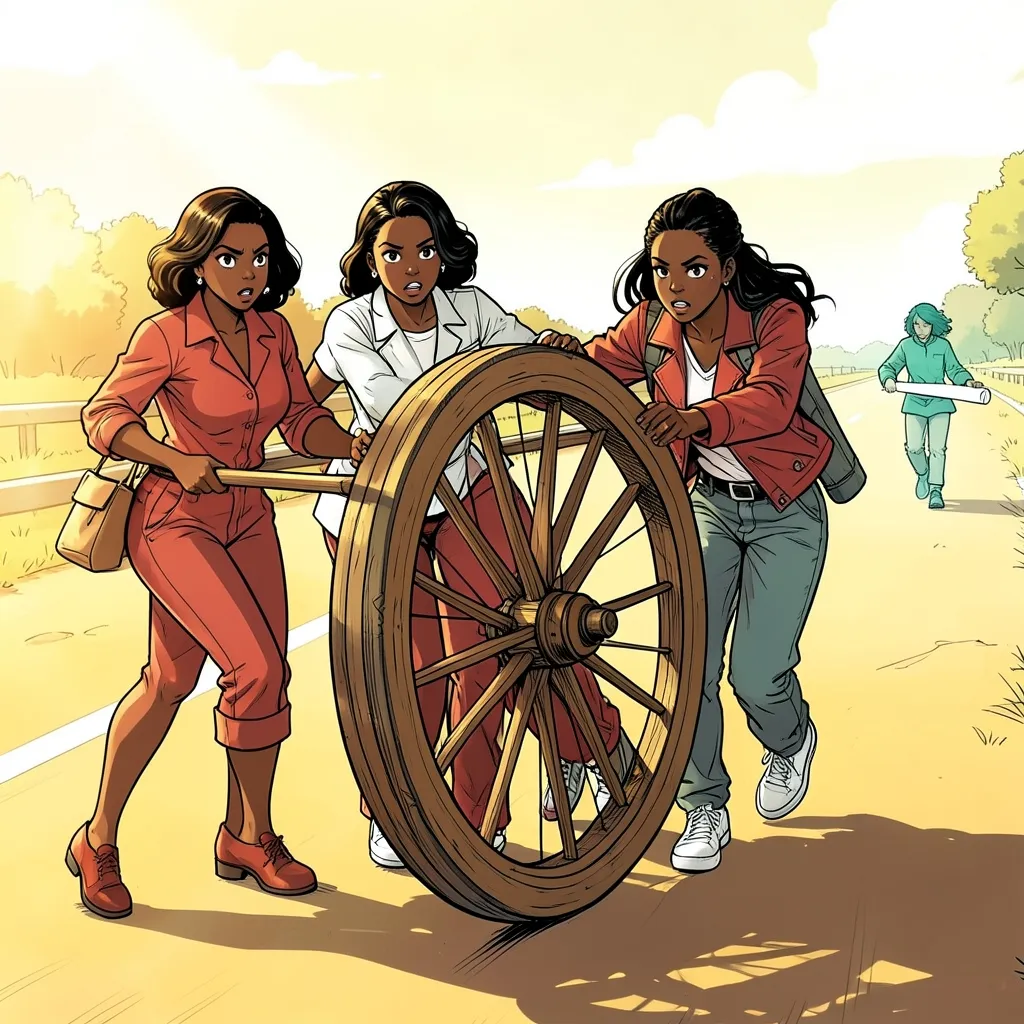
Black women built the wheel.
Not a perfect wheel. Not a universal one. One with contradictions in it — "lose some weight" and "you look good" bolted to the same rim, Bass's pain and Rock's club woman riding the same axle. But round. Load-bearing. Turning.
They built it. They re-engineered it. They put tires on it. They balanced it. They drove the damn thing, for generations, down roads nobody paved for them — and Johnnie Tillmon was driving a busload of welfare mothers on it in 1972 while the manifesto was still a draft.
And then somebody arrived with a blueprint and announced they were about to invent transportation.
I'm not driving. I never was. I've been in the passenger seat my whole life, and from there I can tell you: they are already driving.
19. The question, one more time.
Why did you decide you needed to fix something Black women had already fixed?
Not because they never felt shame. Not because they never dieted. Not because they never talked about each other. Not because racism went anywhere. They simply didn't require the abolition of every standard in order to make room for themselves. They could be fat and beautiful. Fat and criticized. Lose weight. Stay fat. Love thick bodies. Prefer smaller ones. Build a standard. Break somebody else's. Build another one. Say "I'm a fat woman" in a list of six things and get back to work.
Black women didn't need somebody to teach them how to accept themselves. They had already built a culture where they could negotiate what beauty meant — out loud, with each other, every day.
Don't ask for a seat at the table. Build your own. And if you walk into theirs, at least have the respect to notice that somebody already set it.
“Why didn't you look around first?”
Source notes
1. Tillmon, Johnnie. "Welfare Is a Women's Issue." Ms., Spring 1972 (first issue); reprinted at msmagazine.com, 25 Mar 2021. Quoted lines are verbatim; the original prints "black" lowercase. Biography: Encyclopedia of Arkansas, “Johnnie Tillmon (1926–1995)”; BlackPast.org, which records her as a union shop steward in the Compton laundry where she worked before illness put her on welfare. She wrote one sentence about her body in the essay; this piece does not claim more.
2. Sorensen, B. L., & Krings, A. "Fat liberation: How social workers can incorporate fat activism to promote care and justice." Affilia 38:4 (2023), 724–731 — Tillmon and Bass "nearly invisible." Fat Liberation Archive, "Ancestors," fatlibarchive.org (lists Tillmon).
3. Bass, Margaret K. "On Being a Fat Black Girl in a Fat-Hating Culture," in Recovering the Black Female Body: Self-Representations by African American Women, eds. M. Bennett & V. D. Dickerson. Rutgers University Press, 2001. Quoted line via Purkiss, "(Re)examining Fat Stigma through Black Women's History," 2017.
4. Craig, Maxine Leeds. Ain't I a Beauty Queen? Black Women, Beauty, and the Politics of Race. Oxford University Press, 2002 (ch. 3). Also "Black Women and Beauty Culture in 20th-Century America," Oxford Research Encyclopedia of American History, 2014.
5. Roberts, Blain. Pageants, Parlors, and Pretty Women: Race and Beauty in the Twentieth-Century South. UNC Press, 2014.
6. Gill, Tiffany M. Beauty Shop Politics: African American Women's Activism in the Beauty Industry. University of Illinois Press, 2010.
7. Dawson-Andoh, N. A., Gray, J. J., Soto, J. A., & Parker, S. "Body shape and size depictions of African American women in JET magazine, 1953–2006." Body Image 8:1 (2011). PMID 21111694.
8. Thompson-Brenner, H., Boisseau, C. L., & St. Paul, M. S. "Representation of ideal figure size in Ebony magazine: A content analysis." Body Image 8:4 (2011). PMID 21775229.
9. Purkiss, Ava. Fit Citizens: A History of Black Women's Exercise from Post-Reconstruction to Postwar America. UNC Press, 2023; "Beauty Secrets: Fight Fat," Journal of Women's History 29:2 (2017); "Historicizing Black Women's Anti-Fatness," in The Contemporary Reader of Gender and Fat Studies, Routledge, 2023.
10. Roberts, A., Cash, T. F., Feingold, A., & Johnson, B. T. "Are Black–White differences in females' body dissatisfaction decreasing? A meta-analytic review." Journal of Consulting and Clinical Psychology 74:6 (2006). Grabe, S., & Hyde, J. S. "Ethnicity and body dissatisfaction among women in the United States: A meta-analysis." Psychological Bulletin 132:4 (2006).
11. Cameron, N. O., Muldrow, A. F., & Stefani, W. "The Weight of Things: Understanding African American Women's Perceptions of Health, Body Image, and Attractiveness." Qualitative Health Research 28:8 (2018). PMID 29357750.
12. Hunter, E. A., et al. "The Curvy Ideal Silhouette Scale." Sex Roles 84 (2021). Hughes, Elizabeth. "I'm Supposed To Be Thick: Managing Body Image Anxieties Among Black American Women." Journal of Black Studies (2021). McElroy, Q. "Big Butt Ideology: Digital Gaze and Evolving Normative Beauty Constructs for Black Women." Howard Journal of Communications (2025).
13. Cultural artifacts. Sir Mix-a-Lot, "Baby Got Back," Mack Daddy, 1992. Nicki Minaj feat. Drake, Lil Wayne & Chris Brown, "Only," The Pinkprint, 2014 (five words quoted under fair use). Chris Rock, Bigger & Blacker, HBO, 1999 (Apollo Theater; paraphrased).
14. NAAFA, "History," naafa.org/history. Freespirit, J., & Aldebaran. "Fat Liberation Manifesto," Fat Underground, Los Angeles, November 1973; reprinted Canadian Woman Studies 35:1–2; fatlibarchive.org. Saguy, Abigail C. What's Wrong with Fat? Oxford University Press, 2013.
15. The Body Positive, "About us," thebodypositive.org (founded 1996, Connie Sobczak and Elizabeth Scott).
16. Brink, Pamela J. "The fattening room among the Annang of Nigeria." Medical Anthropology 12:1 (1989). Popenoe, Rebecca. Feeding Desire. Routledge, 2004. Cogan, J. C., et al. "A comparison study of United States and African students on perceptions of obesity and thinness." Journal of Cross-Cultural Psychology 27:1 (1996).
17. McIntosh, Peggy. "White Privilege: Unpacking the Invisible Knapsack." Peace and Freedom, July/August 1989. McDermott, M., & Ferguson, A. "Sociology of Whiteness." Annual Review of Sociology 48 (2022).
18. Rebel Wilson. NBC News, 6 Nov 2018; The Washington Post, 6 Nov 2018. Claim on The Ellen DeGeneres Show, late October 2018; apology 5 November 2018.
19. Big Girls Wanted: Escaping Pearadise. Three-part docuseries, dir. Tara Malone, Investigation Discovery / HBO Max, premiered 10 June 2026. Coverage: Los Angeles Magazine; USA Today, 21 May 2026. Allegations against the founder are allegations; he denies them. The author's family's reaction to the series is reported as their reaction, not as a claim about the people in it.
Related Stories
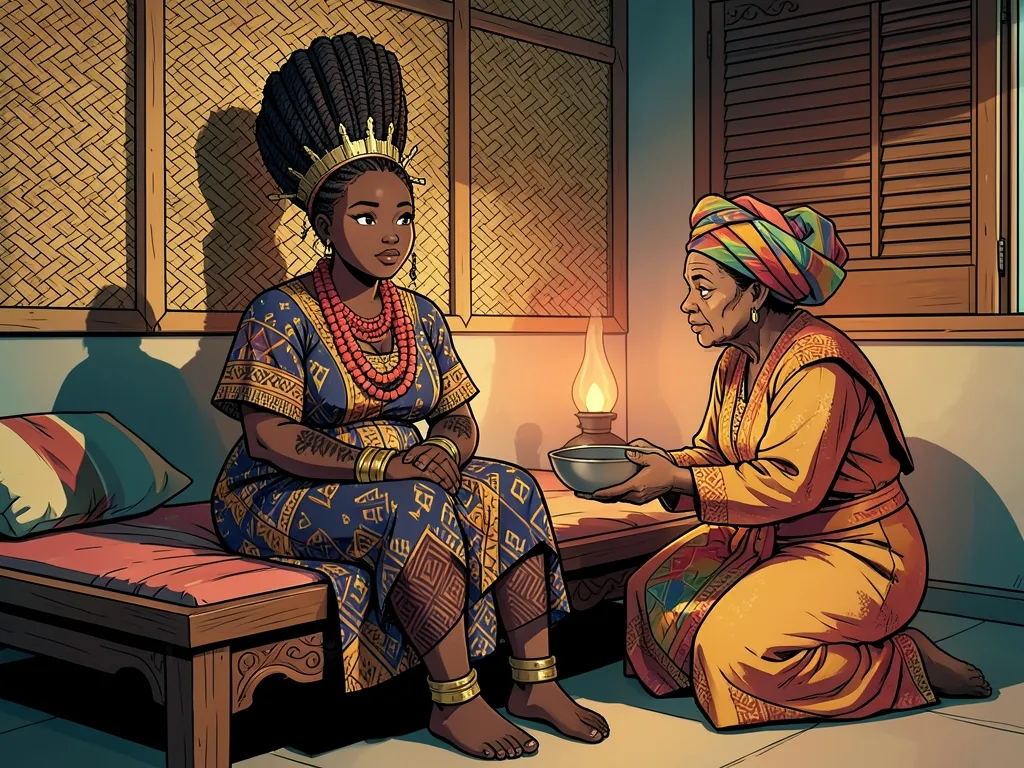
The West African Kingdom Where Brides Were Fed Like Royalty
In the Kingdom of Calabar, elite families fed and secluded their daughters for months before marriage — a fuller body wasn't an accident. It was the point.
 Photo courtesy of Yvonne
Before Forty, Yvonne Wanted Her Health in Order — Confidence Came With It
She changed her relationship with food, started therapy, and found a confidence she calls 'through the roof.'
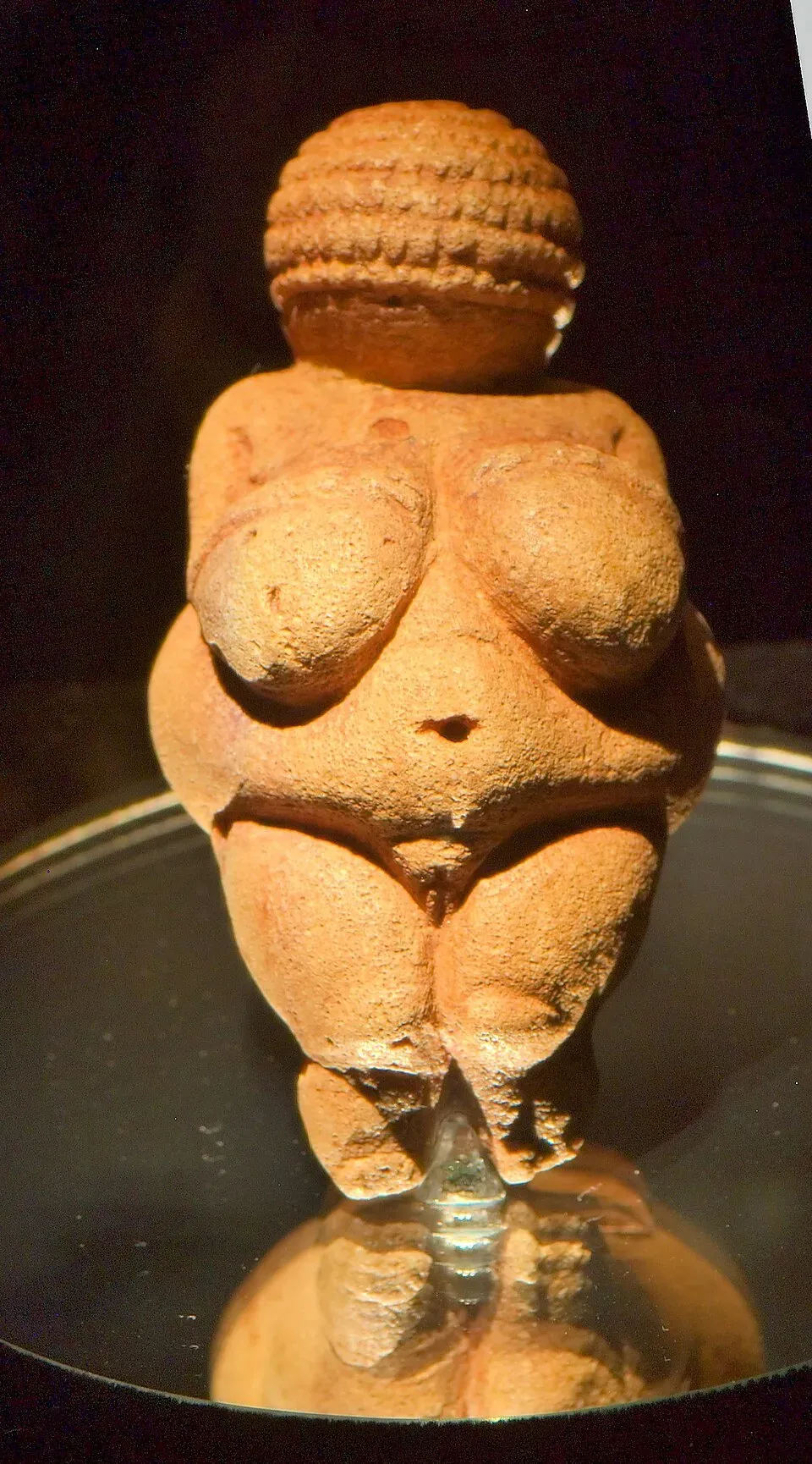 Historical image — Photo by MatthiasKabel, CC BY 2.5, via Wikimedia Commons
The First Woman Ever Carved Wasn't Thin
Forty thousand years before "body positivity," Ice Age carvers rendered the female body full and soft. Nobody agrees why — but nobody flattened her.