
The First Woman Ever Carved Wasn't Thin
Forty thousand years before "body positivity," Ice Age carvers rendered the female body full and soft. Nobody agrees why — but nobody flattened her.
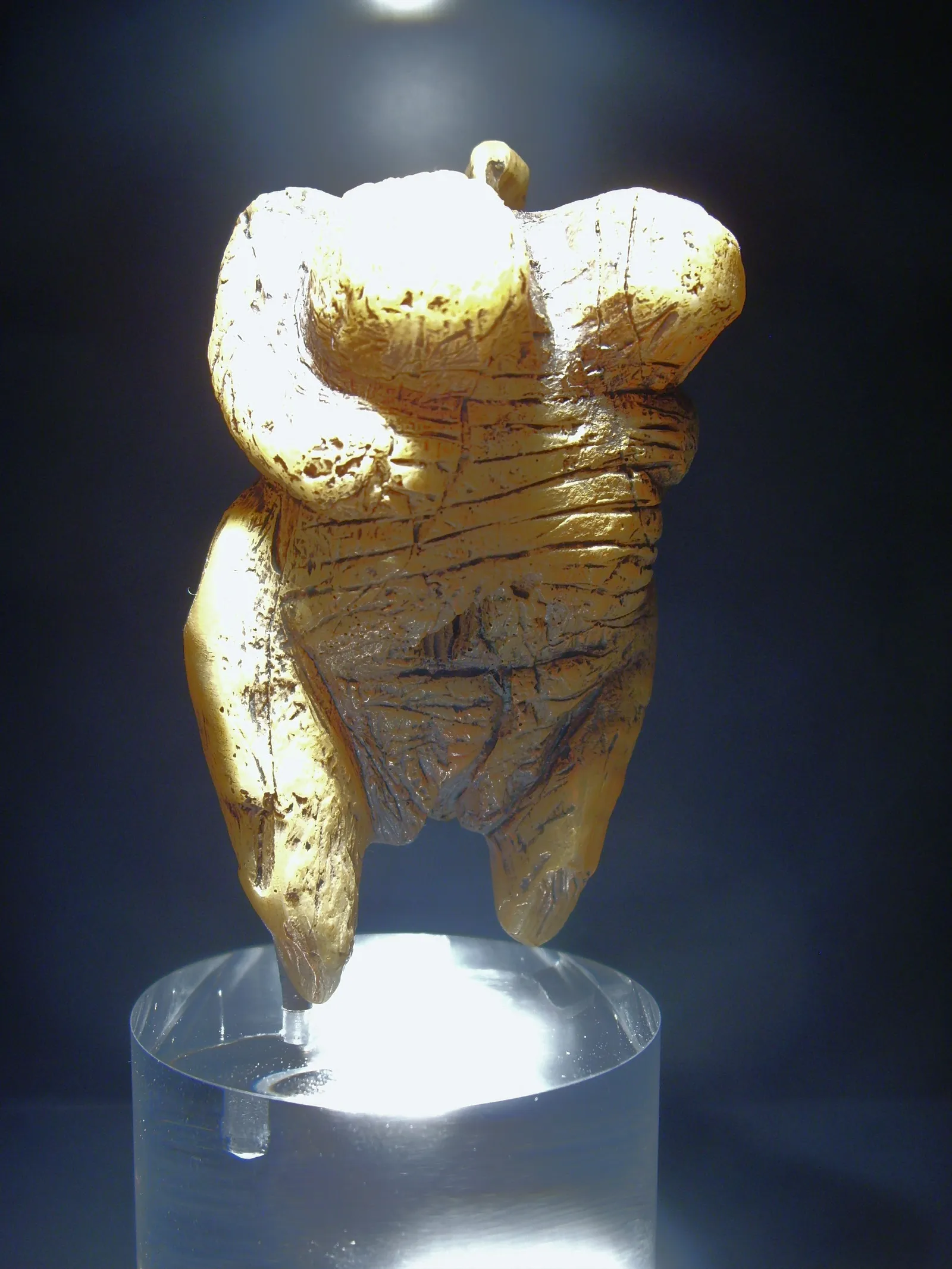
Historical image — Photo by MatthiasKabel, CC BY 2.5, via Wikimedia CommonsDid you know the oldest known image of a human being — not just a woman, a human being, period — is full-figured? Around 40,000 years ago, someone in what's now southwestern Germany carved a fist-sized figure out of mammoth ivory. Archaeologists found her in fragments in a cave called Hohle Fels in 2008 and named her accordingly: the Venus of Hohle Fels. She has ballooning breasts, a heavy abdomen, and carefully carved genitals. She has no head — just a carved loop where one would go, like she was made to be worn. Whoever made her had, apparently, absolutely no impulse to slim her down.
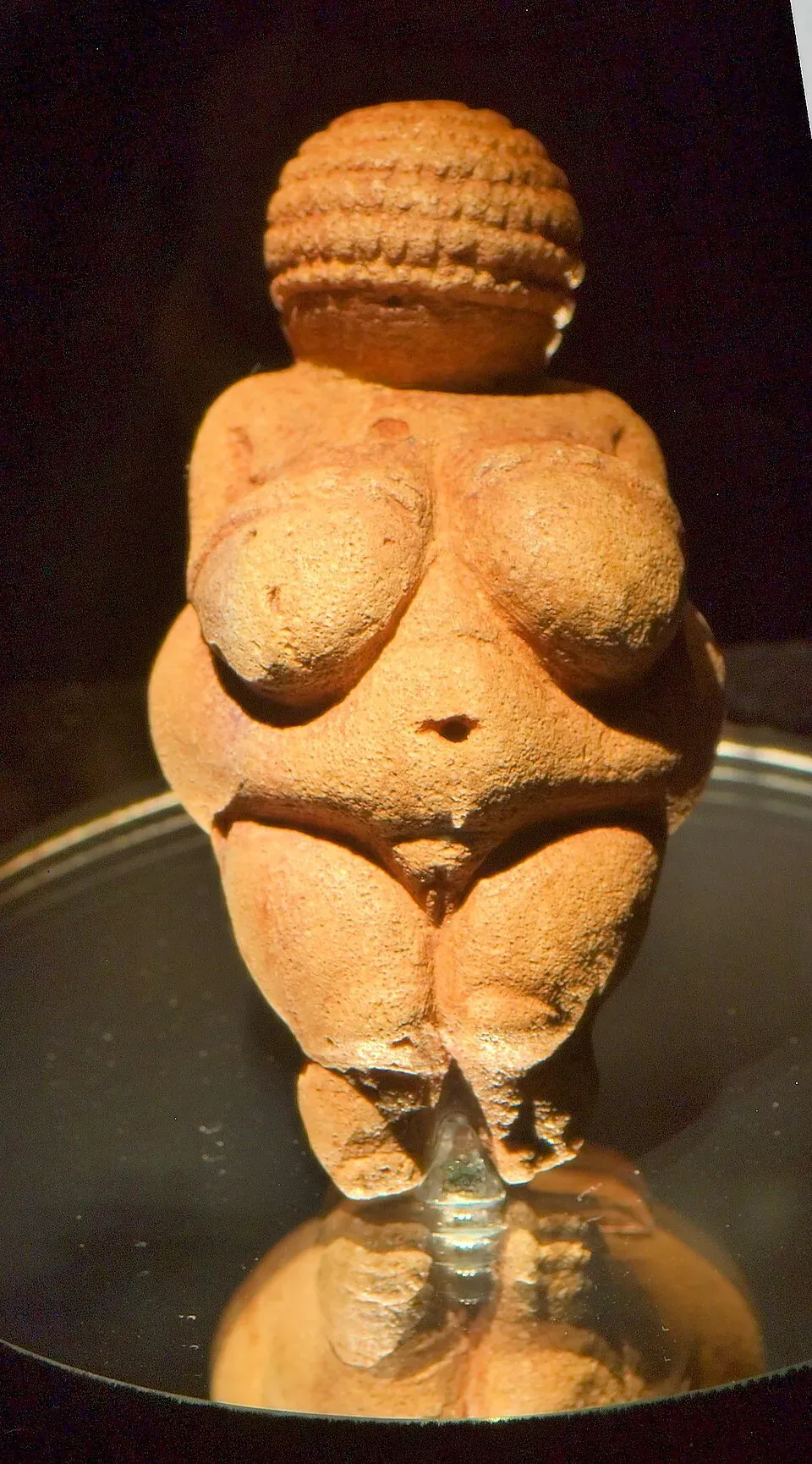
Her more famous cousin came along roughly 15,000 years later and about 260 miles east: the Venus of Willendorf, pulled out of the ground near the Danube in Austria in 1908. She's palm-sized — about 4.4 inches of oolitic limestone, tinted red with ochre — with a full stomach, wide hips, and heavy breasts rendered in patient, deliberate detail. Her head has no face at all, just rows of what looks like braided or woven hair. Estimates for her age vary by source, generally landing somewhere between 25,000 and 30,000 years old. She lives today in Vienna's Natural History Museum, and she is, by a wide margin, the most reproduced image of a prehistoric human on Earth.
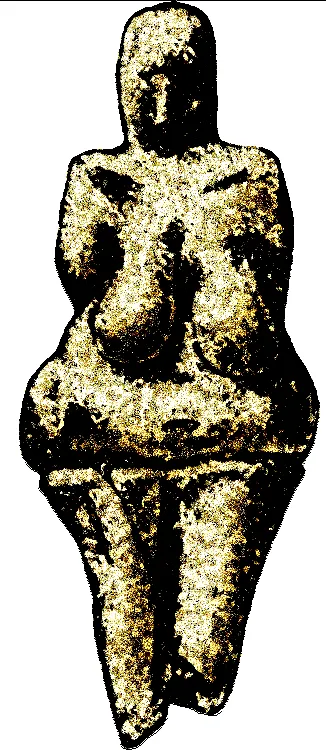
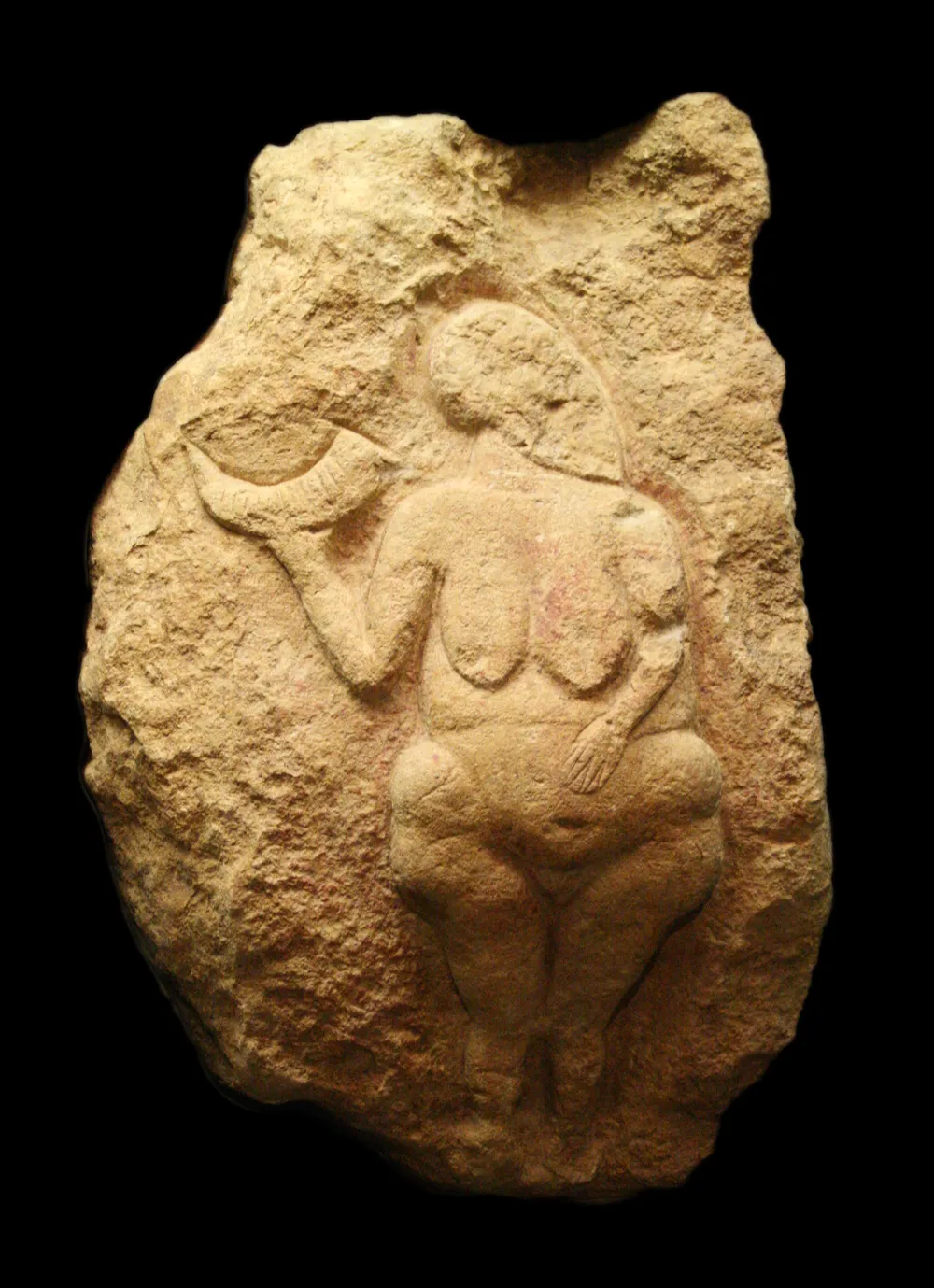
And she's not alone. Archaeologists have catalogued more than 200 of these so-called "Venus figurines" across Europe and into Siberia, spanning tens of thousands of years and several distinct prehistoric cultures. They don't all look identical — some are ivory, some limestone, some clay — but an overwhelming number of them settle on the same basic silhouette: soft stomach, full hips, generous breasts. If you're looking for the oldest surviving opinion on what a beautiful woman's body looks like, this is it. And it was never rendered thin.

So what did she actually mean?
Here's where I have to be honest with you: the record is genuinely disputed, and nobody actually knows. For most of the 20th century, the dominant reading was "fertility idol" or "mother goddess" — a magical figure meant to encourage pregnancy or safe childbirth. That theory is still taught, but it's been seriously challenged in recent decades. In 1996, researchers LeRoy McDermott and Catherine McCoid proposed something stranger and, honestly, more moving: that these are self-portraits. There were no mirrors in the Ice Age. The only way a woman could see her own body was by looking down at it — which foreshortens the legs, shrinks the hands and feet, and erases the face entirely. Run the math on that visual angle, McDermott argued, and you get exactly the proportions carved into these figurines. Not a fertility symbol made by someone looking at a woman. A body, drawn by the woman looking at herself.
Then there's a theory that ties this straight back to survival. In 2020, physician-researcher Richard Johnson and colleagues published a study in the journal Obesity arguing that the figurines' body proportions track climate: they get measurably fuller in regions and periods when glaciers were advancing and food was scarcest, and leaner as the climate warmed. The argument is that a well-fed, higher-body-fat woman was more likely to survive pregnancy and nursing through a genuine famine — so fullness wasn't just tolerated, it was the literal image of a body built to survive. Other researchers read the same figurines as erotic art, good-luck charms, or teaching tools passed between women. Given how much time and territory these carvings span, more than one of these theories could be right in different places, for different people, at different moments — there's no reason a single meaning has to hold for 25,000 years and two continents.
“Whatever she was for — a goddess, a self-portrait, a survival charm — nobody carved her small to make her acceptable.”
One more thing worth sitting with: the name itself is borrowed, and not innocently. "Venus" comes from the archaeologists who first found these figurines in the 19th and early 20th centuries — mostly European men, working in the shadow of Victorian-era beauty ideals, who reached for the Roman goddess of love and used her name half-admiringly, half-mockingly, for bodies that didn't match their own era's preference for a slim waist. It's a modern label stapled onto a Paleolithic object. It tells you a lot about the people doing the naming, and not much about the people who actually carved her.
We've made a version of this argument before — in "The Courts That Crowned Her," about the empires that built royalty around a fuller figure, and in "Why 'Body Positivity' Was Always the Wrong Word," about the language we still use for admiration today. The throughline runs back further than anyone coining a hashtag: all the way to a woman carved in ivory, 40,000 years ago.
Shop the Saga Collection
Corpulent Queen Tee
A crown, and the word we put back under it. Corpulent Queen is the weekly feature — the most interesting woman in the room, printed on purp…
Thick History Graphic Tee
Every era that called itself golden made room for bodies like ours — this shirt just refuses to let anyone forget it. Garment-dyed heavywei…
Venus of Willendorf Graphic Tee
The oldest depiction of the human body that humanity ever bothered to keep is a fat woman — roughly 30,000 years of proof, and she was firs…
Related Stories

The West African Kingdom Where Brides Were Fed Like Royalty
In the Kingdom of Calabar, elite families fed and secluded their daughters for months before marriage — a fuller body wasn't an accident. It was the point.
 Historical image — Photo by Prof. Mortel, CC BY 2.0, via Wikimedia Commons
The Courts That Crowned Her
From the Nile to the Yangtze to the courts of West Africa, six empires didn't just accept a fuller figure — they built their idea of royalty around it. We restore the original narrative.
Ancient Egypt's Beauty Standard Looked Like Us
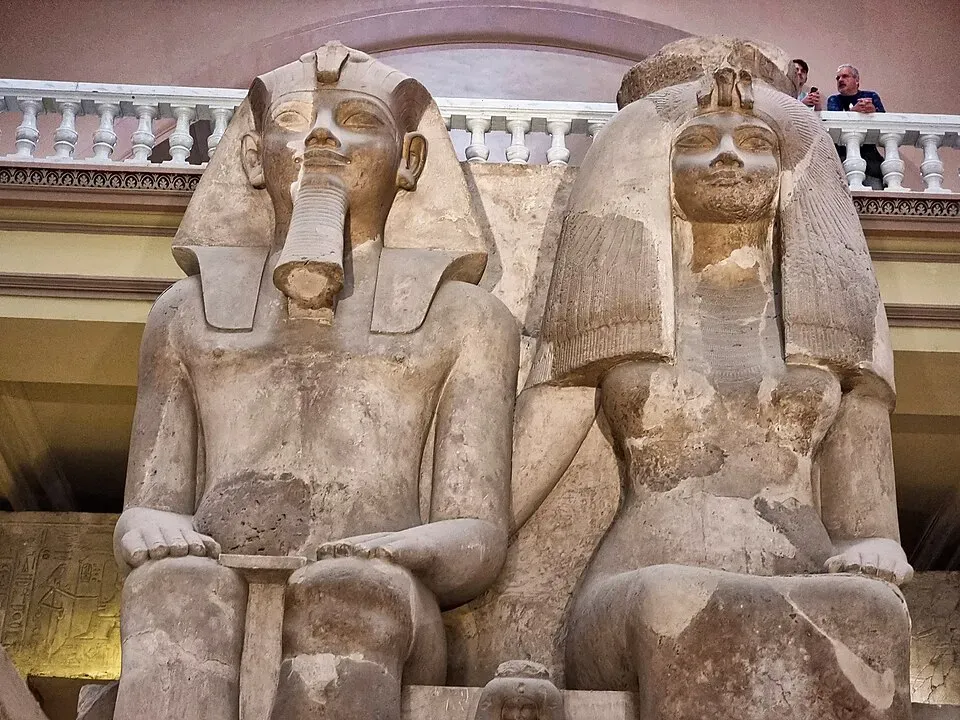
Late in Amenhotep III's reign, Egyptian art finally let its king and queen look like real, mature, fuller-bodied people instead of eternal, airbrushed youth.