
Peter Paul Rubens Made Fullness the Beauty Standard of Baroque Europe
In the 1630s, the era's most celebrated Flemish painter filled his canvases with full-figured women — and left behind a word for it: Rubenesque.
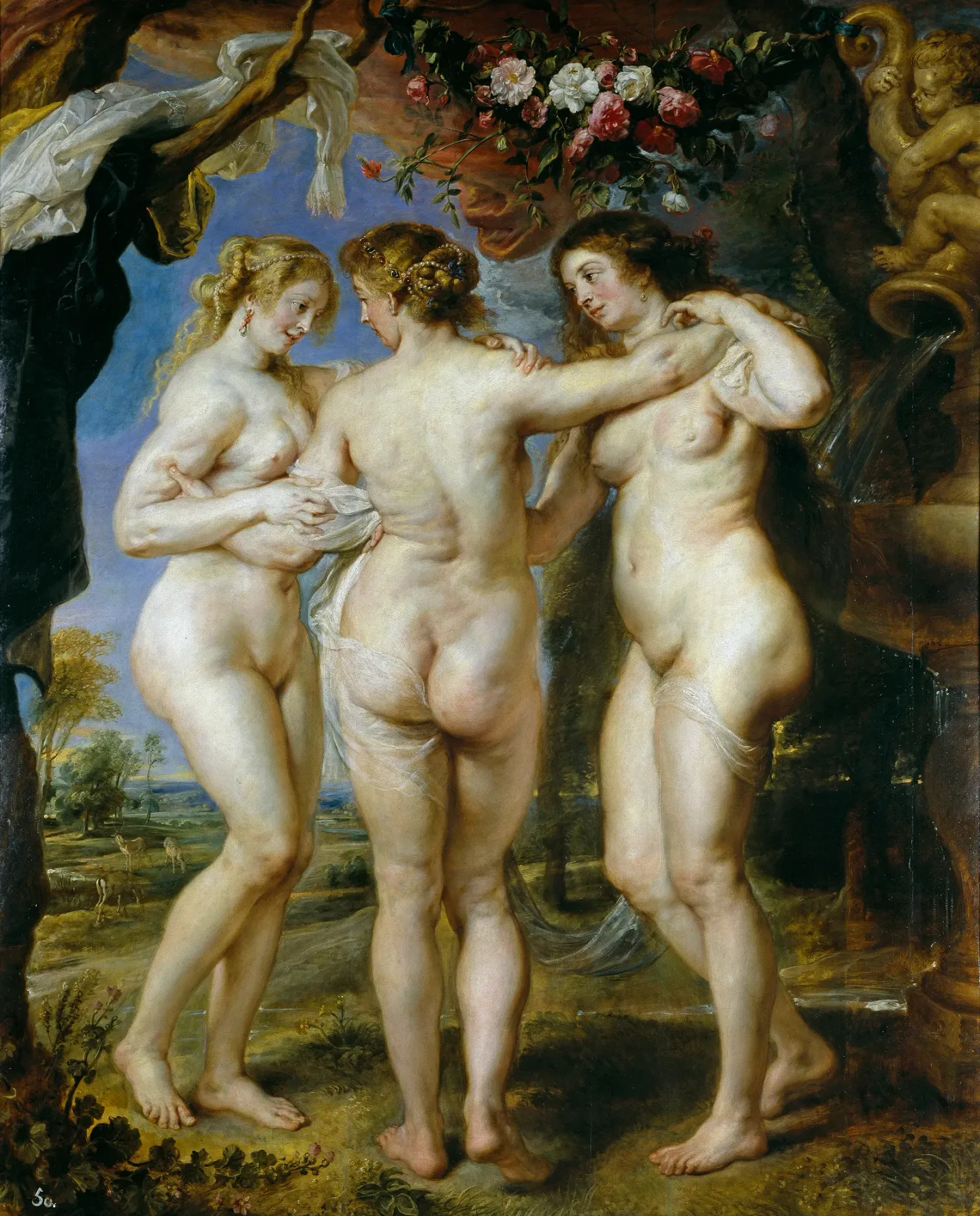
Artwork — Photo by Peter Paul Rubens, Public domain, via Wikimedia CommonsDid you know there's a word in the dictionary for a fuller figure that comes with a painter's name already built in? "Rubenesque" — plump, rounded, full-bodied, usually meant as a compliment — traces directly back to Peter Paul Rubens (1577–1640), the most celebrated painter of Flemish Baroque art. He didn't just happen to paint full-figured women. In the 1630s, at the height of his fame, fullness was his standard of beauty — the thing he returned to, canvas after canvas, when he wanted to paint a woman at her most desirable.
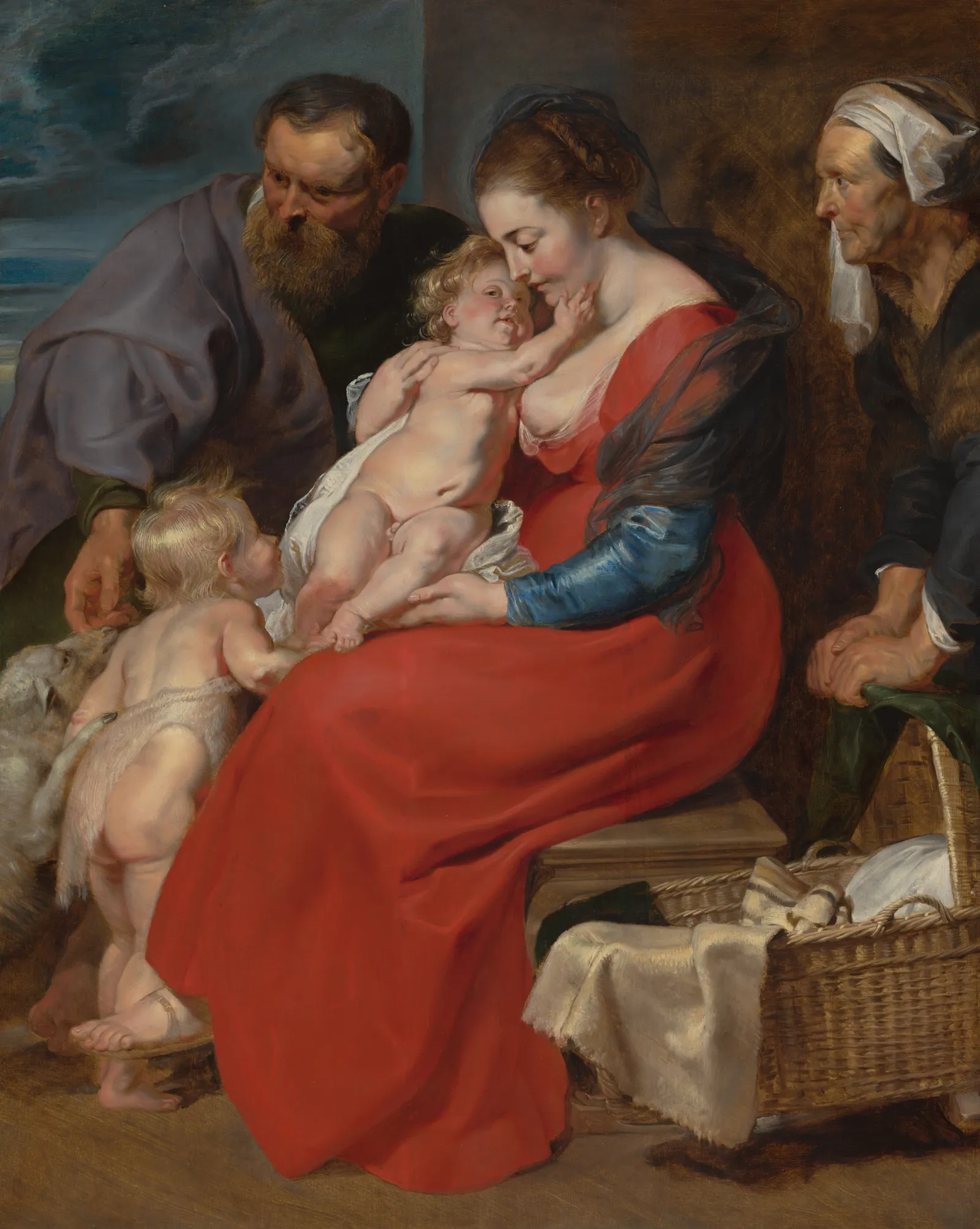
Rubens was born in Siegen, in what's now Germany, on June 28, 1577, and trained in Antwerp under three successive masters before a formative trip to Italy in 1600, where he studied Titian, Tintoretto, and Veronese firsthand. By the time he returned to Flanders in 1608, he was building the workshop that would make him the most sought-after painter in northern Europe — prolific enough to run an operation of assistants and students, respected enough that the kings of both Spain and England knighted him for his work as a diplomat, not just an artist. He died in Antwerp on May 30, 1640, of gout.
The paintings that set the standard
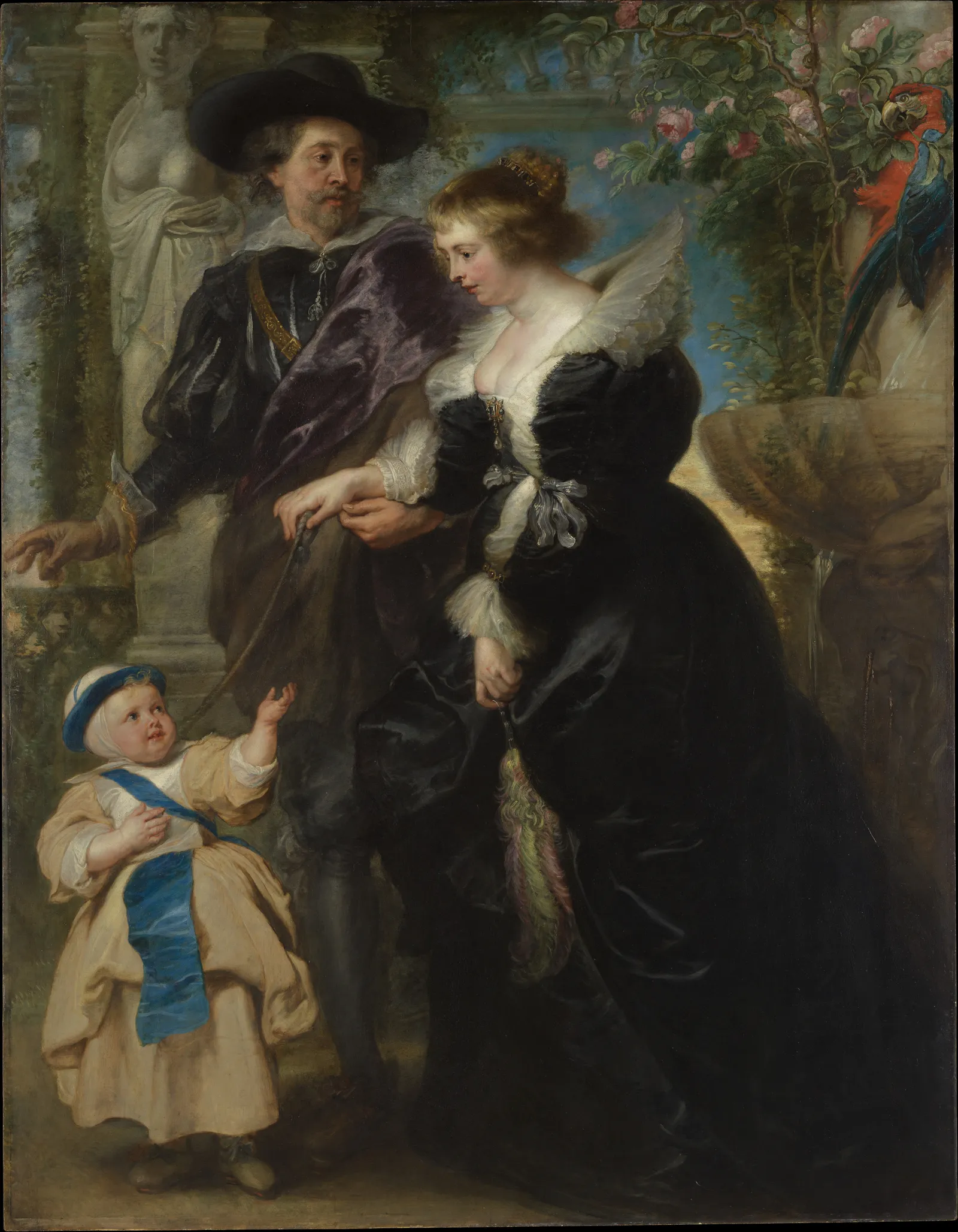
The clearest evidence of what Rubens considered beautiful is The Three Graces, painted around 1630 to 1635 and now in Madrid's Museo del Prado. Three nude women, softly built, stand in a circle with their arms around each other's shoulders, feet caught mid-step as if dancing. Rubens never sold it — it stayed in his own personal collection until his death, when King Philip IV of Spain bought it outright, which is about as clear a signal as an artist can leave about which of his paintings he considered his own ideal. Art historians have long noted a resemblance between the two faces in the painting and Rubens's own wives — Isabella Brant, who died of plague in 1626, and Helena Fourment, whom he married in 1630 when she was 16 and he was 53. The identification isn't settled scholarship, and Rubens never documented it himself, but it's a widely repeated reading: if true, the painting isn't an abstract ideal at all. It's Rubens painting the two women he actually loved.
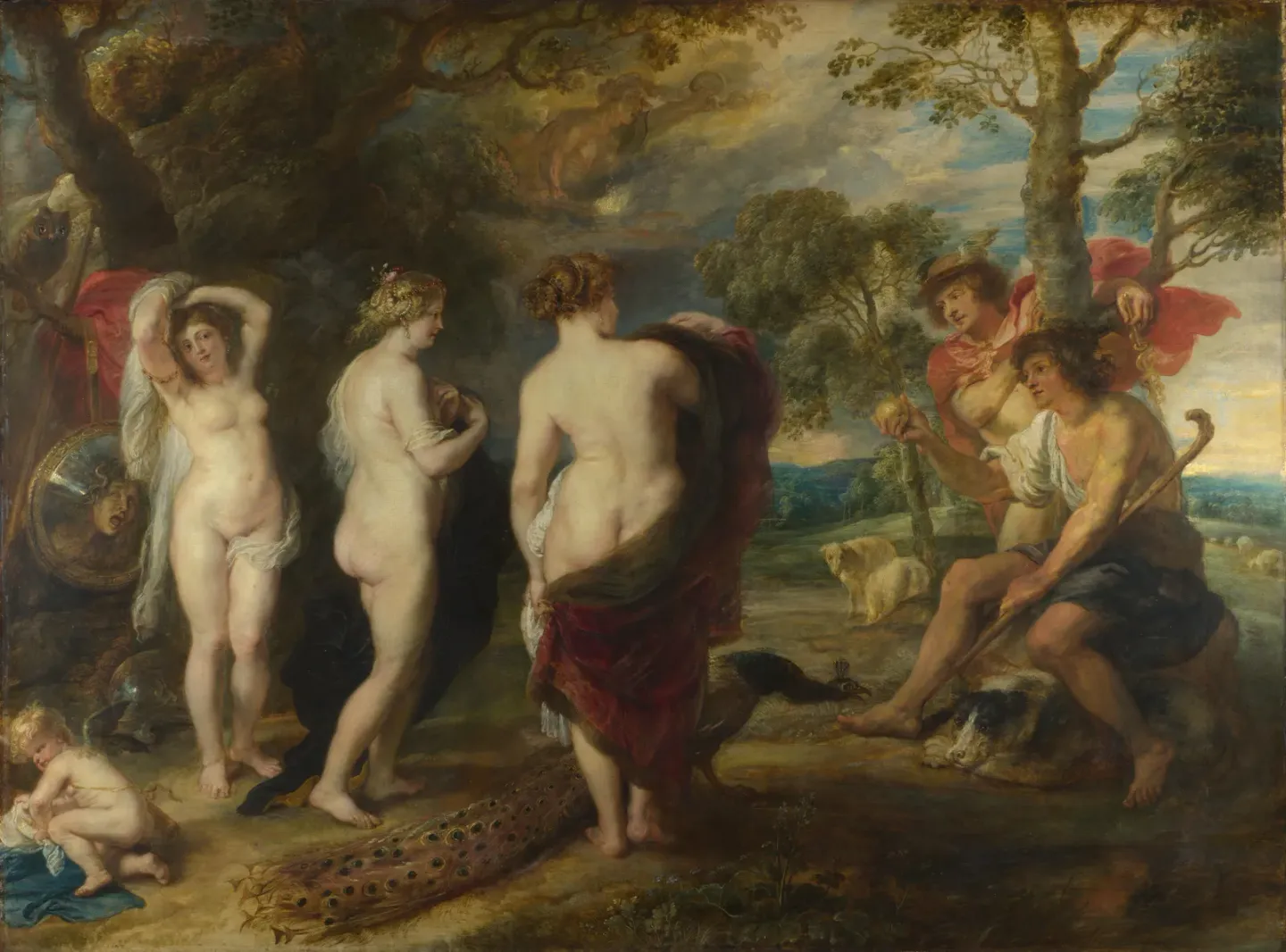
He returned to the same body type again and again. Take The Judgment of Paris, a mythological scene he painted at least three times across four decades — an early version around 1597 to 1600, now in London's National Gallery, and a more mature rendering the museum itself dates to roughly 1632 to 1635, alongside a later, much larger version for the Spanish court finished just before his death. In every one, Paris hands the golden apple to Aphrodite, judging her the most beautiful of three goddesses — and in Rubens's mature versions, all three goddesses share the same soft, fleshy build that defines The Three Graces. It isn't one painting making a case for a particular kind of beauty. It's a working painter, across a whole career, consistently deciding what "most beautiful" looked like.
Where the word actually comes from
"Rubenesque" itself is younger than the paintings by more than two and a half centuries. According to etymological reference sources, the adjective entered English in the early twentieth century — one reference dates it specifically to 1904, more than 260 years after Rubens's death — building on an earlier, more academic term, "Rubensian," documented from 1890. Technically the correct spelling is "Rubensesque," with the extra "s" from his actual surname, but almost nobody uses that form; "Rubenesque" won by popular use instead. By the time dictionaries picked it up, it had already settled into its modern meaning: not a technical art-history term, but a genuinely admiring way to describe a woman's body as full and rounded — a word that, unusually, was built to be a compliment from the start.
That's worth sitting with, because the beauty standard didn't stay this way. Two, three centuries after Rubens, Western fashion swung hard in the opposite direction: the 1920s flapper ideal prized a flat chest and boyish hips, and by the 1960s, models like Twiggy made a slight, adolescent frame the industry standard all over again. Neither shift happened because bodies changed — they happened because what a given decade decided to call beautiful changed, the same way it did in Rubens's own Antwerp workshop three centuries earlier. We told the wider version of this pattern — across six empires and multiple centuries — in "The Courts That Crowned Her." Rubens is just the rare case where the record left behind an actual word for it.
Shop the Saga Collection
Corpulent Queen Tee
A crown, and the word we put back under it. Corpulent Queen is the weekly feature — the most interesting woman in the room, printed on purp…
Thick History Graphic Tee
Every era that called itself golden made room for bodies like ours — this shirt just refuses to let anyone forget it. Garment-dyed heavywei…
Venus of Willendorf Graphic Tee
The oldest depiction of the human body that humanity ever bothered to keep is a fat woman — roughly 30,000 years of proof, and she was firs…
Related Stories

The West African Kingdom Where Brides Were Fed Like Royalty
In the Kingdom of Calabar, elite families fed and secluded their daughters for months before marriage — a fuller body wasn't an accident. It was the point.
 Historical image — Photo by MatthiasKabel, CC BY 2.5, via Wikimedia Commons
The First Woman Ever Carved Wasn't Thin
Forty thousand years before "body positivity," Ice Age carvers rendered the female body full and soft. Nobody agrees why — but nobody flattened her.
 Historical image — Photo by Prof. Mortel, CC BY 2.0, via Wikimedia Commons
The Courts That Crowned Her
From the Nile to the Yangtze to the courts of West Africa, six empires didn't just accept a fuller figure — they built their idea of royalty around it. We restore the original narrative.