
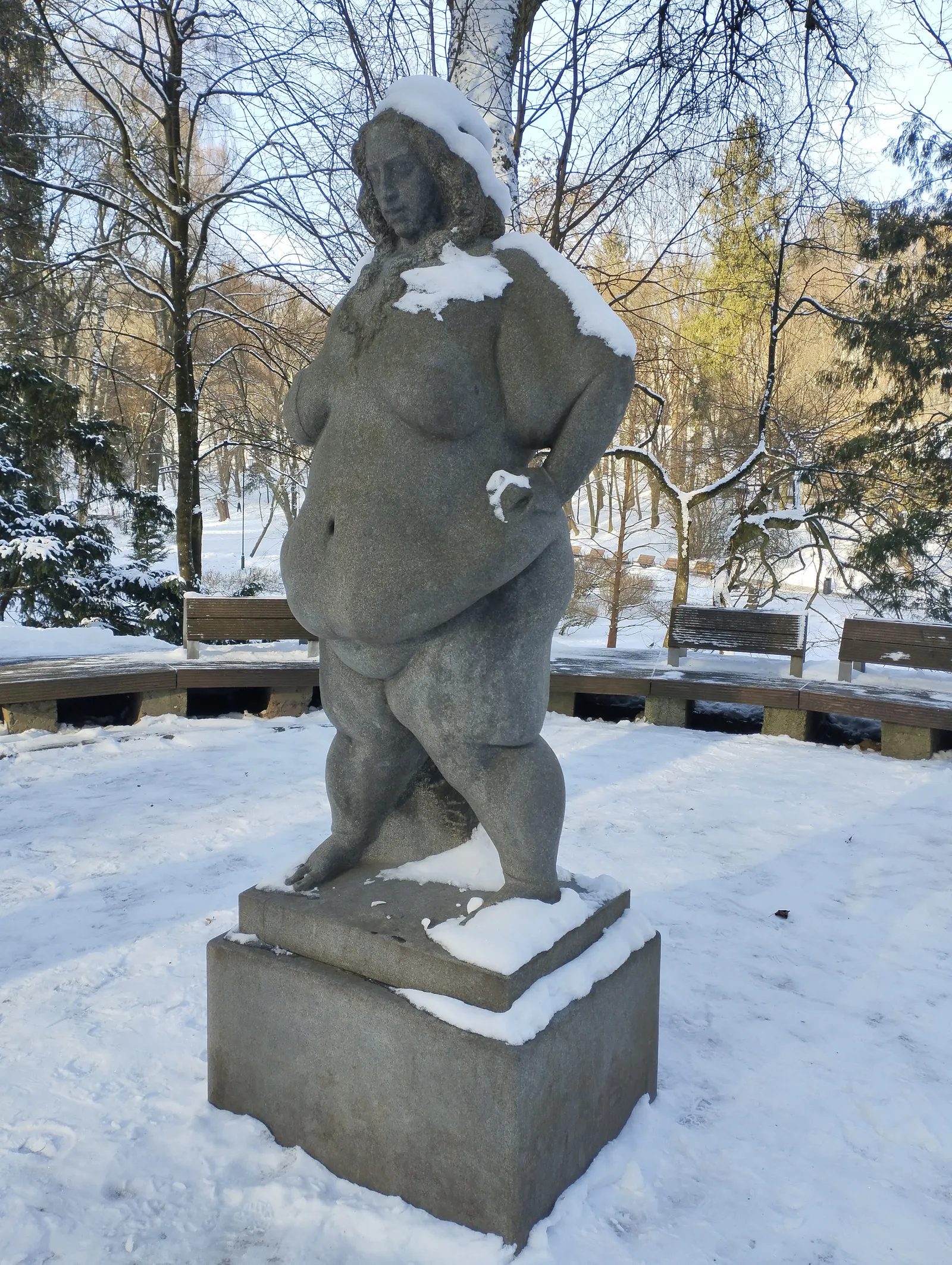
The Granite Woman Lviv Tried to Burn
Vasyl Korchovy carved her 3 meters tall in 2021 and called her Confident. Two years later, in Lviv, someone tried to set her on fire.
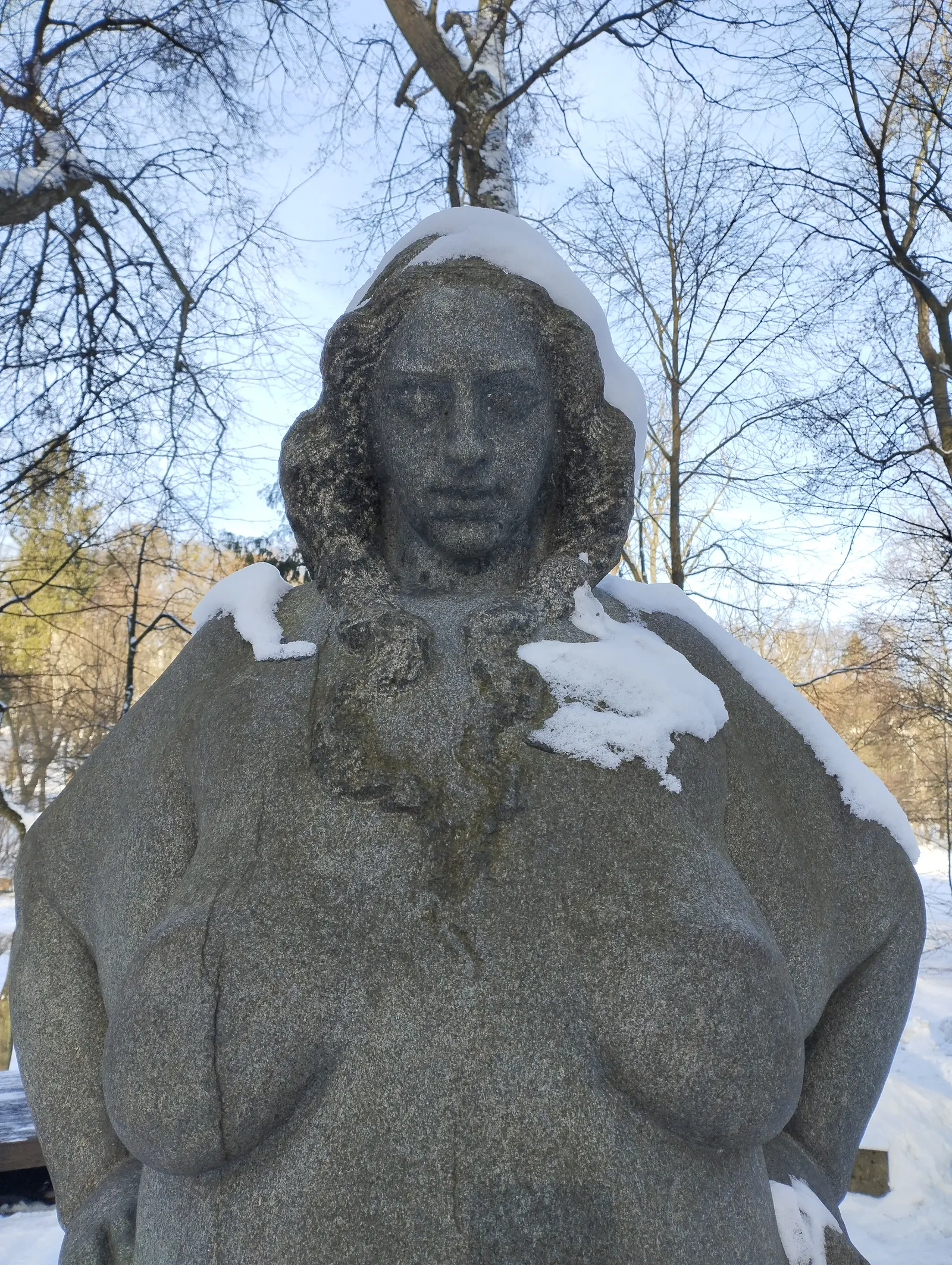
Photo by Ірина Бучнєва, CC0 1.0, via Wikimedia CommonsOn the night of August 22, 2023, a park guard in Lviv, Ukraine, found a group of people at the base of a granite statue in Stryi Park, pouring used grease across her shoulders and trying to set her alight. She's 3 meters tall — roughly 10 feet — carved from solid gray granite, standing with one hand on her hip and her hair falling past her shoulders. The sculptor who made her gave her a name: Confident. In Ukrainian, Впевнена.
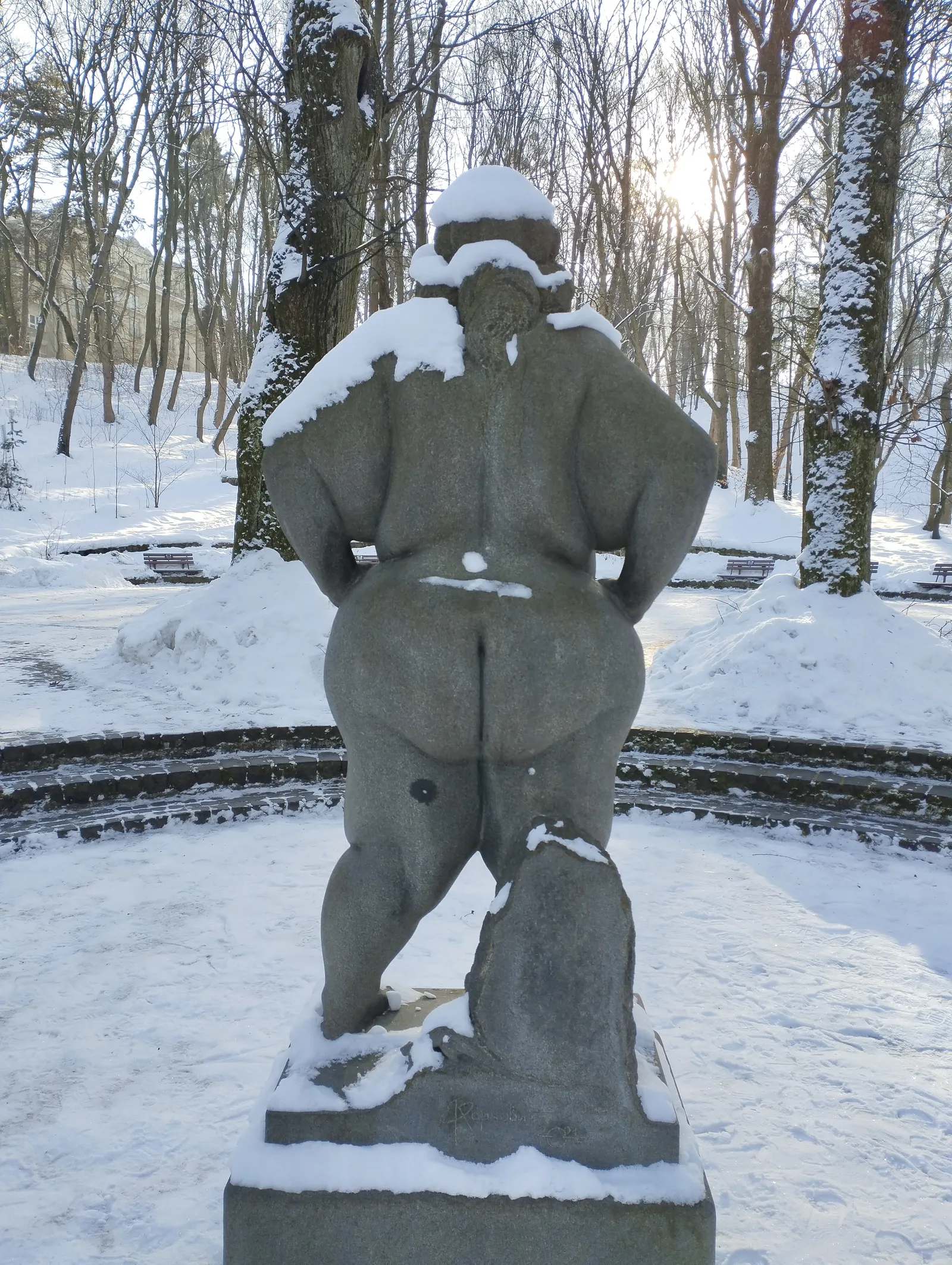
Vasyl Korchovy, a Kyiv-trained sculptor born in 1962, carved her in 2021 for the Kaniv International Sculpture Symposium, an annual residency the artistic association Chervone Chorne runs above the Dnipro River. Working from a small plaster model, he spent three weeks transferring the figure onto stone by hand, converting roughly 3 tons of granite to chips in the process. He'd made a smaller version of the same woman before and called it Such As She Is; enlarged in granite, he renamed her. "The woman stands on the ground, and no one will move her," he told Marie Claire Ukraine in a September 2023 interview, translated here from the original Ukrainian. Asked why anyone found her body controversial at all, his answer, in that same interview, was a question of his own: "A fish is beautiful, a frog is not. But why? Who invented this?"
A City Argues, Then Someone Reaches for a Match
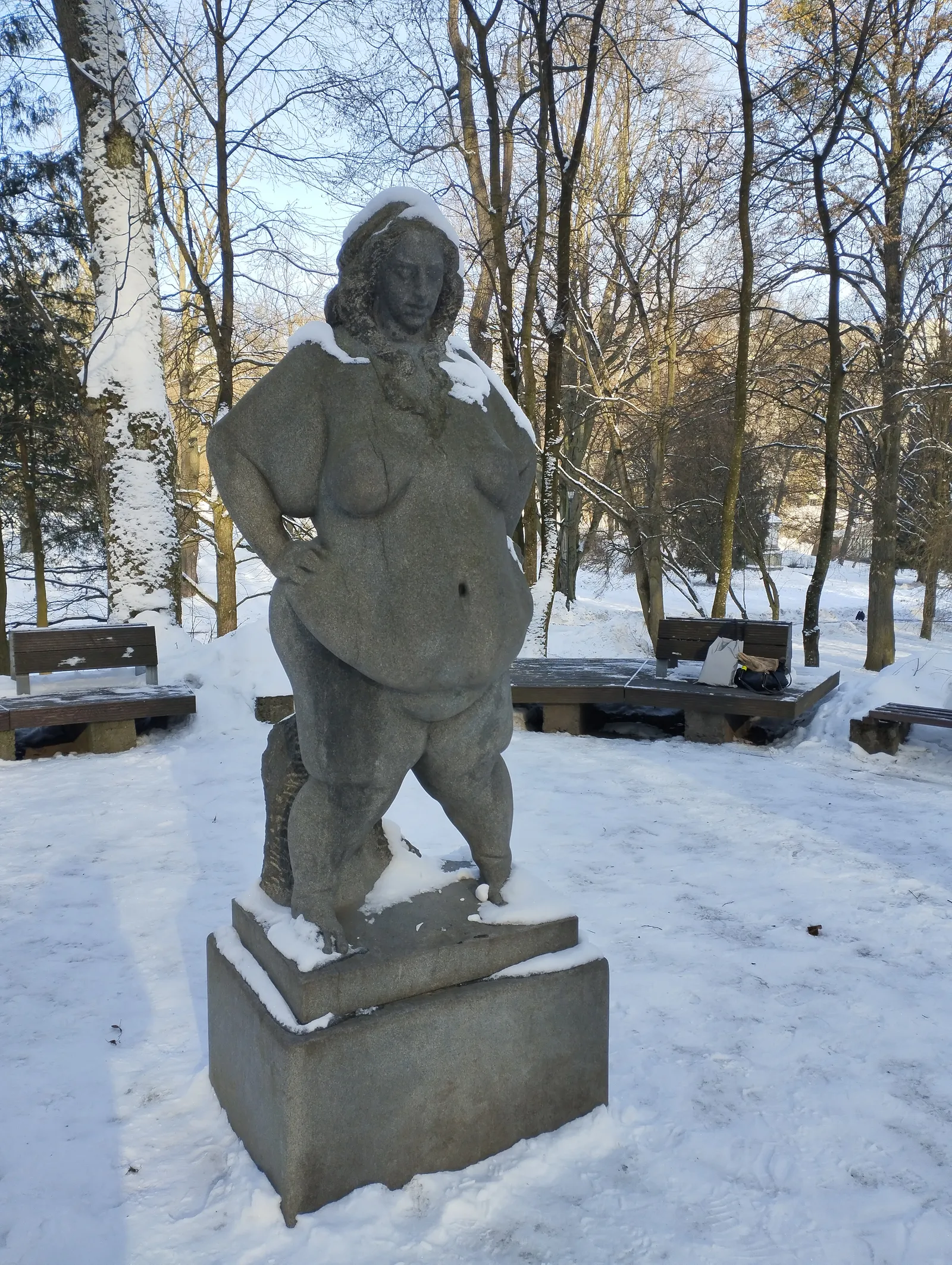
Confident stood in Kaniv's sculpture park for about two years before Chervone Chorne moved a set of eight granite works, hers among them, several hundred miles west to Lviv in August 2023 — opening a new outdoor Sculpture Route through Stryi Park as part of that year's Lviv Sculpture Week. Getting eight granite statues installed in a city living under wartime air-raid alerts took more than half a year of coordination with Lviv's city council, according to Chervone Chorne's own account. Not everyone welcomed the result. Solomiia Rybotytska, a Lviv Oblast Council deputy and chair of its Commission on Historical-Cultural Heritage and Tourism, criticized Confident by name as unfeminine and out of place, then asked more broadly of the whole installation, in a Facebook post Zaxid.net reported on August 17, 2023 — five days before the vandalism: "Who needs these monsters in the park?" Online, coverage from multiple Ukrainian outlets described the reaction splitting into two camps — one reading the statue as overdue and admiring, the other as ugly and out of place — an argument that was still going when, that August night, someone reached for a jug of grease instead of a comment box.
The Long View
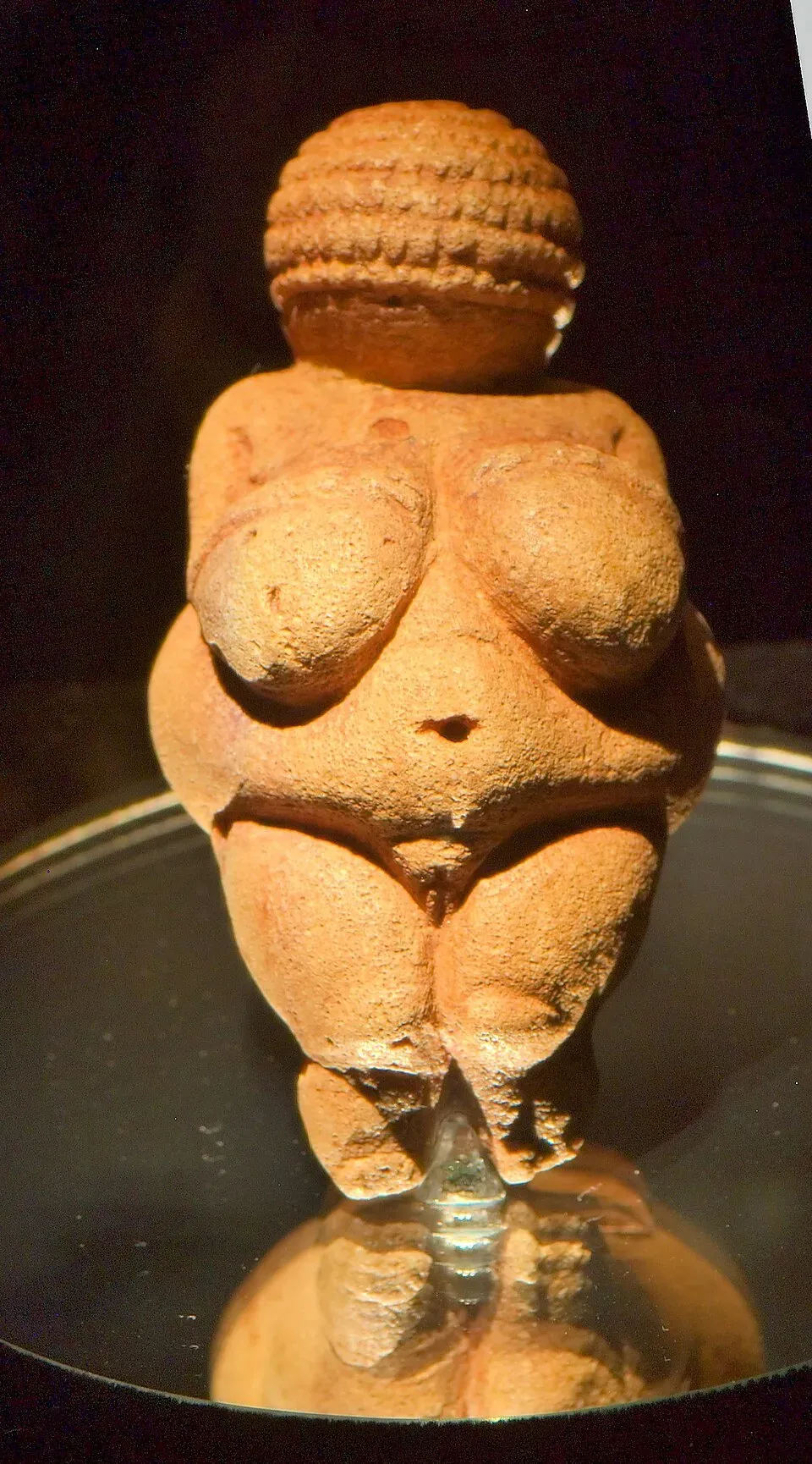
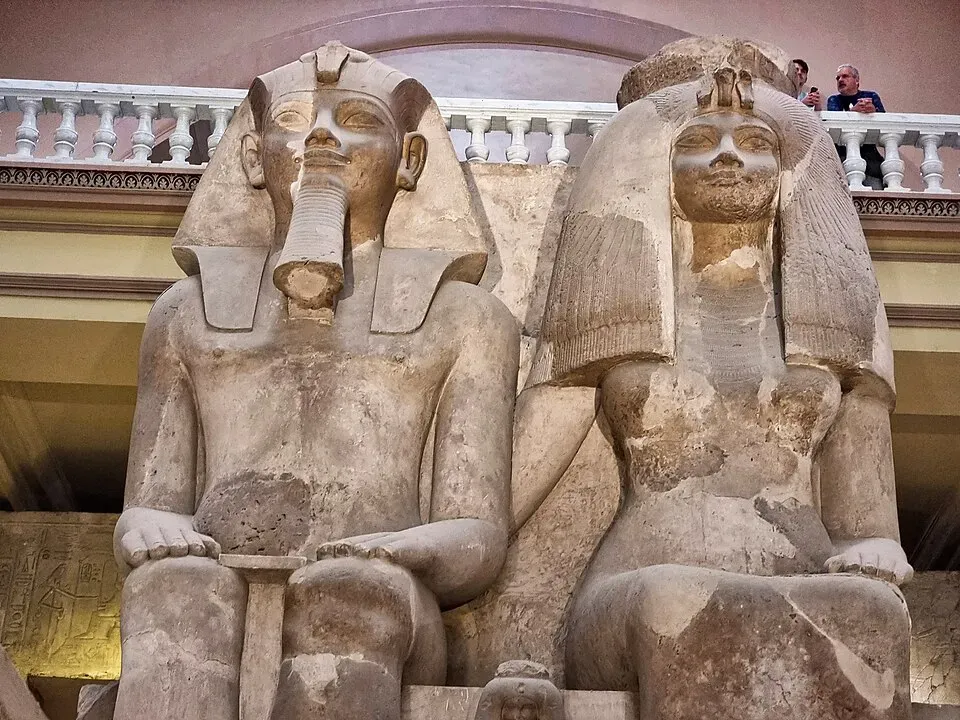
None of this is a new argument, whatever the comment threads think it is. Ice Age carvers were already rendering the female body full and soft roughly 40,000 years before Korchovy picked up a chisel — we told that story in "The First Woman Ever Carved Wasn't Thin." Queen Tiye stood carved at the same monumental scale as her husband, Pharaoh Amenhotep III, more than 3,300 years ago, in one of six empires that built their idea of royalty around a fuller figure rather than a slighter one — the subject of our own "The Courts That Crowned Her." Tang dynasty China measured its most celebrated beauty, Yang Guifei, in the same fullness Confident wears. In the Kingdom of Calabar, elite families spent months feeding and adorning their daughters before marriage, on the understanding that a fuller body was the entire point, not an accident to explain away. Korchovy, whether he knows the lineage or not, is carving inside it. "I'm not a naturalist," he told Marie Claire Ukraine, in that same translated interview. "I don't depict wrinkles or cellulite. I simply convey beauty."
Confident wasn't even the only monumental statue of a woman to spark an international argument about bodies in 2021. In Sapri, Italy, sculptor Emanuele Stifano unveiled La Spigolatrice, a bronze wheat gatherer in a dress carved so tight across her body that Italian senators Monica Cirinnà and Laura Boldrini publicly accused the town of installing a pinup instead of a literary heroine. Stifano defended the work as simple admiration of the human form and said on Facebook that he'd have preferred to carve her nude outright. Two European towns, the same year, both defending a monumental female figure against public objection — and objecting to opposite things. Sapri's statue was accused of being too idealized. Lviv's was accused of being too real.
Three weeks after the attempted arson, on September 16, 2023, the Lviv group Feminist Workshop staged a performance in Stryi Park called (Not) a Public Property, organized around what the group described as the right of fat women to exist. Confident still stands where she was installed, on loan from private collector Yuriy Stashkiv — also a co-founder of Chervone Chorne — according to exhibition curator Pavlo Hudimov. She picks up snow every winter now — and, recently, a second audience online, passed around again by art-history accounts to a comment section that, going by the record above, is arriving at this argument roughly 40,000 years late.
Related Stories

The West African Kingdom Where Brides Were Fed Like Royalty
In the Kingdom of Calabar, elite families fed and secluded their daughters for months before marriage — a fuller body wasn't an accident. It was the point.
 Historical image — Photo by MatthiasKabel, CC BY 2.5, via Wikimedia Commons
The First Woman Ever Carved Wasn't Thin
Forty thousand years before "body positivity," Ice Age carvers rendered the female body full and soft. Nobody agrees why — but nobody flattened her.
 Historical image — Photo by Prof. Mortel, CC BY 2.0, via Wikimedia Commons
The Courts That Crowned Her
From the Nile to the Yangtze to the courts of West Africa, six empires didn't just accept a fuller figure — they built their idea of royalty around it. We restore the original narrative.