
The Most Beautiful Woman in Chinese History Was Plus Size
Yang Guifei's fullness wasn't in spite of the Tang dynasty standard — it was the standard. One of history's great love stories, reconsidered.
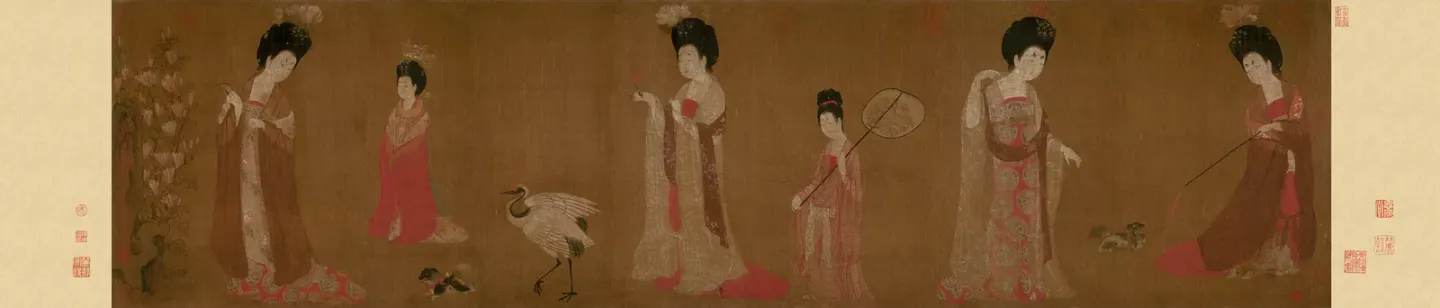
Historical image — Photo by Zhou Fang, Public Domain, via Wikimedia Commons
Did you know one of the most celebrated beauties in the entirety of Chinese history was, by every surviving account, plus-size? Yang Guifei — born Yang Yuhuan in 719 — is remembered alongside three other women as one of the Four Great Beauties of ancient China, a canon of legendary women retold in poetry, opera, and painting for more than 1,000 years. Of the four, she's the only one whose story is inseparable from an entire dynasty's aesthetic: the Tang dynasty (618 to 907) is the stretch of Chinese history art historians most consistently describe as favoring a fuller figure. Yang Guifei wasn't an exception inside that standard. She was its most famous face.
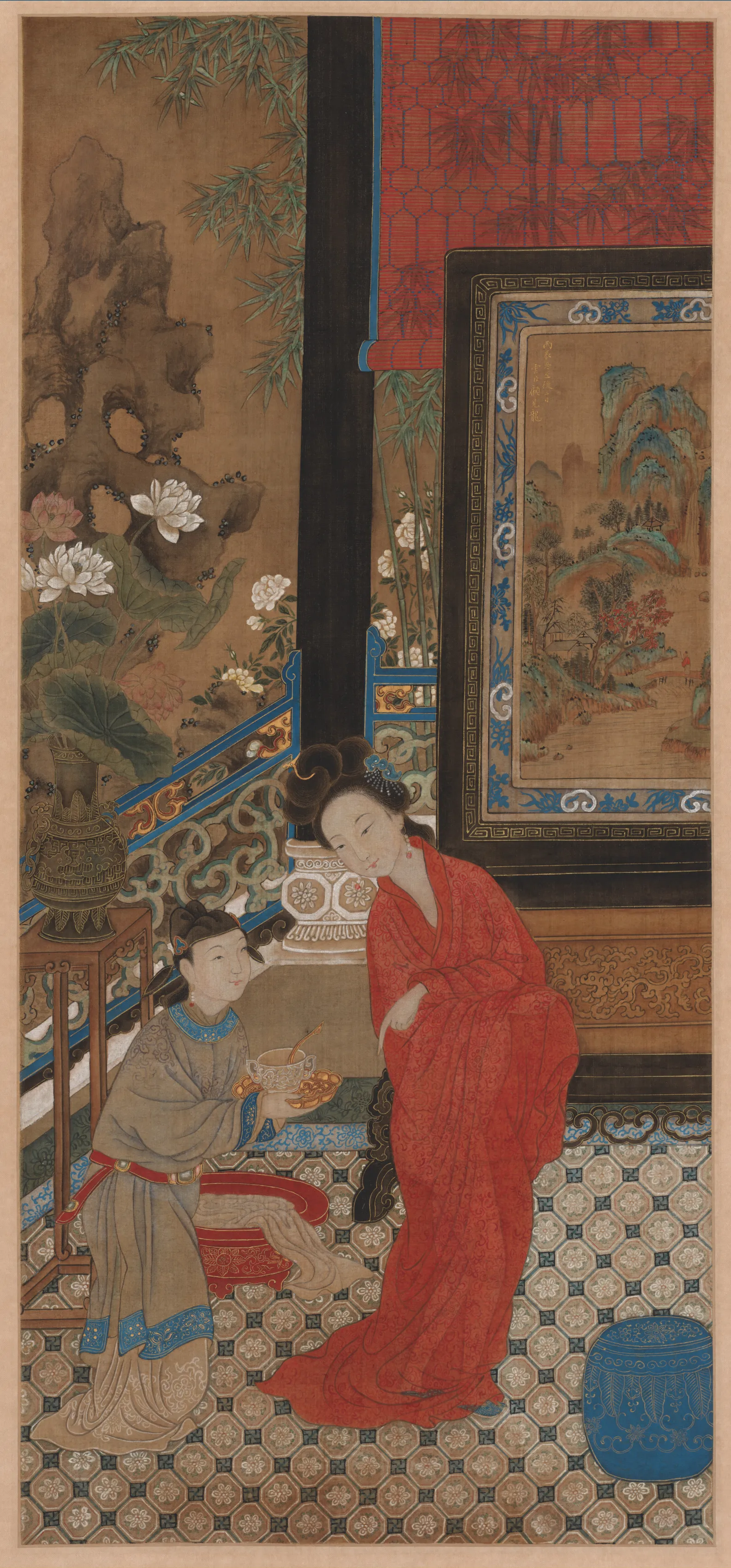
Her path to the palace was strange even by imperial standards. She started out married to Li Mao, Prince Shou — one of Emperor Xuanzong's own sons. At some point in the 730s, the emperor took an interest in his son's wife, and the workaround that let him have her was almost administrative: Yang was ordained as a Daoist nun under the religious name Taizhen, and after several years in that role, reentered court life as Xuanzong's own consort instead. By 745 she held the title Guifei, one of the highest ranks a consort could hold, and by every account that survives, the emperor's devotion to her was total — visible enough at court that it became a political liability for the empire, not just gossip.
A beauty standard, with real nuance
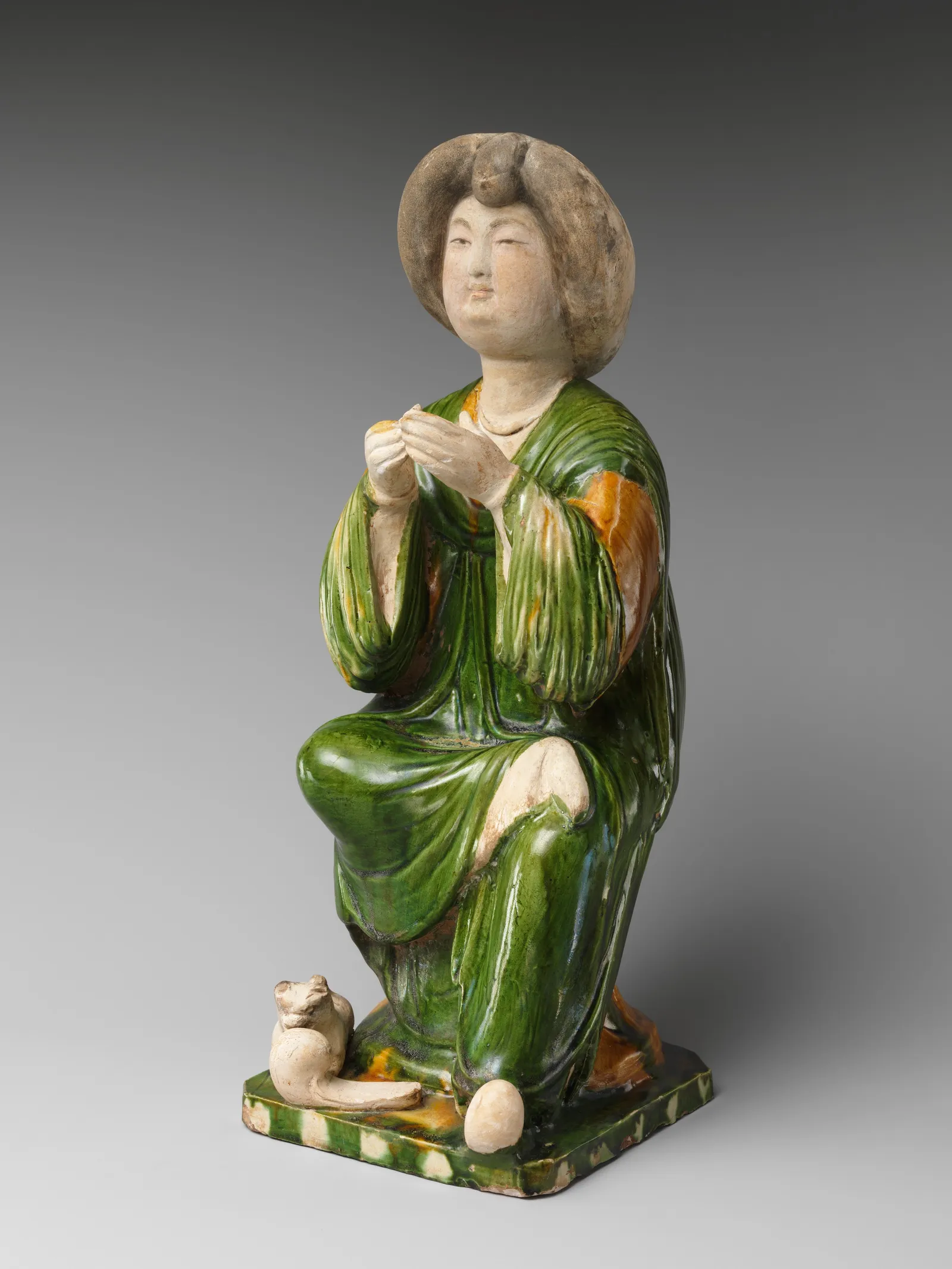
Here's where I have to slow down, because the popular version of this story oversimplifies it. The idea that Tang China simply worshipped fatness — the bigger, the better — is a real belief today, but it's not really a Tang-era one. The line most often cited to prove it — a description of Yang Guifei as full-bodied with fine, pale skin — comes from Su Shi, a poet writing in the Song dynasty more than 300 years after she died, not a contemporary source, and the exact translation varies by source. What survives from the Tang itself is mostly visual: court paintings and tomb figurines from the period consistently render women with round faces, full cheeks, and soft, ample bodies, at a moment when both earlier and later dynasties leaned toward a slimmer ideal. Historians generally read that shift as tied to Tang prosperity — a fuller body read as evidence a family could actually afford to eat well — rather than a simple, universal rule that fatter always meant more beautiful. The standard was real. The cartoon version of it isn't.
The same devotion that elevated her helped end her life. In 755, a general named An Lushan launched a rebellion that would eventually claim millions of lives and permanently weaken the dynasty. As Xuanzong's court fled the capital, Chang'an, the following year, his own imperial guard mutinied, refusing to move further unless the emperor's chancellor, Yang Guozhong — Yang Guifei's cousin — was killed for provoking the crisis. He was. The guards then made clear they didn't consider the emperor safe with Yang Guifei still alive either. Xuanzong, with no army left to argue with, ordered her death. She was strangled at the Mawei relay station in 756, at age 38.
Her death didn't end the story — if anything, it's what made her immortal. About 50 years later, the poet Bai Juyi turned Xuanzong and Yang Guifei's relationship into "The Song of Everlasting Sorrow," a poem that's been assigned, performed, and adapted across China and Japan for more than 1,000 years since. It's a large part of why a consort who died at 38, blamed for a war she didn't start, is still the name most people reach for first when the subject is beauty in Chinese history — and why the Tang dynasty's own fuller-figured aesthetic, visible in the surviving court paintings, never quite got edited out of the record. We told a wider version of this same story — six empires, one throughline — in "The Courts That Crowned Her." Yang Guifei was the centerpiece of that argument, not a footnote to it.

Shop the Saga Collection
Corpulent Queen Tee
A crown, and the word we put back under it. Corpulent Queen is the weekly feature — the most interesting woman in the room, printed on purp…
Thick History Graphic Tee
Every era that called itself golden made room for bodies like ours — this shirt just refuses to let anyone forget it. Garment-dyed heavywei…
Venus of Willendorf Graphic Tee
The oldest depiction of the human body that humanity ever bothered to keep is a fat woman — roughly 30,000 years of proof, and she was firs…
Related Stories
The West African Kingdom Where Brides Were Fed Like Royalty
In the Kingdom of Calabar, elite families fed and secluded their daughters for months before marriage — a fuller body wasn't an accident. It was the point.
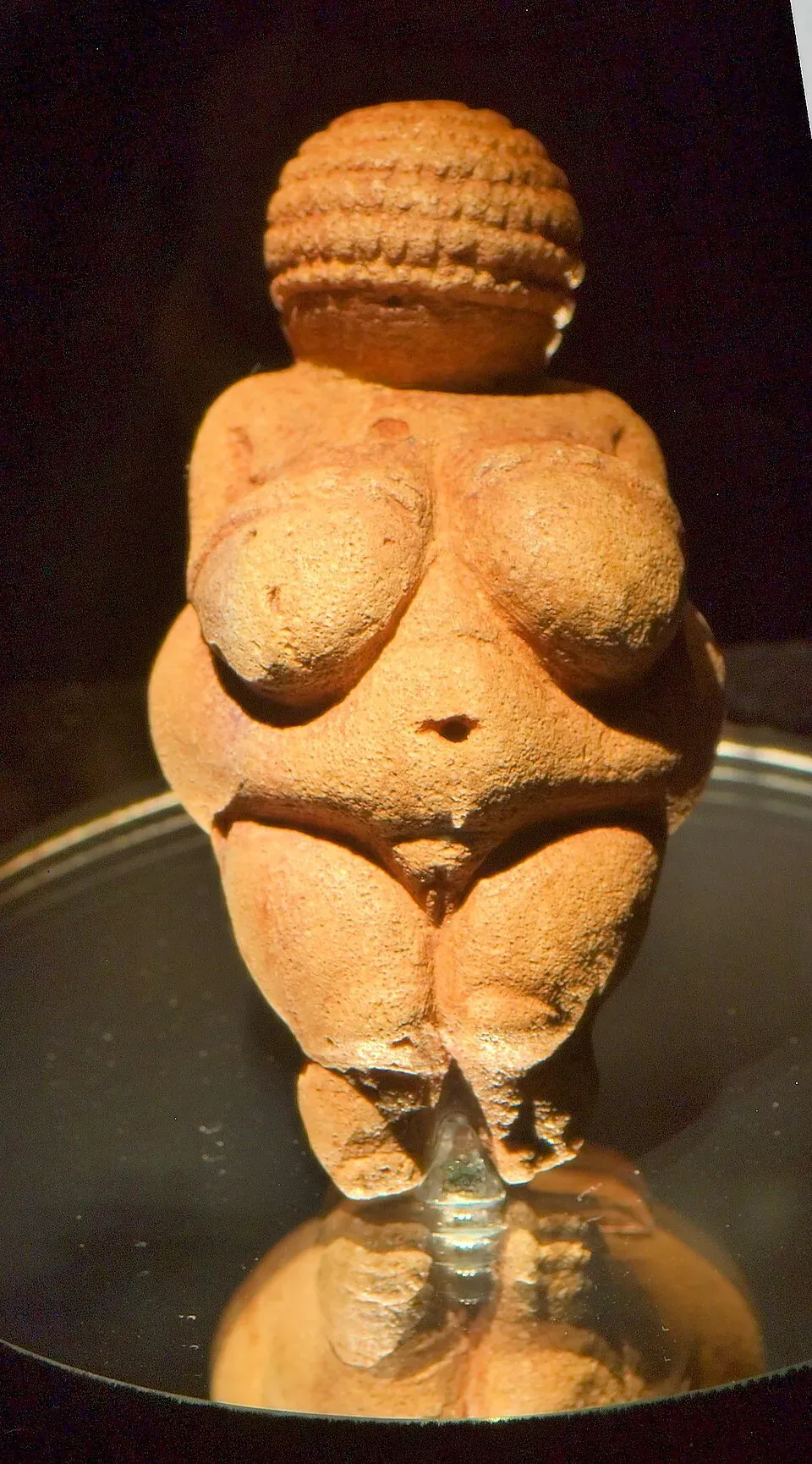 Historical image — Photo by MatthiasKabel, CC BY 2.5, via Wikimedia Commons
The First Woman Ever Carved Wasn't Thin
Forty thousand years before "body positivity," Ice Age carvers rendered the female body full and soft. Nobody agrees why — but nobody flattened her.
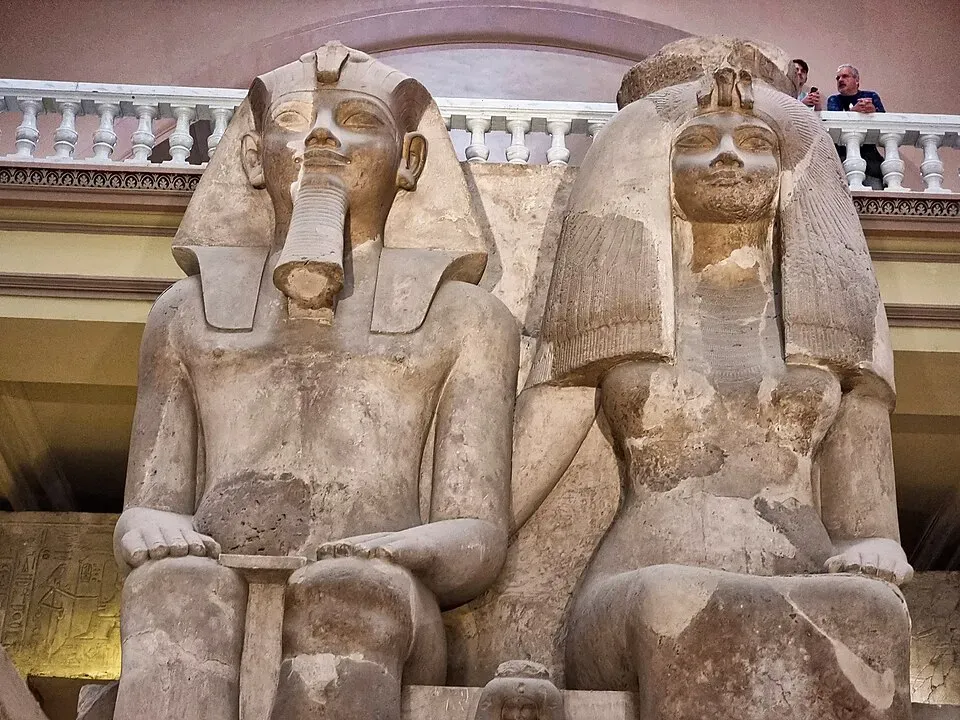 Historical image — Photo by Prof. Mortel, CC BY 2.0, via Wikimedia Commons
The Courts That Crowned Her
From the Nile to the Yangtze to the courts of West Africa, six empires didn't just accept a fuller figure — they built their idea of royalty around it. We restore the original narrative.